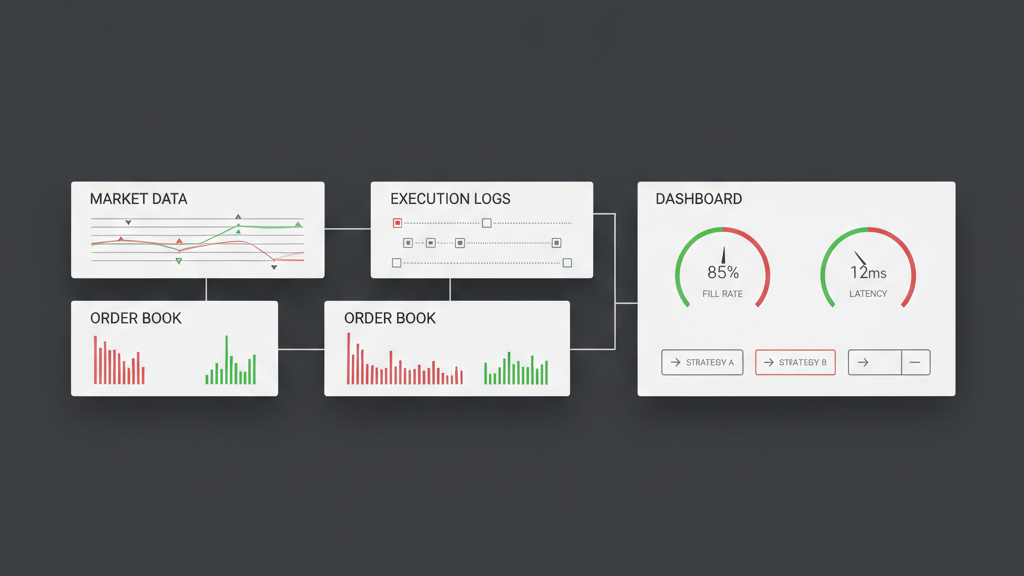
In high-frequency and automated trading, the ability to execute quickly and reliably is paramount. Every microsecond counts, and even minor delays or system failures can significantly impact profitability and risk exposure. This guide explores a comprehensive set of strategies for optimizing trading bot execution speed and reliability in real-time environments, addressing critical aspects from infrastructure to code design. We will cover practical approaches to minimize latency, enhance system stability, and ensure your automated trading systems operate with maximum efficiency and resilience. Implementing these techniques is essential for maintaining a competitive edge and managing operational risks effectively in today’s dynamic financial markets. Focus on these areas can transform a basic script into a high-performance trading machine capable of navigating complex market conditions with precision.
Foundational Infrastructure and Network Latency Reduction
The physical infrastructure forms the bedrock of any high-performance trading system. Minimizing network latency involves strategic hardware choices and network configurations designed for speed. Co-location of trading servers directly within exchange data centers or proximity hosting significantly reduces the physical distance data must travel, cutting down on round-trip times for order submission and market data reception. Utilizing dedicated network lines and high-performance network interface cards (NICs) also contributes to lower latency. Furthermore, optimizing operating system network stacks and employing kernel bypass technologies can further reduce processing overhead. This foundational approach ensures that your trading bots have the fastest possible connection to market venues, which is crucial for achieving superior execution speeds in real-time trading scenarios.
- Co-locate servers in exchange data centers to minimize physical latency.
- Implement dedicated network lines and high-performance NICs for data transfer.
- Optimize operating system network stack settings and consider kernel bypass.
- Ensure robust power and cooling systems for server stability.
- Utilize enterprise-grade hardware components for compute and storage.
Optimizing Code and Algorithm Efficiency
Beyond hardware, the efficiency of your trading bot’s code and algorithms directly impacts its execution speed. Employing efficient data structures and algorithms is critical for reducing processing time. For example, using hash maps for quick lookups instead of linear searches, or employing priority queues for managing order books, can drastically improve performance. Writing code in high-performance languages like C++ or Rust, or optimizing Python code with libraries like Cython or Numba, can convert computationally intensive parts into compiled code, yielding significant speedups. Minimizing memory allocations and garbage collection overhead also contributes to more predictable and faster execution. Regularly profiling your code helps identify bottlenecks and areas ripe for optimization, ensuring your automated trading system processes information as quickly as possible.
- Select optimal data structures for fast lookups and manipulations (e.g., hash maps, balanced trees).
- Optimize algorithms to reduce computational complexity (e.g., O(1), O(log N)).
- Leverage compiled languages (C++, Rust) for critical performance paths.
- Minimize memory allocations and garbage collection cycles to avoid pauses.
- Profile code regularly to identify and address performance bottlenecks.
Real-Time Market Data Processing and Latency Management
Effective handling of real-time market data is central to a trading bot’s responsiveness and reliability. This involves subscribing to low-latency data feeds, often direct from exchanges or specialized vendors, to receive market updates with minimal delay. Data parsing and normalization must be highly efficient, transforming raw data into usable formats quickly without introducing bottlenecks. Implementing intelligent data filtering and aggregation techniques helps reduce the data volume processed, allowing the bot to focus on relevant information. Techniques like direct memory access (DMA) and shared memory can bypass conventional I/O operations, accelerating data flow between processes. Proactive management of market data processing ensures that your trading decisions are based on the freshest information available, critical for successful real-time execution optimization.
- Subscribe to low-latency, direct market data feeds from exchanges or vendors.
- Implement efficient data parsing and normalization routines.
- Utilize data filtering and aggregation to reduce processing load.
- Employ direct memory access or shared memory for faster inter-process data transfer.
- Design fault-tolerant data ingestion systems to handle feed disruptions.
Streamlining Order Management and Execution Logic
The speed and reliability of order placement and management are paramount for any trading bot. This involves optimizing the integration with brokerage APIs, ensuring that order submission, modification, and cancellation requests are processed with minimal latency. Implementing smart order routing logic can direct orders to the most liquid venue or the one offering the best price, enhancing execution quality. Techniques such as order batching or spread order handling can also improve efficiency. Furthermore, robust error handling and retry mechanisms for order submissions are essential for reliability, preventing missed opportunities due to transient network issues or API limits. Focus on a streamlined order management system contributes significantly to the overall real-time execution optimization of trading strategies.
- Optimize integration with brokerage APIs for rapid order submission.
- Implement smart order routing to access best prices and liquidity.
- Design robust error handling and retry logic for order failures.
- Utilize techniques like order batching where appropriate.
- Ensure fast processing of order acknowledgments and fill confirmations.
Implementing Robust Monitoring and Alerting Systems
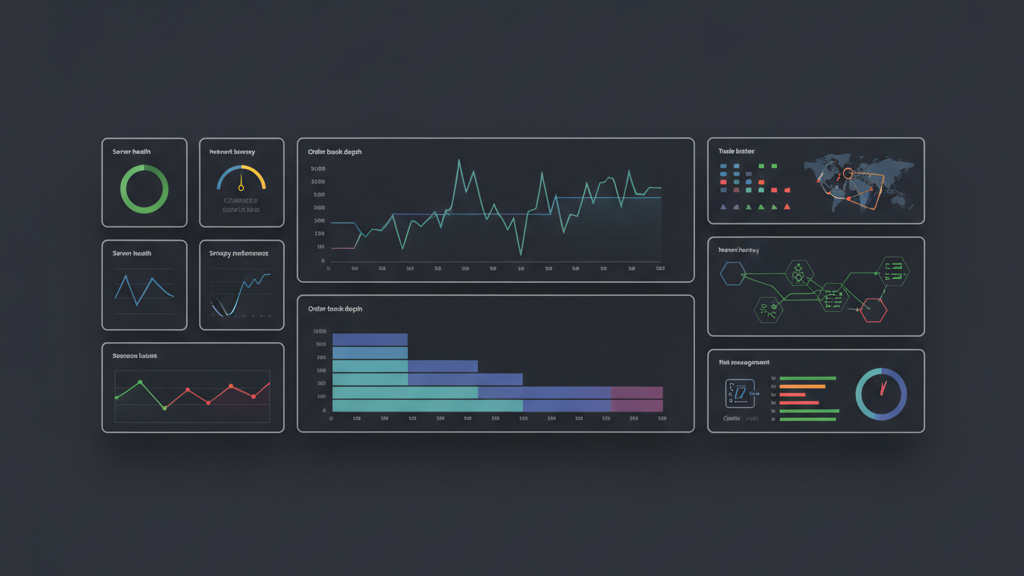
Reliability in real-time trading environments heavily depends on effective monitoring and alerting. A comprehensive monitoring system tracks key performance indicators (KPIs) such as execution latency, system uptime, market data feed health, and API response times. Real-time dashboards provide immediate insights into bot performance and health. Automated alerts, triggered by predefined thresholds or anomalies, ensure that operational teams are promptly notified of potential issues, from elevated latency to unexpected trading activity or system failures. These systems should log all critical events and data for post-mortem analysis and continuous improvement. Robust monitoring is not just about detecting problems but also about preventing them by identifying deteriorating conditions before they become critical, directly supporting consistent bot performance and stability.
- Monitor key performance indicators like latency, throughput, and error rates in real-time.
- Implement automated alerts for critical events, system failures, and performance degradation.
- Utilize dashboards for a comprehensive overview of bot health and market data feeds.
- Log all significant trading events, system actions, and errors for analysis.
- Configure alerts for unusual trading patterns or excessive slippage.
Ensuring System Reliability through Redundancy and Failover
Building a reliable trading bot requires incorporating redundancy and failover mechanisms to withstand hardware failures, network outages, or software errors. This includes deploying redundant servers and network paths to ensure continuous operation if one component fails. Implementing active-passive or active-active failover strategies ensures that a backup system can take over seamlessly with minimal disruption to trading. Data replication and consistent state management across redundant systems are critical to prevent data loss or inconsistencies during a failover event. Regular testing of failover procedures confirms their effectiveness and shortens recovery times in real-world scenarios. These reliability measures are fundamental to ensuring that your trading bot maintains continuous operation, even in the face of unforeseen challenges, thereby safeguarding capital and strategy integrity.
- Deploy redundant hardware and network components (e.g., dual servers, multiple ISPs).
- Implement active-passive or active-active failover strategies for critical services.
- Ensure robust data replication and synchronization across redundant systems.
- Develop graceful shutdown and startup procedures for all bot components.
- Regularly test failover mechanisms to validate their effectiveness.
Continuous Backtesting and Performance Validation
Optimizing trading bot execution speed and reliability is an ongoing process that demands continuous validation. Rigorous backtesting and simulation environments are essential for testing new optimizations or changes before deployment to live markets. These environments should accurately mimic real-time market conditions and data feeds to provide realistic performance insights. A/B testing different configurations or algorithmic improvements can help quantify the impact of changes on speed, slippage, and overall profitability. Monitoring performance in production and regularly comparing it against expected benchmarks helps identify drift or new areas for improvement. This iterative process of testing, measuring, and refining ensures that performance improvements are sustained and the trading bot remains robust and competitive over time.
- Utilize high-fidelity backtesting environments that replicate real-time conditions.
- Perform A/B testing on different optimization strategies to measure impact.
- Continuously monitor live performance metrics against backtested benchmarks.
- Document all changes and their observed effects on speed and reliability.
- Establish a robust CI/CD pipeline for safe and tested deployments.