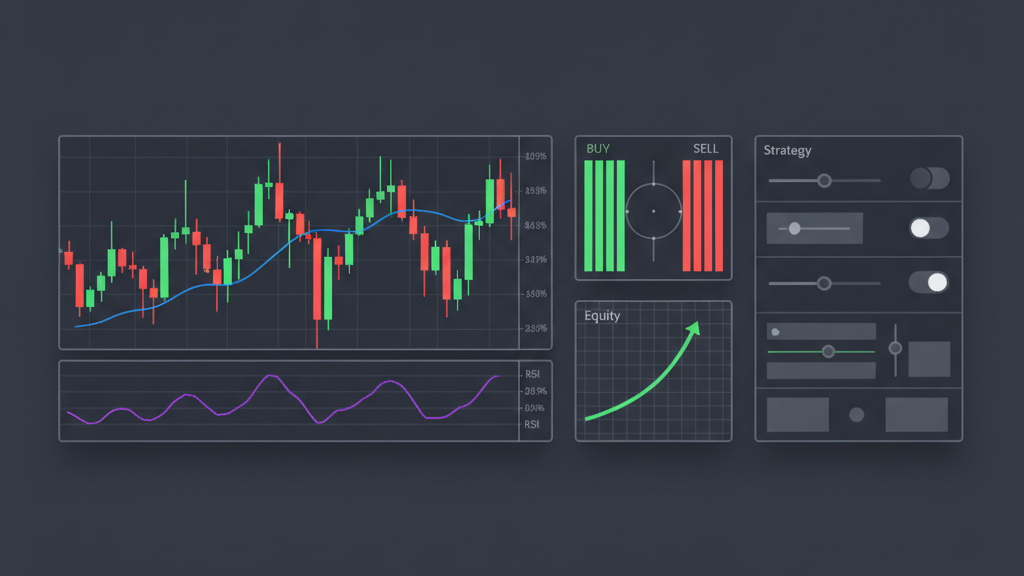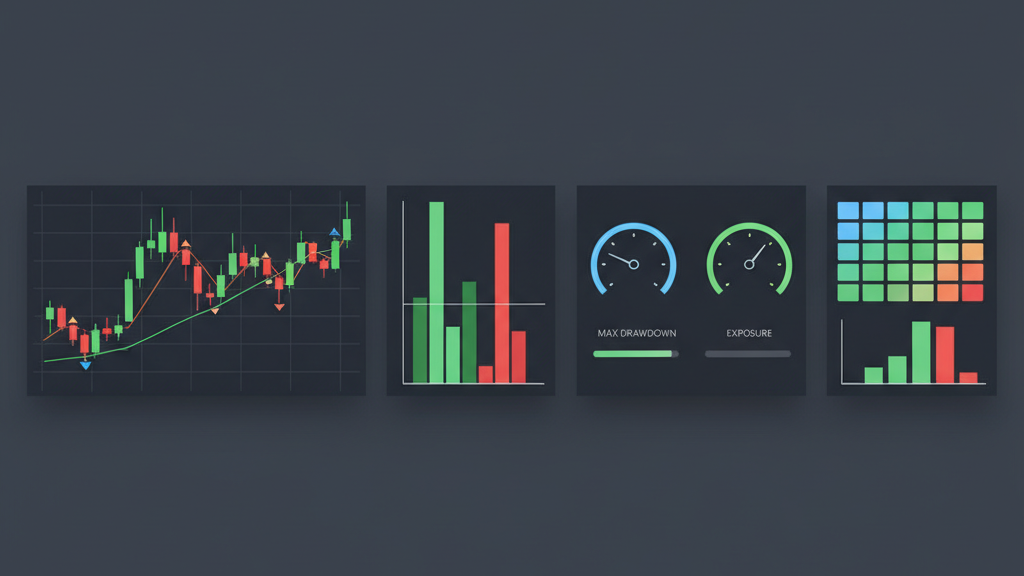
The journey from a promising trading strategy idea to a fully automated, executable algorithmic script requires a structured approach. Many traders and quantitative analysts recognize the efficiency and potential of automation but face challenges in bridging the gap between a conceptual insight and a functional system. This guide demystifies the process, outlining the critical steps involved in transforming a discretionary strategy or a data-driven hypothesis into robust, automated code. Successfully converting an abstract trading logic into an algo trading script demands clear definition, rigorous testing, and careful implementation of risk controls. It involves more than just programming; it requires a deep understanding of market dynamics, data analysis, and software development principles. By following a systematic methodology, you can significantly increase the chances of developing a reliable and profitable automated trading solution.
Formalizing Your Trading Strategy Idea
The initial step involves translating a conceptual trading idea into a set of discrete, measurable rules that a computer can interpret and execute. This requires an objective breakdown of the strategy, removing all discretionary elements. You must clearly define entry signals, exit conditions, position sizing, and initial risk parameters. A precise definition ensures the strategy can be consistently applied and accurately translated into code without ambiguity. This foundational stage is crucial before attempting to turn trading strategy ideas into executable algo trading script, as any imprecision here will directly lead to errors in automation. Quantifiable criteria are essential to allow for systematic evaluation and coding.
- Clearly articulate entry and exit conditions using objective, quantifiable metrics.
- Define precise rules for position sizing and capital allocation per trade.
- Specify risk management parameters, including stop-loss levels and profit targets.
- Document all rules comprehensively to serve as a blueprint for development.
Architecting the Algorithmic Logic
This stage involves converting the formalized strategy rules into a structured algorithmic design. It often begins with pseudocode or flowcharts to map out the decision-making process and execution flow. The choice of programming language, such as Python, C++, or Java, and the trading platform, like MetaTrader, NinjaTrader, or proprietary systems, depends on factors like strategy complexity, execution speed requirements, and integration needs. The developed script must effectively interact with market data feeds, execute orders, and manage open positions. Careful consideration of data structures, API integration, and robust error handling is vital to ensure the script operates reliably in a dynamic market environment. This transition demands a practical blend of trading knowledge and programming expertise.
- Select an appropriate programming language and trading platform compatible with your strategy needs.
- Develop detailed pseudocode or a flowchart to outline the strategy’s logic.
- Integrate necessary real-time data feeds and brokerage APIs for market interaction.
- Implement robust error handling, logging mechanisms, and system checks within the script.
Validating Performance Through Backtesting
Backtesting is a critical phase where the developed algo script is tested against historical market data. This process evaluates the strategy’s potential performance under various market conditions without risking real capital. It involves simulating trades based on past prices and calculating key metrics such as profit/loss, maximum drawdowns, win rate, and risk-adjusted returns like the Sharpe Ratio. Effective backtesting requires clean, high-quality historical data and an understanding of its limitations, including potential survivorship bias or look-ahead bias. Optimization, while valuable for refining parameters, must be approached cautiously to avoid overfitting the strategy to past data, which can lead to poor performance in live trading environments.
- Acquire high-quality, clean historical data relevant to your target markets and assets.
- Execute backtests using diverse market conditions and timeframes to assess robustness.
- Analyze key performance indicators (KPIs) like Sharpe Ratio, Maximum Drawdown, and Profit Factor.
- Optimize strategy parameters carefully, avoiding excessive data mining and overfitting.
- Conduct walk-forward analysis to validate parameter stability across different periods.
Building Comprehensive Risk Controls
Beyond the core trading logic, an automated trading script must embed sophisticated risk management protocols. These controls act as essential safeguards against adverse market movements, technical failures, and unexpected events. Essential risk components include automatic stop-loss orders, take-profit limits, maximum daily loss thresholds, and position sizing algorithms that adjust based on account equity or market volatility. Incorporating circuit breakers, which can pause or halt trading under extreme conditions, is also crucial. A well-designed risk management framework protects capital and ensures the longevity of the trading operation, preventing catastrophic losses even when the primary strategy faces market challenges or technical issues.
- Integrate automatic stop-loss and take-profit mechanisms directly into the script.
- Implement dynamic position sizing rules based on account equity and defined risk tolerance.
- Set maximum daily or per-trade loss limits to prevent significant capital drawdowns.
- Develop circuit breaker logic to halt trading during unusual market events or system errors.
- Diversify trading across multiple strategies or assets to mitigate single-point failure risks.
Deploying and Monitoring Live Algo Scripts
After thorough backtesting and integrated risk management, the algo script is ready for deployment. This involves setting up the script on a reliable server environment, typically a Virtual Private Server (VPS) or dedicated hosting, to ensure continuous operation and minimal latency. Stable connectivity to the brokerage or exchange via APIs is critical. Before full live deployment, a period of ‘paper trading’ or ‘simulated live’ testing is highly recommended. This observes the script’s behavior in real-time market conditions without risking actual capital. Ongoing monitoring of the script’s performance, system health, and market data integrity is paramount, often facilitated by real-time dashboards and alert systems to identify and address issues promptly.
- Choose a stable and low-latency server environment for script hosting.
- Establish secure and reliable API connections to your chosen broker or exchange.
- Conduct extensive simulated trading (paper trading) before going live with real capital.
- Implement real-time monitoring dashboards for strategy performance and system health.
- Configure automated alerts for critical events, errors, or unexpected market conditions.
Iterative Improvement and Adaptation
The development of an automated trading script is not a one-time event; it is an iterative process of continuous improvement. Markets evolve, and even the most robust strategies can lose efficacy over time. Post-deployment analysis involves regularly reviewing the script’s live performance, comparing it against backtest results, and identifying any discrepancies or underperformance. This feedback loop is essential for refining strategy parameters, adjusting risk controls, or even re-evaluating the underlying market assumptions. Version control systems are vital for managing code changes, allowing for systematic updates and rollbacks. Proactive adaptation and refinement ensure the automated trading system remains relevant and effective in changing market landscapes over the long term.
- Regularly review live trading performance and compare it against backtested expectations.
- Analyze market changes and their potential impact on the strategy’s statistical edge.
- Implement a robust version control system for all script modifications and updates.
- Conduct periodic strategy audits to identify areas for improvement or potential obsolescence.
- Be prepared to adapt, modify, or decommission strategies that no longer perform effectively.