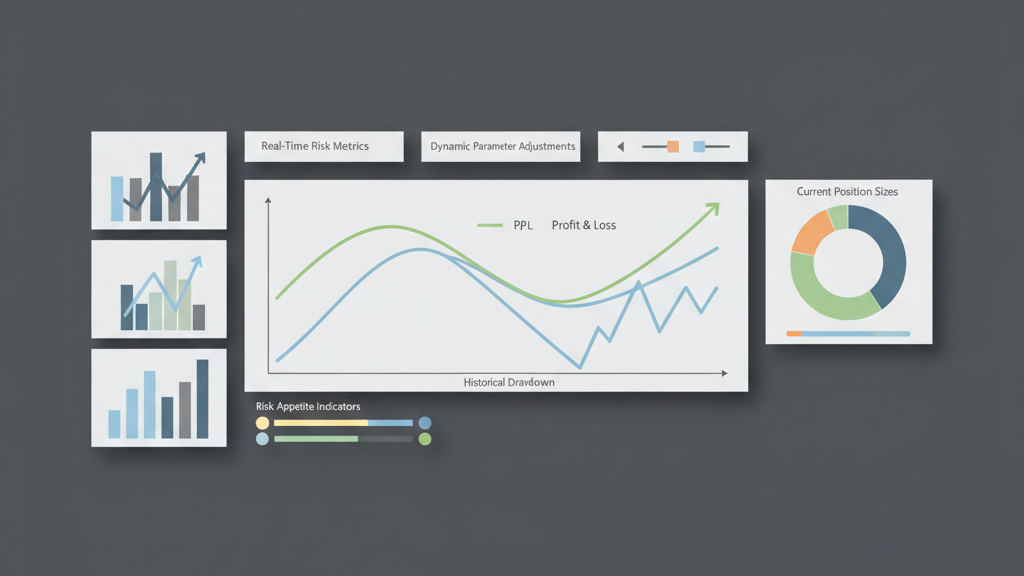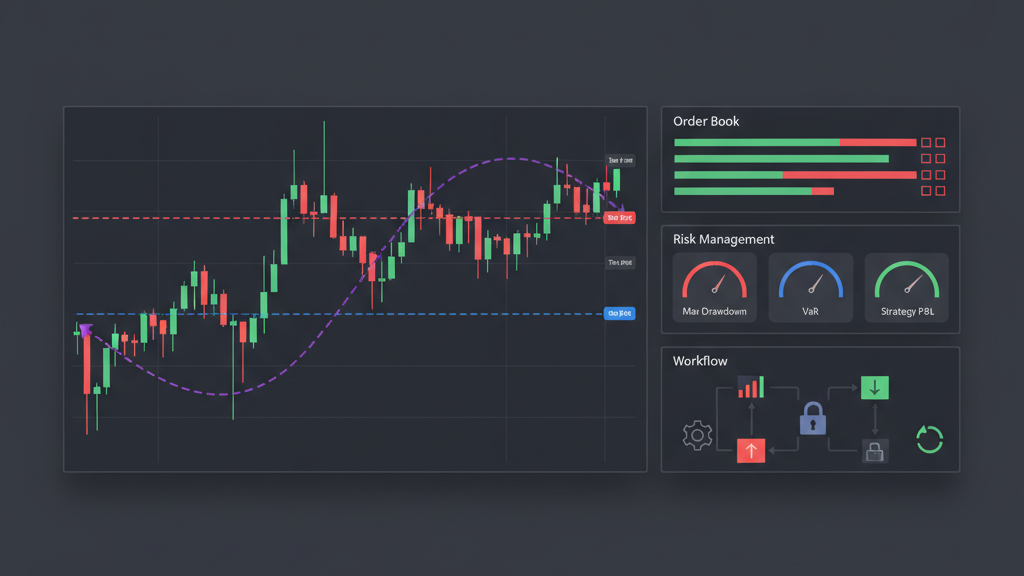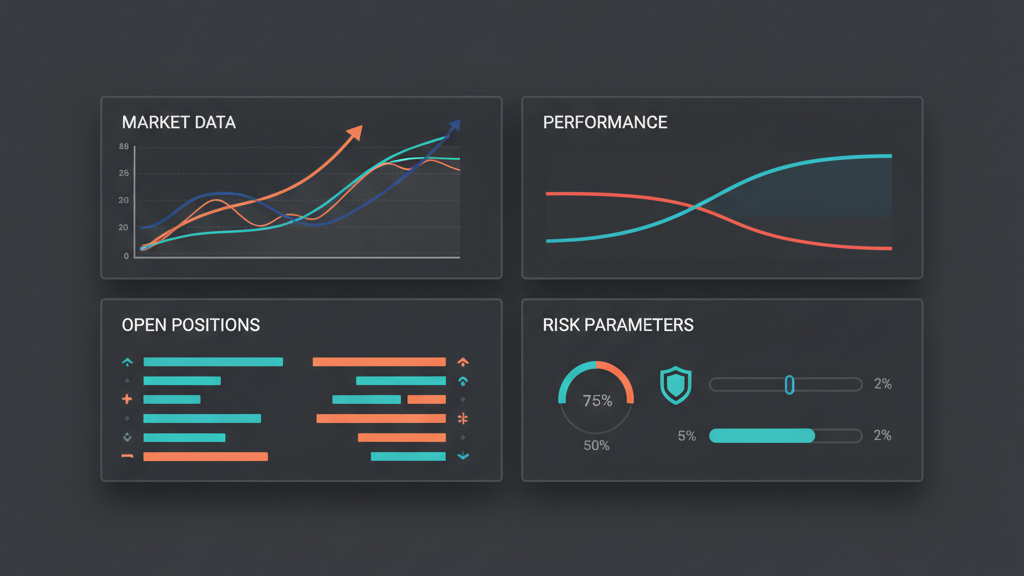
In the world of algorithmic trading, effective risk management is paramount. While strategy logic and execution efficiency often receive significant attention, the mechanism for managing exposure on each trade is equally vital. Automated position sizing strategies for robust capital protection ensure that a trading system can withstand volatility, mitigate drawdowns, and preserve capital over the long term. This systematic approach replaces discretionary decision-making with predefined rules, allowing for consistent risk allocation regardless of market conditions or emotional biases. Implementing these strategies is not merely about limiting losses; it is about optimizing capital deployment to achieve sustainable growth and resilience in complex markets.
The Critical Role of Automated Position Sizing in Algorithmic Trading
Automated position sizing is a fundamental component of any sound algorithmic trading framework. It dictates the number of units or lot size to trade for each position, directly impacting potential gains and losses. Without a systematic approach, even highly profitable strategies can lead to significant capital erosion due to improper exposure. Integrating automated rules ensures that trading capital is allocated efficiently and in alignment with predefined risk tolerances. This removes human error and emotional decisions from the equation, providing a consistent and disciplined method for managing trade exposure. The primary goal is not just to make money, but to do so while safeguarding the trading account against unexpected market movements and adverse outcomes, thus reinforcing overall capital protection.
- Ensures consistent risk allocation across all trades.
- Eliminates emotional biases from trade size decisions.
- Adapts exposure based on predefined risk parameters.
- Prevents overleveraging, protecting account equity.
- Supports long-term strategy viability and resilience.
Core Principles of Effective Position Sizing Calculations
Effective position sizing begins with understanding core risk management principles. Key considerations include the total capital available, the maximum acceptable risk per trade, and the volatility of the asset being traded. A common approach involves defining a percentage of account equity to risk on any single trade, often referred to as the ‘risk percentage.’ This percentage, combined with the stop-loss level, determines the appropriate position size. For instance, if a trader risks 1% of a $100,000 account, they are willing to lose $1,000 on that trade. If the stop-loss is set at $10 per share, the system can calculate a position size of 100 shares. This foundational calculation ensures that potential losses are always capped and proportionate to the overall capital base, forming a robust defense for capital protection.
- Define a clear percentage of capital to risk per trade.
- Calculate position size based on stop-loss distance.
- Factor in account equity to scale trade sizes appropriately.
- Adjust for instrument-specific characteristics and liquidity.
- Understand the potential impact of slippage on actual risk.
Implementing Fixed Fractional and Fixed Ratio Position Sizing
Two widely used methods for position sizing are fixed fractional and fixed ratio. Fixed fractional sizing involves risking a constant percentage of the current trading capital on each trade. As the account grows, the absolute risk amount and position size increase, and vice-versa. This method inherently scales with account performance. Fixed ratio position sizing, developed by Ryan Jones, adjusts position size based on a fixed increase in profits (delta) required to add a new unit of trading. For example, a system might require $5,000 in profits to add one additional contract to its trading size. Both methods provide a systematic framework, but fixed fractional is more common for its direct link to equity, while fixed ratio offers a non-linear scaling potentially suitable for specific strategies. Selecting the right method depends on the strategy’s risk profile and capital growth objectives for effective capital protection.
- Utilize fixed fractional to risk a constant percentage of equity.
- Implement fixed ratio to scale positions based on profit targets.
- Assess which method aligns best with strategy growth goals.
- Ensure chosen method accounts for drawdowns effectively.
- Script these methods into your trading platform for automation.
Dynamic and Volatility-Adjusted Position Sizing Methods
Beyond static methods, dynamic and volatility-adjusted position sizing offers more sophisticated risk management. These strategies continuously adapt position size based on real-time market conditions. Volatility-adjusted methods, for example, typically use indicators like Average True Range (ATR) to measure market swings. When volatility is high, the position size is reduced to keep the dollar risk constant, compensating for wider stop-losses. Conversely, in low volatility environments, position size might increase. Other dynamic methods can adjust based on system performance, drawdown levels, or specific economic indicators. This adaptability ensures that capital protection remains optimized even as market regimes shift, preventing excessive exposure during turbulent periods and allowing for appropriate scaling during calmer times.
- Adjust position size in real-time based on market volatility.
- Employ ATR or similar metrics for volatility assessment.
- Reduce size during high volatility to maintain dollar risk.
- Increase size during low volatility when risk per share is lower.
- Integrate performance feedback loops for adaptive sizing.
Integrating Position Sizing with Broader Risk Management Frameworks
Automated position sizing is a powerful tool, but it operates most effectively when integrated into a comprehensive risk management framework. This framework includes elements like hard stop-losses, trailing stops, daily loss limits, and maximum drawdown thresholds. Position sizing determines the initial exposure, while these other controls act as a safety net, exiting trades or even halting trading when predefined risk boundaries are breached. For instance, a system might have a position sizing rule that allows for a 1% risk per trade, but also a global rule that stops all trading if the daily loss exceeds 2% of the account. This layered approach creates multiple lines of defense, ensuring that capital is protected not just at the individual trade level, but across the entire portfolio and trading session. Algovantis specializes in developing such robust and integrated systems.
- Combine position sizing with hard stop-losses and trailing stops.
- Implement daily, weekly, or monthly loss limits.
- Define maximum allowable portfolio drawdown thresholds.
- Establish circuit breakers to halt trading under severe conditions.
- Ensure all risk controls are fully automated and enforced.
Scripting and Backtesting Automated Position Sizing Algorithms
Developing automated position sizing strategies requires careful scripting and rigorous backtesting. Algorithms must precisely calculate position sizes based on current account equity, risk parameters, and market data. This involves writing code that integrates with your chosen trading platform’s API to retrieve real-time data and execute orders. Before deploying live, these algorithms must undergo extensive backtesting against historical data. Backtesting helps validate the effectiveness of the chosen position sizing method under various market conditions, identify potential vulnerabilities, and optimize parameters. It allows traders to simulate thousands of trades and observe the strategy’s impact on equity curves, drawdowns, and overall capital preservation without risking real money. This iterative process of development, testing, and refinement is crucial for building confidence in the automated system’s ability to protect capital.
- Develop scripts to calculate position sizes dynamically.
- Integrate algorithms with trading platform APIs.
- Perform extensive backtesting using diverse historical data.
- Validate effectiveness across different market regimes.
- Refine parameters to optimize risk-adjusted returns.
Monitoring and Adapting Automated Position Sizing Strategies
Once deployed, automated position sizing strategies require continuous monitoring and periodic adaptation. Market dynamics, instrument characteristics, and even the strategy’s own performance can evolve over time, potentially impacting the effectiveness of the initial sizing rules. Traders and quantitative teams should regularly review performance metrics, including actual versus target risk per trade, drawdown statistics, and overall profit factors. If the market environment shifts significantly, or if the strategy’s edge changes, the position sizing algorithm may need adjustments. This iterative process of monitoring, analysis, and adaptation ensures that the automated system remains aligned with current market realities and continues to provide robust capital protection, supporting long-term success in algorithmic trading. Algovantis provides ongoing support and optimization services for these systems.
- Continuously monitor live performance against expected risk.
- Review the impact of position sizing on drawdowns and equity.
- Analyze market regime shifts that may affect sizing efficacy.
- Adapt sizing parameters based on new insights and data.
- Regularly audit the automated system’s adherence to rules.