In the fast-paced world of algorithmic trading, uninterrupted operation is not just an advantage; it is a fundamental requirement. Any downtime can result in significant financial losses, missed opportunities, and reputational damage. This makes robust disaster recovery planning for seamless live trading execution continuity an indispensable component of any serious algo trading infrastructure. It extends beyond simple backups, encompassing a comprehensive strategy to maintain operational integrity during unforeseen events. From hardware failures and network outages to power disruptions and software errors, a well-defined disaster recovery plan ensures that trading strategies continue to execute as intended, protecting capital and preserving market positions. This guide explores the critical aspects of developing and implementing such a plan, focusing on practical steps and architectural considerations for algo traders, quantitative teams, and brokerage operations leads.
Understanding the Imperative for Algo Trading Disaster Recovery
Algorithmic trading systems operate on tight margins and split-second decisions, making them uniquely vulnerable to disruptions. A brief outage can lead to unmanaged open positions, failure to execute critical orders, or the inability to react to market changes, potentially causing substantial losses. Traditional disaster recovery approaches, designed for less time-sensitive business operations, often fall short in the high-frequency trading environment. The imperative is not merely to restore operations but to minimize the interruption period to near zero, ensuring continuous market presence and strategy execution. This demands proactive planning that anticipates various failure scenarios and implements preventative measures rather than reactive fixes. Recognizing this necessity is the first step towards building resilient trading infrastructure that can withstand adverse events without compromising performance or profitability.
- Assess potential failure points across infrastructure and software.
- Quantify the financial impact of downtime per minute or second.
- Identify regulatory and compliance obligations for trading system uptime.
- Map critical dependencies within the algo trading ecosystem.
- Evaluate the specific risks associated with your chosen trading platforms.
Architecting Redundancy for High Availability
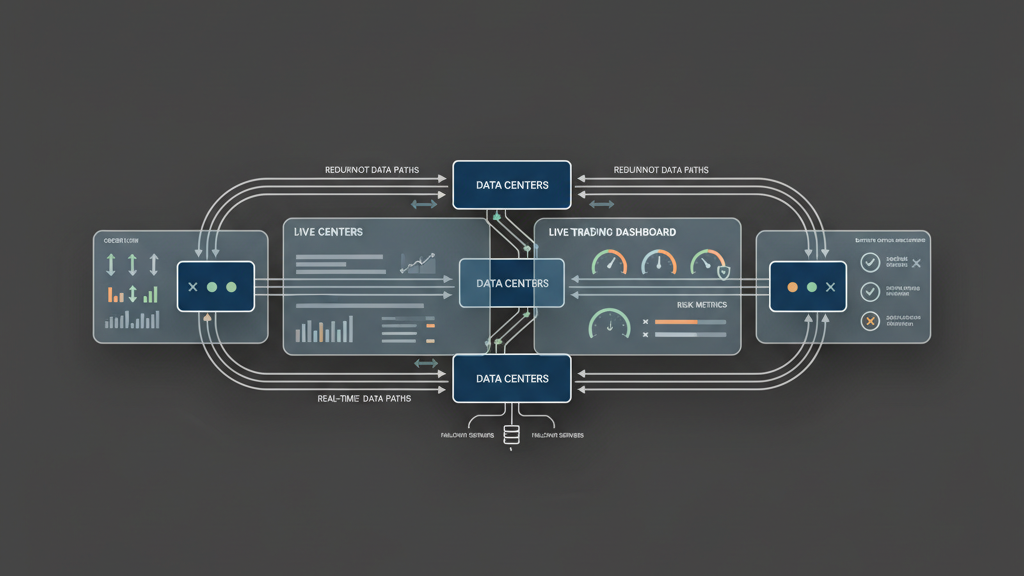
Achieving high availability in algo trading systems requires a multi-layered approach to redundancy across all critical components. This includes duplicating hardware, networking, power supplies, and even entire data centers. Implementing active-passive or active-active failover mechanisms ensures that if a primary component or location fails, a secondary one can seamlessly take over operations with minimal interruption. Load balancing and geographic distribution of servers further enhance resilience, distributing workload and mitigating the impact of localized outages. The goal is to eliminate single points of failure throughout the trading architecture, providing continuous service even when individual elements encounter problems. Such architectural considerations are paramount for maintaining execution continuity during unexpected events, forming the backbone of any effective disaster recovery strategy.
- Deploy redundant hardware for servers, network devices, and storage.
- Utilize multiple internet service providers and diverse network paths.
- Implement uninterruptible power supplies (UPS) and backup generators.
- Configure automated failover for critical applications and databases.
- Geographically disperse data centers to protect against regional disasters.
- Use load balancing to distribute traffic and prevent overloading single points.
Data Integrity and Real-Time Replication Strategies
Maintaining data integrity and ensuring its immediate availability are critical for disaster recovery in algo trading. This involves more than just periodic backups; it requires real-time data replication and robust recovery protocols. Strategies often include synchronous or asynchronous replication of order books, trade logs, market data feeds, and strategy parameters across redundant storage systems. Database clustering and transaction logging ensure that data remains consistent and complete, even during a failover event. Implementing robust checksums and validation processes helps detect and prevent data corruption. The ability to restore to a very recent point in time, with minimal data loss, is crucial for preserving the state of live trading operations. Effective data management underpins the entire continuity plan, safeguarding valuable trading information.
- Implement real-time replication for all mission-critical trading data.
- Utilize database clustering for high availability and data consistency.
- Maintain immutable backups of historical market data and trade logs.
- Regularly verify data integrity using automated checksums.
- Define specific Recovery Point Objectives (RPO) for different data types.
- Develop rapid data restoration procedures for various scenarios.
Developing Robust Trading System Failover Protocols
Beyond infrastructure, the core algo trading systems themselves require explicit failover protocols. This involves designing scripts and applications that can gracefully transition between primary and secondary environments without interruption to live trading. A well-defined failover protocol specifies how open positions are managed, how new orders are routed, and how market data subscriptions are re-established. It also dictates how strategy state is transferred and synchronized, ensuring algorithms pick up exactly where they left off. Automated failover triggers, based on real-time monitoring of system health and connectivity, minimize human intervention and reaction time during an incident. Developing and testing these protocols is a complex but vital task, as it directly impacts the ability to maintain continuous execution, forming a cornerstone of comprehensive disaster recovery planning.
- Automate failover procedures for trading algorithms and order management systems.
- Ensure seamless transfer of open positions and active orders during failover.
- Implement intelligent routing for market data feeds and order submissions.
- Design strategies to re-synchronize state across primary and secondary systems.
- Define clear triggers and thresholds for automated system switching.
- Establish robust communication channels with brokers during failover events.
Testing, Monitoring, and Continuous Improvement
A disaster recovery plan is only as effective as its last test. Regular, realistic testing of all failover mechanisms, data recovery procedures, and communication protocols is essential. This includes conducting drills that simulate various disaster scenarios, from minor component failures to complete data center outages. Monitoring tools must provide real-time insights into system health, performance, and the status of all redundant components, enabling proactive identification of potential issues. Automated alerts ensure that relevant teams are immediately notified of deviations. Feedback from these tests and ongoing monitoring drives continuous improvement of the plan, identifying weaknesses and refining procedures. A living disaster recovery strategy adapts to evolving threats and system changes, ensuring long-term resilience for seamless live trading execution continuity.
- Conduct regular, documented disaster recovery drills and simulations.
- Implement comprehensive real-time monitoring for all system components.
- Set up automated alerting for critical performance deviations and failures.
- Analyze test results to identify and address plan weaknesses.
- Review and update the disaster recovery plan annually or after significant changes.
- Train all relevant personnel on their roles and responsibilities during an incident.
Personnel, Communication, and Vendor Engagement
Effective disaster recovery involves more than just technology; it requires a well-prepared team and strong vendor partnerships. Clearly defined roles and responsibilities for all personnel involved in managing and executing the disaster recovery plan are crucial. This includes designated crisis management teams, technical support staff, and communication leads. Establishing clear communication protocols for internal teams, external stakeholders like brokers, and market data providers ensures coordinated responses during an incident. Engaging with technology vendors, cloud providers, and brokerage firms to understand their own business continuity plans is equally important. Their resilience directly impacts your ability to maintain operations. A collaborative approach, supported by regular training and clear lines of communication, solidifies the overall strategy for continuous trading operations.
- Assign clear roles and responsibilities for all disaster recovery team members.
- Establish defined internal and external communication protocols for incidents.
- Regularly train staff on disaster recovery procedures and tools.
- Review business continuity plans with all critical vendors and service providers.
- Maintain up-to-date contact information for all key personnel and third parties.
- Develop an incident response playbook for various failure scenarios.