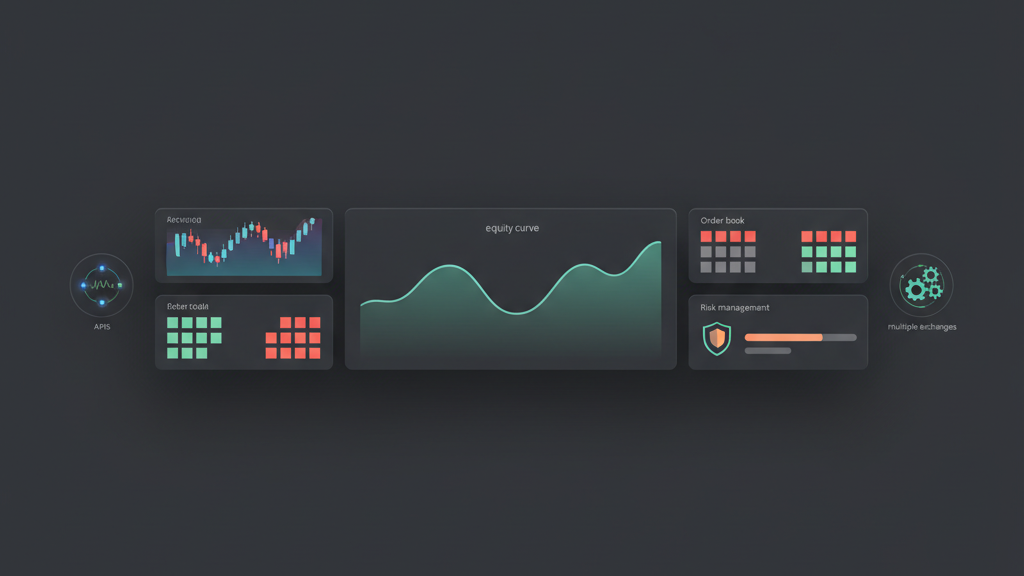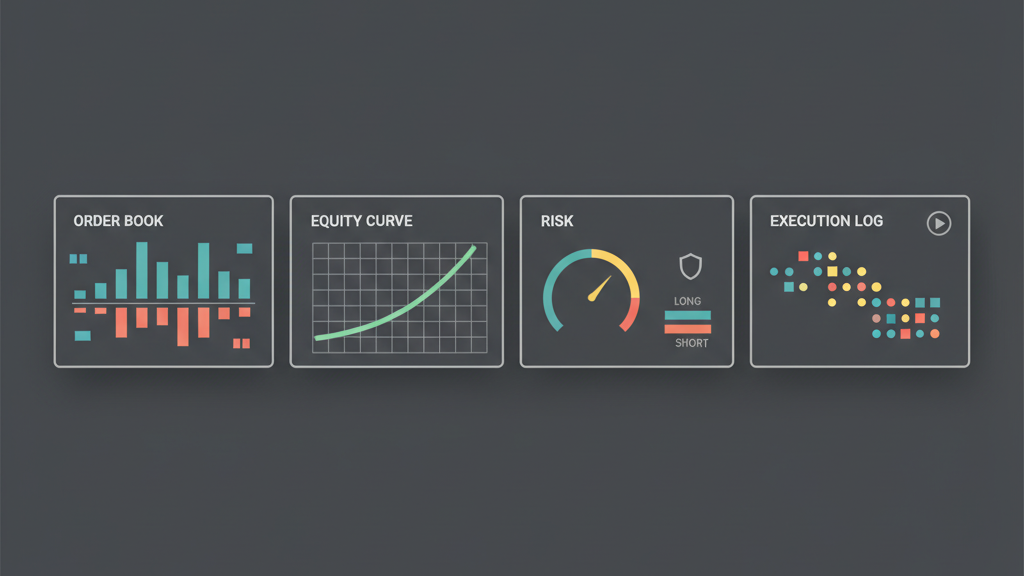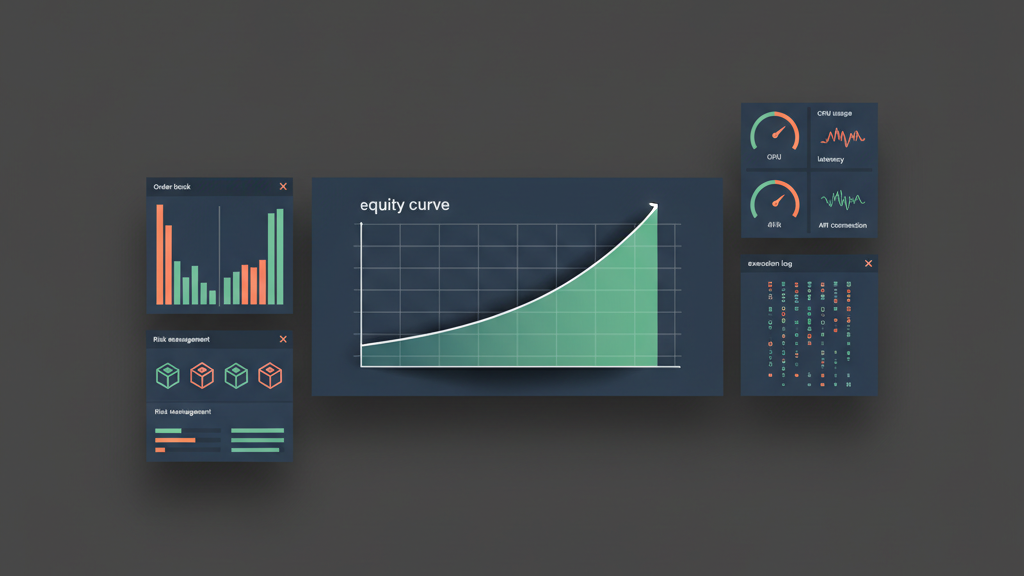
Building a successful algorithmic trading system isn’t just about crafting a profitable strategy; it’s about engineering a resilient, high-performance machine capable of operating autonomously in real-time markets. An end-to-end algorithmic trading system design for live deployment requires meticulous attention to every stage, from low-latency data acquisition and robust backtesting to sophisticated execution management, comprehensive risk controls, and continuous monitoring. This isn’t a theoretical exercise; it demands practical decisions on infrastructure, error handling, and operational workflows that stand up to the unpredictable nature of live trading environments. Overlooking any single component can lead to significant financial exposure or missed opportunities, emphasizing the need for a holistic and rigorously tested design.
Architecting Data Ingestion and Preprocessing for Live Trading
The foundation of any robust end-to-end algorithmic trading system begins with reliable, low-latency data ingestion. Accessing clean, accurate market data in real-time is non-negotiable for effective strategy execution. This involves connecting to various exchange APIs or data vendors, managing different data formats, and handling the sheer volume and velocity of tick data, order book updates, and news feeds. Practical challenges include API rate limits, transient connection drops, and ensuring data integrity across multiple symbols. A well-designed system will implement robust error handling for data feeds, automatic re-connection logic, and checksums or sequence number validations to catch corrupted or out-of-order packets. Preprocessing steps are also crucial, such as timestamp normalization, handling corporate actions (splits, dividends), and aggregating ticks into bars, all while maintaining strict latency budgets to avoid stale information.
- Implement redundant data feeds from multiple sources to ensure high availability.
- Develop robust error detection and recovery mechanisms for data stream interruptions.
- Normalize timestamps to a common epoch, preferably UTC, to prevent synchronization issues.
- Create a persistent storage layer for historical data for backtesting and analysis.
Strategy Development and Backtesting Rigor
Once data pipelines are stable, the next phase in an end-to-end algorithmic trading system design involves developing and rigorously backtesting the trading strategy. This process demands more than just running code against historical data; it requires deep understanding of market microstructure, slippage, and transaction costs. A common pitfall is overfitting, where a strategy performs exceptionally well on historical data but fails dramatically in live conditions. To mitigate this, developers must employ techniques like walk-forward optimization, out-of-sample testing, and Monte Carlo simulations. Accurately modeling execution logic, including factors like limit order placement, market impact, and partial fills, is paramount. Ignoring these real-world constraints during backtesting leads to inflated performance expectations that will not materialize during live deployment.
Execution Management System (EMS) Design
The Execution Management System (EMS) is the bridge between a strategy’s signals and the actual market. Designing an efficient EMS for live deployment means minimizing latency from signal generation to order placement, managing complex order types, and gracefully handling exchange-specific API eccentricities. This component must incorporate smart order routing logic to achieve best execution, considering factors like liquidity, price, and fees across multiple venues. Critically, the EMS needs robust error handling for rejected orders, API failures, and network outages. Implementing state machines for order lifecycle management, tracking partial fills, and managing outstanding orders are complex but essential for maintaining an accurate view of market exposure and preventing unintended positions.
- Implement intelligent order routing to optimize for price, latency, and liquidity.
- Design order state machines to track lifecycle events: pending, filled, partial, canceled, rejected.
- Build re-try logic for transient API errors and configure rate limit adherence.
- Prioritize low-latency communication with exchange gateways using optimized network protocols.
Comprehensive Risk Management and Position Sizing
Risk management is not an afterthought; it’s an intrinsic part of the end-to-end algorithmic trading system design. Live deployment without robust, real-time risk controls is irresponsible. This involves defining and enforcing hard limits on maximum daily loss, per-trade loss, exposure per instrument, and overall portfolio drawdown. Dynamic position sizing, adjusting trade size based on market volatility, account equity, and perceived edge, is also a critical component. Implementing circuit breakers that automatically halt trading or close positions under extreme market conditions or system anomalies protects capital. These mechanisms need to operate independently, often on a separate thread or service, to ensure they can act even if the primary trading logic experiences issues, providing a vital safety net against black swan events or coding errors.
Monitoring, Logging, and Alerting Infrastructure
Operating an algorithmic trading system in live deployment without comprehensive monitoring, logging, and alerting is like flying blind. A sophisticated monitoring infrastructure continuously tracks critical metrics: system health (CPU, memory, network), strategy performance (realized P&L, open P&L, fill rates), connectivity status to exchanges and data feeds, and adherence to risk limits. Detailed, granular logging is essential for post-mortem analysis, providing an immutable record of every decision, order, and market event. Automated alerting, configured with intelligent thresholds, immediately notifies operators via multiple channels (SMS, email, Slack) when anomalies occur, such as a disconnected feed, excessive slippage, or a breach of a risk threshold, enabling rapid intervention before minor issues escalate into significant problems.
Deployment, Resilience, and Post-Deployment Iteration
The final stage of an end-to-end algorithmic trading system design is deploying it to a production environment and ensuring its continuous operation. This involves selecting appropriate infrastructure, whether bare-metal servers for ultra-low latency or cloud-based solutions for scalability and redundancy. Implementing robust failover mechanisms, such as active-passive setups or hot-standby systems, is critical to maintain uptime and minimize disruption in case of hardware or software failure. After deployment, the work isn’t over; continuous iteration based on live performance, market changes, and observed inefficiencies is vital. This requires a feedback loop involving post-trade analysis, performance attribution, and regular strategy recalibration. A well-designed deployment pipeline with automated testing and rollback capabilities facilitates safe, incremental updates to the system without incurring downtime or introducing new risks.
- Utilize containerization (e.g., Docker) for consistent deployment across environments.
- Implement CI/CD pipelines to automate testing, build, and deployment processes.
- Configure redundant infrastructure with automatic failover for high availability.
- Establish a routine for post-trade analysis and performance attribution to drive improvements.