Leveraging technical indicators in automated trading often moves beyond simple crossover strategies. RSI divergence indicator signals, when properly identified and integrated, can offer a more nuanced approach to generating entry rules. This method relies on the premise that price and momentum are moving in opposite directions, suggesting a potential trend reversal or continuation. Translating these visual patterns into robust, executable logic for an automated system requires a deep understanding of market mechanics, data processing, and the inherent challenges of real-time execution. We’ll delve into how to programmatically detect these divergences and integrate them into a reliable trading framework, focusing on practical implementation rather than theoretical ideals.
Programmatic Detection of RSI Divergence
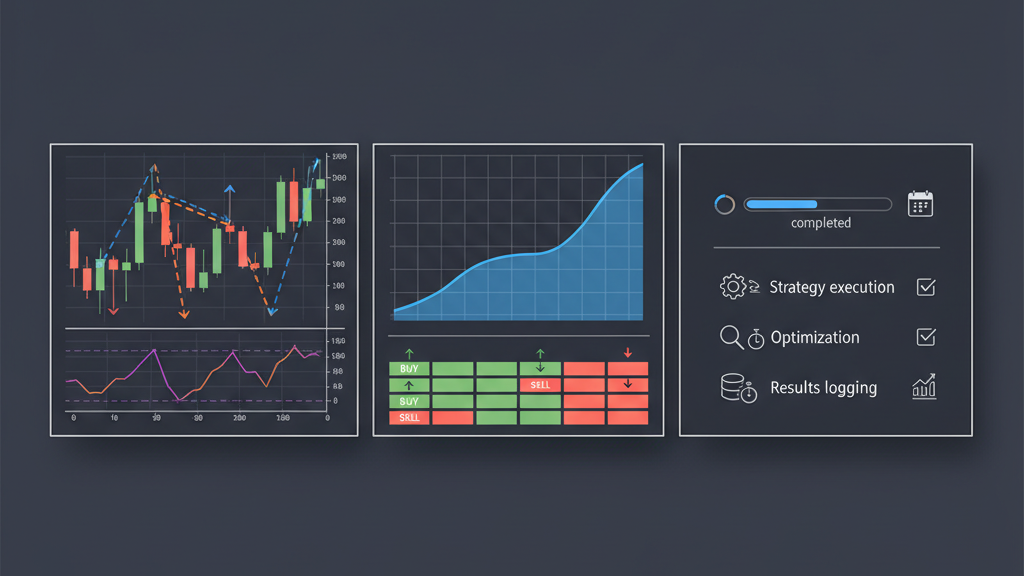
Detecting RSI divergence programmatically is more complex than a quick glance at a chart might suggest. A ‘classic’ bullish divergence, for instance, requires identifying a lower low in price while the Relative Strength Index (RSI) makes a higher low over the same period. For hidden bullish divergence, it’s a higher low in price with a lower low in RSI, hinting at trend continuation. The core challenge is defining the ‘same period’ and handling local extremum detection in a robust, non-repainting manner. We typically implement a swing high/low detection algorithm on both price and the RSI, then compare the swing points. This often involves looking back a defined number of bars to identify significant peaks and troughs, filtering out minor fluctuations that could generate false signals. An overly aggressive extremum detection can lead to premature signals, while a too conservative approach might miss valid opportunities or delay entry, impacting potential returns.
- Define clear lookback periods for identifying price and RSI swing points.
- Implement a robust extremum detection algorithm for both price action and the indicator.
- Distinguish between ‘classic’ (reversal) and ‘hidden’ (continuation) divergences.
- Address potential repainting issues if using adaptive lookback windows without proper care.
Translating Divergence into Actionable Entry Rules
Once a potential RSI divergence indicator signal is detected, the next step is to translate it into a concrete, actionable entry rule for an automated system. A raw divergence signal is rarely sufficient on its own. It often requires confirmation from other indicators, price action, or volume. For example, a bullish divergence might be validated by a price breakout above a resistance level, or a specific candlestick pattern forming concurrently. Similarly, setting a clear entry trigger, such as placing a limit order at a specific level after confirmation or using a market order upon a defined breakout, is crucial. Without precise entry logic, the system may enter trades prematurely on false signals or miss optimal entry points, leading to sub-optimal performance. We often build a rule engine that combines the divergence detection with additional filters, ensuring that the signal aligns with broader market context or specific volatility conditions before an order is placed.
Backtesting Considerations for Divergence Strategies
Backtesting strategies based on RSI divergence indicator signals demands rigorous attention to data quality and methodology. One common pitfall is ‘look-ahead bias,’ where future data is inadvertently used to make past decisions, leading to overly optimistic results. Ensuring that your divergence detection logic only uses data available up to the current bar is paramount. Furthermore, the choice of historical data — tick, minute, or daily — significantly impacts results. Divergences on lower timeframes are more frequent but often less reliable, while higher timeframes offer stronger signals but fewer opportunities. Realistic slippage and transaction costs must be modeled, as divergence signals can sometimes be time-sensitive, and a small delay in execution can erode profitability. We simulate order types, such as market or limit orders, and factor in typical spread and commission costs, which is critical for understanding true strategy viability.
- Use high-quality, non-adjusted historical data to prevent look-ahead bias.
- Model realistic slippage and transaction costs specific to the chosen asset class.
- Test across various timeframes and market conditions to assess robustness.
- Evaluate the impact of different RSI lookback periods and divergence confirmation criteria.
Execution Challenges and Latency Sensitivity
Automating entry rules based on RSI divergence indicator signals presents several execution challenges, particularly regarding latency. Divergence signals, especially on shorter timeframes, can be fleeting. A detected divergence might resolve or invalidate within a few bars, making rapid order placement critical. High-latency execution can result in significant slippage, where the executed price differs substantially from the intended entry price, thus eroding potential profits. For this reason, optimizing the execution path, minimizing network hops, and ensuring direct market access are often necessary. Furthermore, handling partial fills or rejected orders gracefully is essential; a system must be able to re-evaluate the signal or adjust its order strategy if the initial attempt fails. The actual market liquidity at the moment of the signal is also a key factor, as even a perfect signal can be useless if there aren’t enough willing participants to take the other side of your trade at a reasonable price.
Integrating Robust Risk Management Logic
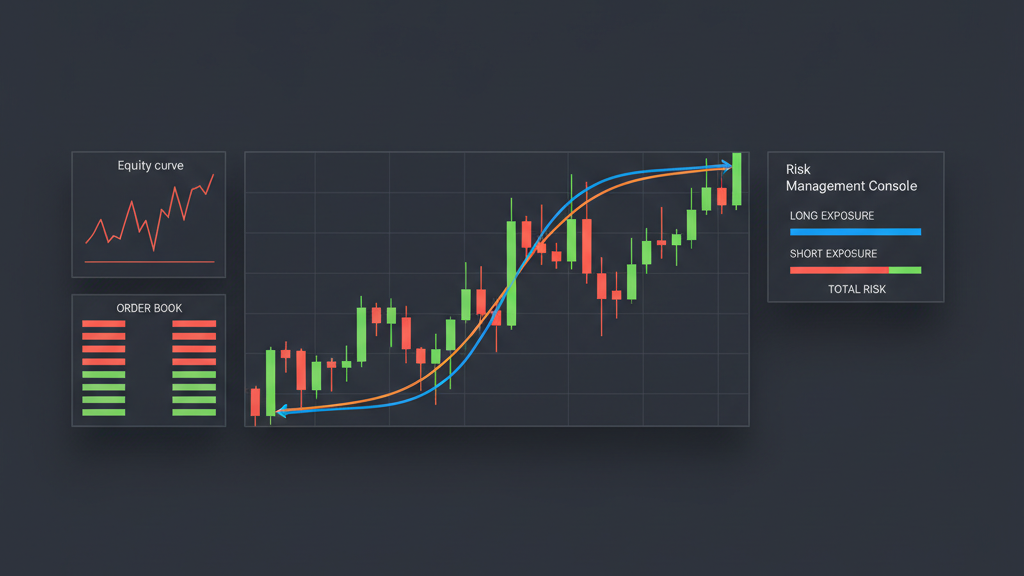
Even with well-defined RSI divergence indicator signals and efficient execution, no strategy is infallible. Integrating robust risk management logic is non-negotiable. This includes setting clear stop-loss levels, which can be static (e.g., a percentage loss from entry) or dynamic (e.g., based on recent volatility or previous swing points). Position sizing must also be managed algorithmically, often linked to account equity and the volatility of the asset being traded, ensuring that no single trade exposes the account to excessive risk. We implement circuit breakers that pause or halt trading if specific drawdown thresholds are breached, or if the number of consecutive losses exceeds a predefined limit. Divergence strategies, like any mean-reversion or trend-following approach, can experience prolonged periods of underperformance, and without strict risk controls, a few bad trades can decimate an entire account. It’s about preserving capital above all else.
Platform Scripting and API Considerations
Implementing automated entry rules leveraging RSI divergence indicator signals often requires deep engagement with platform-specific scripting languages and API protocols. Whether you are using Python with a broker’s API, C# for a custom solution, or a proprietary DSL on a platform like TradeStation or NinjaTrader, understanding the nuances is key. This includes managing API rate limits, handling connection dropouts, and processing real-time data feeds without introducing latency. State management is critical; the system needs to maintain historical price and RSI data to detect divergence across bars and track open positions. Error handling for order placement, modification, and cancellation must be robust, often involving retries or fallback mechanisms. A common mistake is assuming perfect API reliability; building in a robust error handling framework for network issues or unexpected API responses is vital for continuous operation and avoiding orphaned orders.