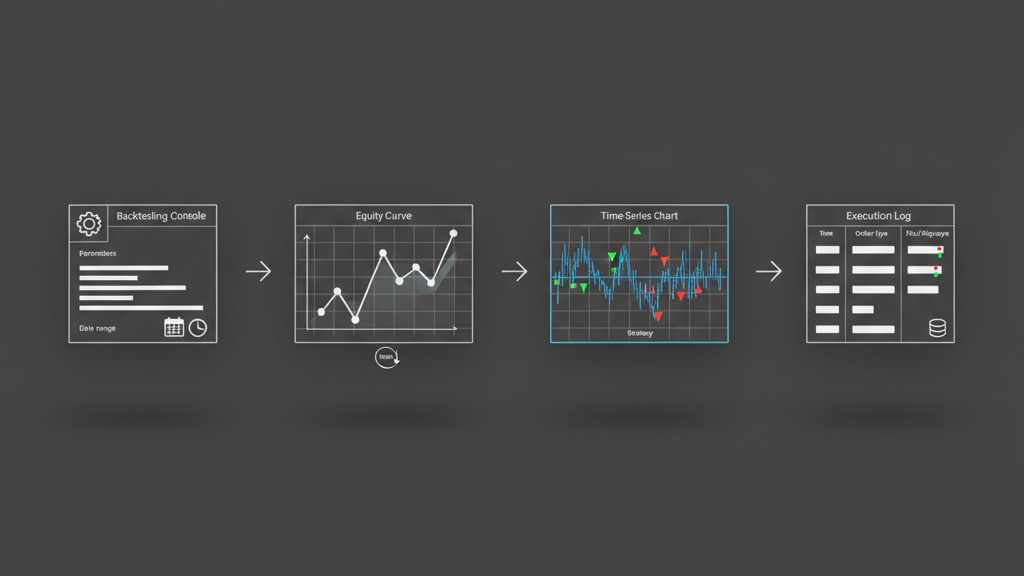
Developing profitable intraday trading strategies is a challenging endeavor. The fast-paced, highly dynamic nature of market microstructure means that conditions can change rapidly, often invalidating strategy parameters tuned on a static historical period. Traditional backtesting, which uses a single, fixed dataset to optimize and test, frequently leads to overfitting, where a strategy appears robust in historical data but fails spectacularly in live trading. This is particularly true for high-frequency or short-term algorithms that exploit fleeting market inefficiencies. To combat this, a more rigorous and adaptive approach is required: backtesting methodology for intraday strategies with walk forward analysis. This method simulates continuous learning and adaptation, providing a more realistic assessment of a strategy’s long-term viability and robustness in evolving market environments.
The Necessity of Walk Forward for Intraday Strategies
Intraday trading operates in a domain where market structure, participant behavior, and even algorithmic dominance can shift dramatically within hours or days. A strategy optimized on a year of static data might perform exceptionally well for the first six months, then completely fall apart as market volatility changes or new liquidity providers enter the scene. This fragility is a core reason why traditional, single-pass backtesting often proves inadequate for intraday systems. Walk forward analysis addresses this by forcing the strategy to adapt and prove its mettle across multiple, unseen market regimes, simulating the continuous optimization and deployment cycle required for real-world trading. It’s not enough for a strategy to work once; it must demonstrate consistent adaptability. Without this iterative validation, the likelihood of deploying an overfitted algorithm with a short shelf-life significantly increases, leading to potential capital erosion and system instability when facing live market stress.
Data Requirements and Preprocessing for Robust Intraday Backtesting
For intraday strategies, the quality and granularity of historical data are paramount, more so than for longer-term approaches. Tick-level or minute-bar data is often essential, and it must be meticulously cleaned and validated. Common issues include data gaps, misaligned timestamps across different symbols, corporate action discrepancies, and incorrect bid-ask spreads, all of which can severely distort backtest results. Preprocessing involves not just cleaning but also careful synchronization of multiple instruments and handling time zone conversions, especially for global markets. Any deficiency in data quality at this stage will cascade through the entire backtesting methodology for intraday strategies with walk forward analysis, leading to unreliable optimizations and misleading performance metrics. Real-world execution is contingent on accurate market representation, which starts with perfect data.
- Sourcing reliable tick-level or M1 data, ideally from multiple vendors for cross-verification.
- Handling survivorship bias and look-ahead bias meticulously during data preparation.
- Normalizing timestamps and managing time zone conversions for global or multi-exchange datasets.
- Imputing missing data responsibly (e.g., last-known value, interpolation) or explicitly excluding affected periods to avoid distortions.
Dissecting the Walk Forward Methodology
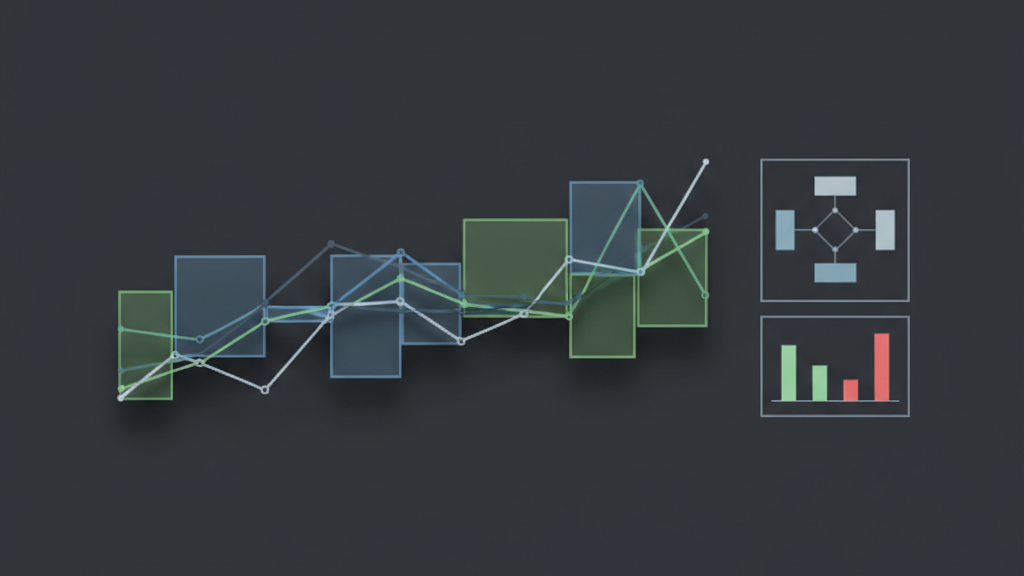
At its core, walk forward analysis is an iterative process designed to simulate the real-world cycle of strategy development and deployment. It begins by dividing the historical dataset into sequential ‘training’ (in-sample) and ‘testing’ (out-of-sample) windows. Within each in-sample window, the strategy’s parameters are optimized to achieve a predefined objective function, such as maximizing Sharpe ratio or profit factor. These optimized parameters are then applied to the *subsequent*, never-before-seen out-of-sample window, and the strategy’s performance is recorded. Once this is complete, both the training and testing windows are shifted forward by a predefined step size, and the entire process repeats. This iterative mechanism ensures that the strategy is continuously validated on fresh data, preventing it from overfitting to any single historical period and making it a critical component of any sound backtesting methodology for intraday strategies with walk forward analysis.
Practical Implementation of Walk Forward Backtests
Implementing a walk forward backtest requires careful consideration of window lengths, step sizes, and the optimization process itself. For intraday strategies, the in-sample window might span several months to capture sufficient market behavior for robust parameter estimation, while the out-of-sample window could be as short as a few days or weeks to reflect immediate market conditions. The choice of optimization algorithm is also key; simple grid searches might suffice for a few parameters, but more complex genetic algorithms or Bayesian optimization techniques are often needed for higher-dimensional parameter spaces. Integrating this rolling optimization and testing logic into your backtesting engine demands precise scripting to prevent data leakage and ensure consistent evaluation across all windows. This meticulous setup forms the backbone of a reliable backtesting methodology for intraday strategies with walk forward analysis, providing confidence in the adaptiveness of the trading system.
- Determining optimal in-sample window durations (e.g., 3-6 months) and shorter out-of-sample windows (e.g., 1-4 weeks) suitable for intraday dynamics.
- Selecting an appropriate objective function for parameter optimization within each in-sample window (e.g., Sharpe ratio, profit factor, Calmar ratio).
- Managing computational resources effectively for numerous, computationally intensive optimizations across sequential windows.
- Rigorous scripting of the rolling window logic within your backtesting platform, ensuring strict separation between in-sample and out-of-sample data.
Evaluating Robustness and Performance Across Walk Forward Segments
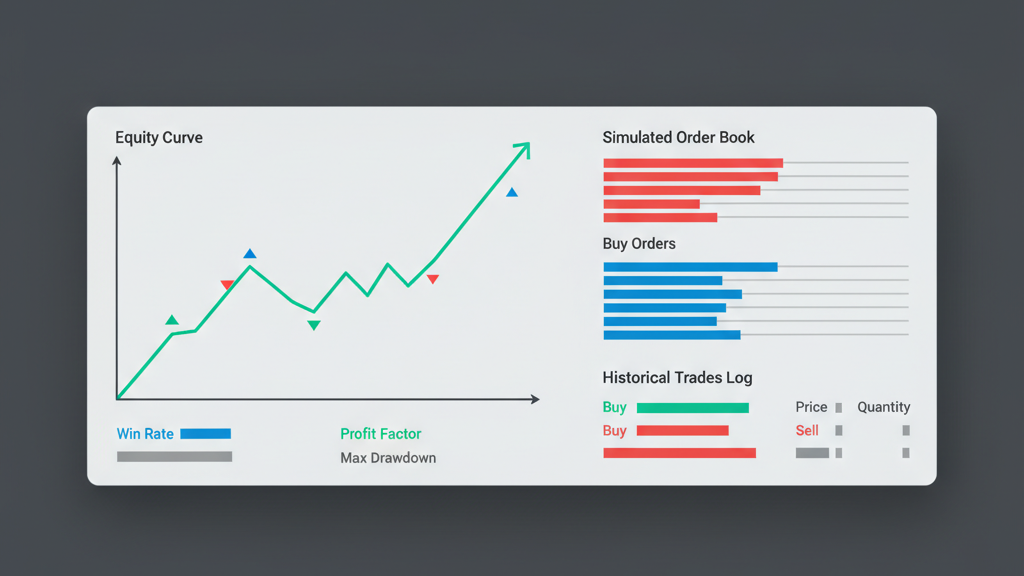
After completing the walk forward backtest, the critical phase of performance evaluation begins. This goes beyond merely looking at the cumulative equity curve. Instead, it involves a detailed analysis of the individual out-of-sample segments. You need to assess the consistency of performance metrics like Sharpe ratio, maximum drawdown, and profit factor across *each* out-of-sample period. A truly robust strategy will exhibit relatively stable performance, even if not spectacular, across diverse market conditions encountered in these segments. High variability or periods of significant losses in specific out-of-sample windows signal fragility or a lack of adaptability. Furthermore, analyzing the stability and range of optimized parameters over time can reveal parameter drift, which suggests the strategy might be unstable or highly sensitive to regime changes. This holistic evaluation is a cornerstone of the backtesting methodology for intraday strategies with walk forward analysis, distinguishing truly resilient algorithms from those that merely got lucky on historical data.
Common Pitfalls and Real-World Constraints in Walk Forward Analysis
Even with walk forward analysis, several pitfalls can undermine the validity of your results. Parameter drift, where the optimal parameters vary wildly between successive optimization windows, is a red flag indicating potential strategy instability. Transaction costs, including commissions, exchange fees, and especially slippage, are often underestimated during backtesting but can significantly erode profits for high-frequency intraday strategies. Execution latency, partial fills, and API rate limits are real-world constraints that can degrade live performance compared to idealized backtest results. There’s also the risk of ‘meta-overfitting,’ where the walk forward parameters themselves (e.g., window lengths, step sizes) are optimized, leading to an overly specific and potentially fragile framework. A sound backtesting methodology for intraday strategies with walk forward analysis must proactively account for these practical constraints and biases to bridge the gap between simulation and live trading.
- Accurately modeling transaction costs and slippage based on real brokerage fees and observed market depth impact.
- Accounting for execution latency and the practical challenges of partial fills, especially for larger or more aggressive orders.
- Vigilantly avoiding ‘meta-overfitting’ by tuning the walk forward parameters (window sizes, optimization objectives).
- Recognizing the inherent limitations of historical data for perfectly predicting future market microstructure changes and unforeseen events.
From Walk Forward to Live Deployment and Continuous Monitoring
A successful walk forward backtest provides a more grounded expectation of how an intraday strategy might perform in a live environment. It also lays the groundwork for a continuous optimization framework in production. The transition to live trading involves mirroring the walk forward process: periodically re-optimizing strategy parameters based on recent market data and deploying the newly optimized parameters. This demands robust execution automation tools capable of handling parameter updates without interrupting live trades. Continuous monitoring is crucial, not just for P&L but also for tracking key metrics like maximum drawdown, Sharpe ratio, and most importantly, detecting parameter drift. Early detection of performance degradation or parameter instability allows for timely intervention, such as adjusting the strategy, scaling back exposure, or even deactivating it, ensuring that the backtesting methodology for intraday strategies with walk forward analysis extends into a proactive risk management framework for live operations.