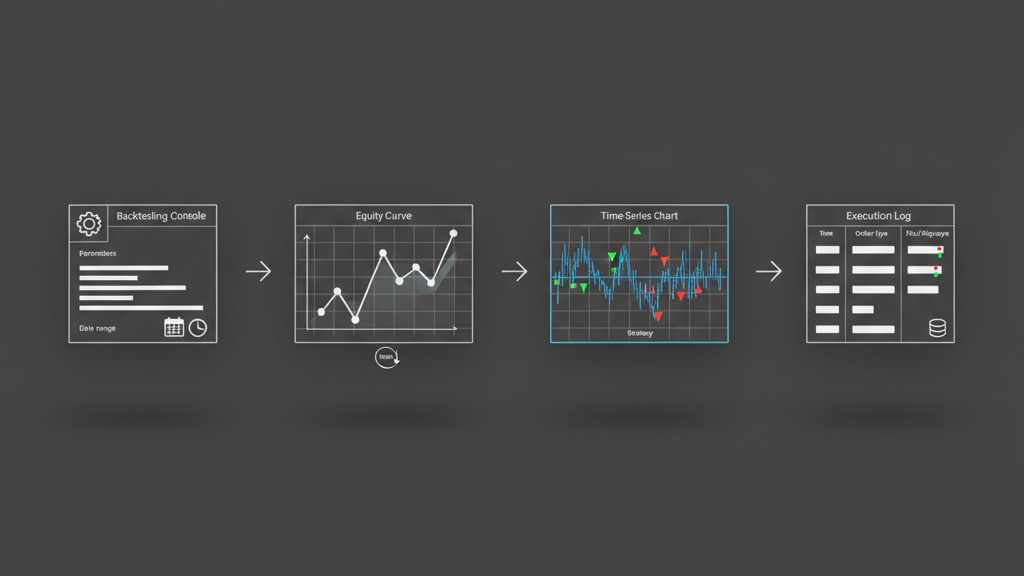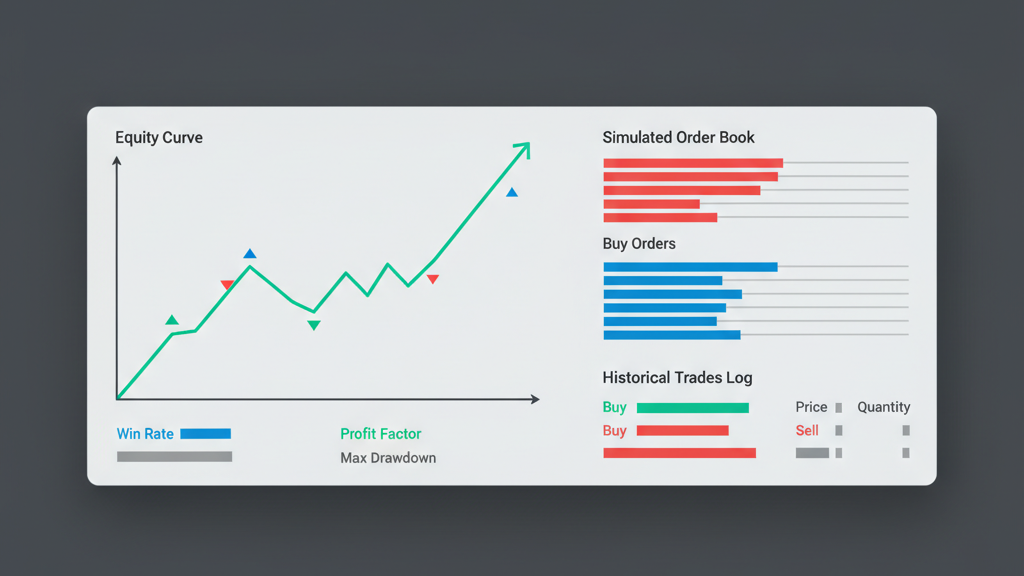
Developing and validating intraday algorithmic trading strategies presents a unique set of challenges compared to longer-term approaches. The high frequency of trades, tight profit margins, and rapid market dynamics demand a backtesting methodology that is exceptionally rigorous and brutally honest about potential pitfalls. A simple historical replay often falls short, failing to account for market microstructure, execution realities, and the insidious creep of overfitting. This article outlines a comprehensive framework for strict validation of intraday strategies, covering data fidelity, execution realism, and advanced statistical techniques necessary to build truly robust systems.
The Imperative of High-Quality Intraday Data
The foundation of any reliable backtest for intraday strategies lies in the quality and granularity of your historical data. Unlike daily or weekly strategies, intraday systems require tick-level data, encompassing every trade and quote update. This often extends to Level 2 order book data, providing depth and spread information crucial for realistic execution simulation and understanding market microstructure. Inaccurate or incomplete data—missing ticks, bad prints, or improperly handled corporate actions like splits or dividends—can fundamentally distort performance metrics and lead to misleading results. Cleaning this data is a non-trivial process, often involving custom scripts to identify and correct outliers, fill gaps intelligently, and synchronize data streams across multiple exchanges or asset classes to ensure a coherent market view. Using lower frequency data, like 1-minute bars, without proper aggregation and volume weighting, can entirely mask the dynamics a true intraday strategy aims to exploit, resulting in an overly optimistic backtest that collapses under real-world conditions.
Simulating Realistic Execution and Market Impact
A common failing in intraday backtesting is an oversimplified execution model. Real-world execution involves latency, slippage, partial fills, and market impact, all of which can significantly erode the edge of a high-frequency strategy. Your backtesting engine must incorporate sophisticated slippage models, moving beyond fixed percentages to dynamic models based on historical bid-ask spread, order book depth, and estimated market volatility at the time of execution. Latency, from signal generation to order placement and confirmation, must be realistically estimated and factored into the trade timing. Accounting for minimum tick sizes, commission structures, exchange fees, and even the potential for order rejection or timeout due to API rate limits is critical. Furthermore, for strategies that place larger orders, market impact – the effect of your own trade on the price – needs to be estimated and simulated, as it can turn a profitable backtest into a losing live strategy by moving prices against you during execution.
- Implement dynamic slippage models based on real-time market conditions.
- Estimate and factor in end-to-end execution latency from signal to fill.
- Simulate partial fills, order rejections, and minimum tick constraints.
- Incorporate realistic commission structures and exchange fees.
- Model market impact for larger orders to prevent self-inflicted price movements.
Beyond Basic Backtesting: Advanced Validation Techniques
Strict validation for intraday strategies goes far beyond a simple single-pass backtest. To truly assess robustness and mitigate overfitting, techniques like walk-forward analysis are essential. This involves segmenting your historical data into rolling in-sample (optimization) and out-of-sample (validation) periods, iteratively optimizing parameters on the in-sample data, and then testing them on the subsequent out-of-sample segment. This mimics the reality of live trading where parameters might be periodically re-optimized. Another powerful technique is Monte Carlo simulation, not just for price paths but for evaluating parameter sensitivity and the strategy’s robustness across varied market noise or minor parameter perturbations. Cross-validation, common in machine learning, can also be adapted to time-series data to ensure that the strategy generalizes well across different market regimes, rather than being tailored to a specific historical period. These methods help reveal if your strategy’s edge is genuine or merely an artifact of historical data selection.
Avoiding Look-Ahead Bias and Data Snooping
Look-ahead bias and data snooping are silent killers of backtested strategies, especially in the intraday domain where data dependencies can be subtle. Look-ahead bias occurs when future information accidentally leaks into the strategy’s decision-making process during the backtest – for example, using a daily close price when only intraday data up to that point should be available, or calculating an indicator based on data that wouldn’t be known until after the trade decision. Data snooping, on the other hand, is the result of repeatedly testing and optimizing a strategy on the same historical data until a profitable configuration is found, which is often purely coincidental. To combat this, strict separation of datasets is paramount: a training set, a validation set, and a final, untouched test set. Any strategy refinement or parameter optimization should only occur on the training and validation sets, with the final evaluation performed only once on the unseen test set. This discipline is crucial for generating an unbiased estimate of real-world performance.
Performance Metrics and Risk Assessment for Intraday
While net profit and Sharpe ratio are fundamental, a strict backtesting methodology for intraday strategies demands a broader suite of performance and risk metrics. Beyond maximum drawdown and overall equity curve shape, it’s critical to analyze metrics specific to high-frequency trading. These include average holding period, trade frequency, win/loss ratio, average profit per trade, average loss per trade, and the profit factor. Robustness checks should extend to evaluating performance during different market regimes (e.g., high volatility, low volatility, trending, ranging markets) and specific times of day. Furthermore, stress testing the strategy against historical shocks or simulated extreme events, such as flash crashes or significant news announcements, provides insight into its resilience. Considering Value-at-Risk (VaR) and Conditional VaR (CVaR) at the intraday level, accounting for overnight hold risks (if applicable), helps quantify potential capital exposure under adverse scenarios, moving beyond simple P&L to a comprehensive risk profile.
- Analyze average holding period and trade frequency for operational realism.
- Evaluate profit factor, win/loss ratio, and average profit/loss per trade.
- Assess performance across various market regimes and intraday time windows.
- Conduct stress tests against historical or simulated extreme market events.
- Calculate intraday VaR and CVaR to quantify capital risk exposure.
Infrastructure, Computational Power, and Reproducibility
Running a strict backtesting methodology for intraday strategies is computationally intensive and requires robust infrastructure. A powerful backtesting engine, capable of handling large volumes of tick data efficiently, is indispensable. This often means leveraging in-memory databases, parallel processing, and distributed computing architectures to run simulations across vast historical datasets within a reasonable timeframe. The backtesting environment itself should be isolated and strictly version-controlled, from the strategy code and parameters to the exact dataset used. Reproducibility is paramount: any team member should be able to run the same backtest and arrive at identical results. Platform scripting details for managing data ingestion, cleaning, and scenario execution become critical here. For example, using a system like Algovantis’s, which provides optimized data handling and a high-performance backtesting engine, allows traders to focus on strategy development and validation, knowing the underlying infrastructure can support the rigorous demands of intraday analysis.