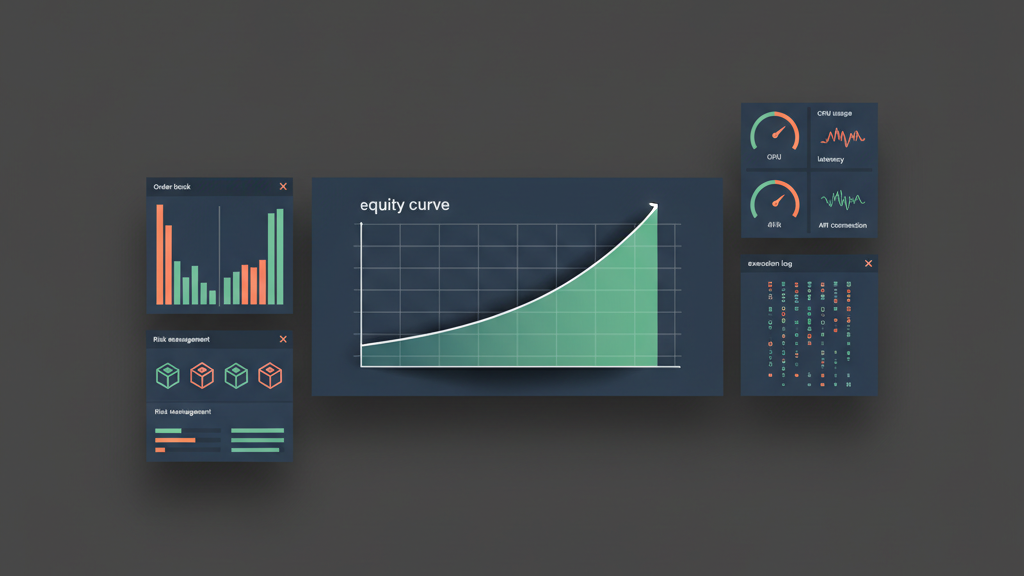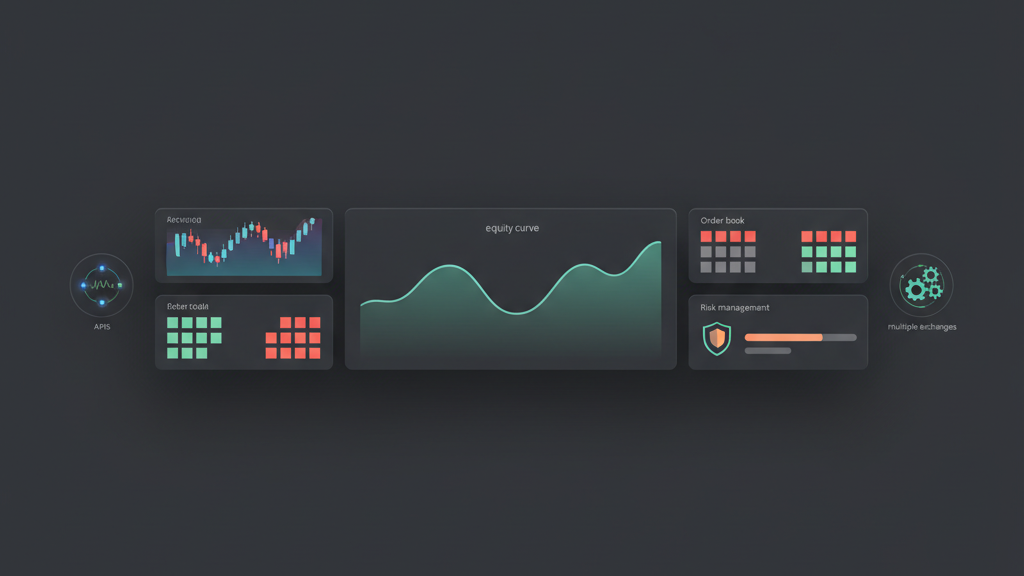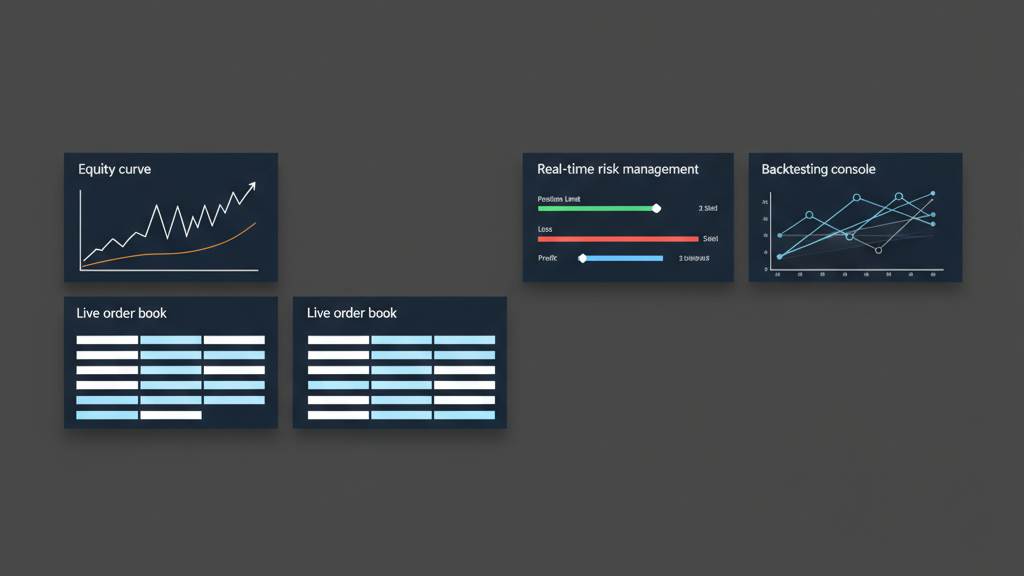
Transitioning an algorithmic trading strategy from an initial research concept to a fully automated, production-grade system is a multi-faceted engineering challenge. It demands more than just a profitable idea; it requires a structured workflow that rigorously validates the strategy, builds resilient infrastructure, and implements robust risk controls. This journey is often iterative, involving constant feedback loops between research, development, and operations, as real-world market dynamics and system limitations constantly test initial assumptions. Our focus here is on navigating this complex path, highlighting the practical stages and critical considerations involved in bringing an algorithmic trading strategy to life with reliability and precision.
Phase 1: Strategy Research and Initial Development
The starting point for any algorithmic trading strategy is a hypothesis, often derived from market observations, academic research, or statistical arbitrage opportunities. This phase involves extensive data sourcing and cleaning, which is critical as the quality of input data directly impacts the validity of subsequent analysis. Traders typically explore various market datasets, including tick data, order book snapshots, fundamental data, and alternative data sources, to identify potential edges. Initial signal generation and basic strategy logic are developed using programming languages like Python or R, focusing on feature engineering and exploring correlations. This often means iterating quickly through different indicators, entry/exit conditions, and position sizing rules, without yet optimizing for performance. The goal here is to establish a foundational set of rules that demonstrate a plausible edge under historical conditions, acknowledging that this initial model is far from production-ready and will require significant refinement.
Phase 2: Robust Backtesting and Validation
Once an initial strategy logic is formulated, rigorous backtesting is essential to evaluate its historical performance and uncover potential weaknesses. This isn’t just running code on past data; it involves constructing a realistic simulation environment that accounts for real-world constraints like transaction costs, slippage, and market impact. Using high-quality historical data, free from survivorship bias or look-ahead errors, is paramount. Advanced backtesting engines allow for event-driven simulations, processing market data tick by tick to accurately reflect order execution and state changes. Performance metrics such as Sharpe ratio, Sortino ratio, max drawdown, and profit factor are closely scrutinized. Often, a walk-forward optimization and testing approach is used, where the strategy is optimized on an in-sample period and then tested on an out-of-sample segment, repeating this process to assess robustness across different market regimes and prevent overfitting. This phase helps identify parameter sensitivity and provides a more realistic expectation of the strategy’s potential performance in live conditions.
- Implement realistic slippage models to account for execution costs beyond simple bid-ask spread.
- Integrate accurate historical transaction costs, including commissions and exchange fees.
- Validate data quality rigorously for survivorship bias and look-ahead errors.
- Perform walk-forward analysis to test parameter stability and prevent overfitting.
- Analyze sensitivity to key parameters and various market conditions to understand robustness.
Phase 3: Pre-Production Tuning and Paper Trading
After a strategy demonstrates promising results in backtesting, the next step involves fine-tuning it for near-live conditions and validating its operational aspects without risking real capital. This pre-production phase often begins with extensive parameter optimization on out-of-sample data, ensuring the strategy isn’t overly dependent on a specific historical period. A critical step here is setting up a paper trading environment, which involves connecting the strategy to a real-time market data feed and a simulated brokerage account. This allows observation of how the strategy behaves with live data latency, API response times, and potential execution gaps that backtesting might not fully capture. Monitoring the strategy’s real-time performance metrics against its backtested expectations helps identify any significant discrepancies. This stage also includes initial latency budgeting, considering the network path to the exchange, API call overhead, and the computational load of the strategy logic itself. Any issues identified here, such as unexpected market data format quirks or API rate limit challenges, provide valuable feedback for further adjustments before a live deployment.
Phase 4: Infrastructure Development and Execution Automation
Moving from a validated strategy to live execution requires robust infrastructure. This involves building or integrating components such as market data handlers for real-time feeds, an Order Management System (OMS) to route and manage orders, and an Execution Management System (EMS) for intelligent order placement and fills. Low-latency considerations are paramount, dictating choices in hardware, network architecture, and programming languages. Designing for fault tolerance is also critical, with redundant systems, failover mechanisms, and comprehensive error handling for API failures, network outages, and unexpected market events. The execution logic must be idempotent, meaning repeated execution of an operation yields the same result, preventing duplicate orders. Comprehensive logging and alerting systems are deployed to monitor the health and performance of the entire system. This phase ensures the strategy can interact reliably with exchanges and brokers, turning theoretical signals into actual trades while minimizing operational risks.
- Design a low-latency architecture for market data ingestion and order routing.
- Implement robust error handling for API failures, network issues, and data anomalies.
- Develop an idempotent order management system to prevent duplicate orders and ensure reliable state.
- Integrate comprehensive logging and monitoring for system health and trade execution.
- Ensure secure and reliable connectivity to brokerage APIs and exchange gateways.
Phase 5: Live Deployment, Monitoring, and Risk Management
The final phase is the controlled live deployment of the algorithmic trading strategy, followed by continuous monitoring and proactive risk management. Deployment often begins with a ‘soft launch,’ allocating minimal capital or running in a ‘shadow mode’ where trades are simulated but not executed, to gain confidence in the live environment. Once fully live, real-time performance metrics like PnL, fill rates, slippage, and latency are continuously tracked against expected benchmarks. Critical risk management logic, often called ‘circuit breakers’ or ‘kill switches,’ is essential. These automated controls are designed to halt trading under predefined adverse conditions, such as exceeding daily loss limits, extreme volatility, or connectivity issues. Position limits, maximum drawdown controls, and exposure limits are dynamically enforced. Post-trade analysis is crucial for identifying execution inefficiencies, analyzing market impact, and feeding insights back into the research phase for iterative improvement. Continuous monitoring of system health, market data integrity, and trade execution status is non-negotiable for long-term operational success.