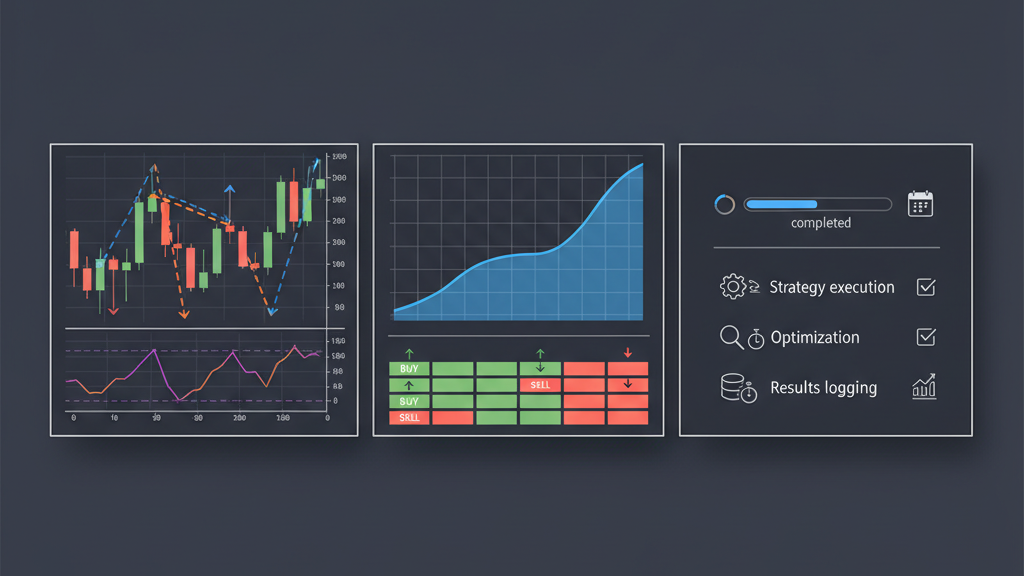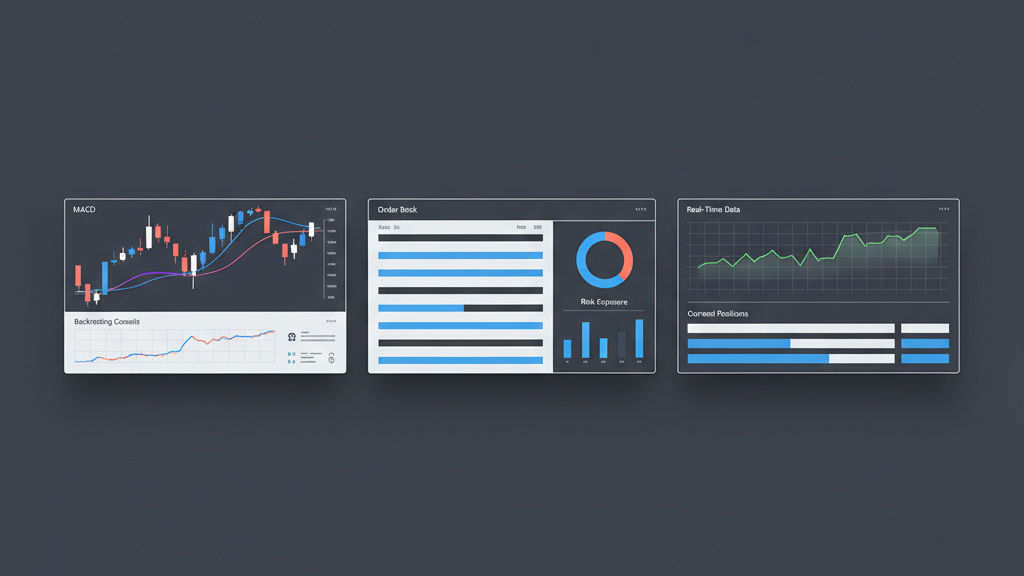
Developing robust intraday momentum trading systems often hinges on precise signal generation. The Moving Average Convergence Divergence (MACD) indicator, with its inherent lag and smoothing, presents a unique challenge for fast-paced environments. Effective MACD signal line indicator tuning for intraday momentum systems is not just about finding ‘magic numbers’; it’s a rigorous process involving deep understanding of market microstructure, meticulous backtesting, and practical execution considerations. This article dives into the practicalities of optimizing MACD parameters to generate reliable, actionable signals, moving beyond textbook definitions to real-world implementation challenges that quantitative traders face daily.
Understanding MACD’s Role in Intraday Momentum
The MACD is fundamentally a trend-following momentum indicator, but its application in intraday contexts requires careful consideration. It calculates the difference between two exponential moving averages (EMAs) – typically 12-period and 26-period – and then applies another EMA (the signal line, typically 9-period) to this difference. For intraday momentum strategies, the goal is often to capture quick, decisive price movements, which means traditional MACD parameters (12, 26, 9) are often too slow. A signal generated with these defaults might come well after a significant portion of the move has occurred, leading to substantial slippage upon entry or delayed exits. Tuning involves shortening these lookback periods to make the indicator more reactive, but this also inherently increases sensitivity to market noise, creating a trade-off that advanced backtesting methods must address. The challenge lies in enhancing responsiveness without succumbing to whipsaws, especially in volatile intraday markets.
The Core Challenge: Latency, Noise, and Execution Gaps
Intraday trading is characterized by high-frequency data, rapid price fluctuations, and significant market microstructure effects. Unlike daily charts, where a single bar can represent a full day’s trading, intraday charts (e.g., 1-minute, 5-minute) expose granular price action, often dominated by noise. A MACD signal line indicator tuned too aggressively for such noisy data will generate an excessive number of false signals, leading to overtrading and cumulative transaction costs eroding any potential edge. Furthermore, even a perfectly tuned signal doesn’t guarantee profitable execution. Latency between signal generation, order routing, and market confirmation can introduce slippage, especially for larger orders. Partial fills or outright rejection of orders due to market conditions or API rate limits are common execution gaps that widen the disparity between backtested results and live performance. Real-time monitoring of these execution metrics is crucial to validate the effectiveness of any MACD parameter set.
- High-frequency data often introduces substantial noise, requiring robust smoothing.
- Execution latency and slippage can significantly degrade signal profitability.
- API rate limits and order rejections can cause material deviations from strategy intent.
- Market microstructure effects like bid-ask bounce impact signal interpretation and entry points.
Rigorous Backtesting for Parameter Robustness
Effective MACD signal line indicator tuning for intraday momentum systems demands a disciplined approach to backtesting. Simply optimizing parameters over a single historical period is a common pitfall leading to curve-fitting. A more robust method involves walkforward optimization, where parameters are optimized over a training window and then tested on a subsequent, unseen out-of-sample period. This process is repeated across the entire dataset, simulating how a strategy would perform in live trading by periodically re-tuning. Testing across diverse market conditions – ranging from trending to choppy, low to high volatility – is paramount. Sensitivity analysis, exploring how performance changes with minor parameter variations, helps identify stable parameter regions versus ‘knife-edge’ optimizations that are likely to fail out-of-sample. Algovantis’s backtesting engine facilitates this by allowing multi-parameter sweeps and automated walkforward testing, providing a comprehensive view of parameter stability and strategy robustness.
Practical Execution and Risk Integration
Tuning the MACD signal line extends beyond just generating entry/exit points; it’s about integrating those signals into a complete, executable system with proper risk management. For intraday momentum, a fast-moving average crossing the signal line might indicate an entry, but without clear stop-loss and take-profit levels, the system is incomplete. Consider dynamic stop-loss mechanisms, such as those based on Average True Range (ATR) or recent price volatility, which adjust to current market conditions rather than static percentages. Position sizing also plays a critical role; scaling positions based on available capital and volatility can optimize risk-adjusted returns. For instance, in higher volatility environments, smaller positions might be appropriate to maintain consistent risk exposure per trade. The interplay between signal timing, execution speed, and immediate risk controls dictates whether the tuned MACD signals translate into consistent profitability or simply amplified losses.
Data Quality and Platform Scripting Considerations
The foundation of any successful MACD signal line indicator tuning, especially for intraday systems, is immaculate data. Low-quality data – plagued by gaps, incorrect timestamps, or missing ticks – will inevitably lead to misleading backtesting results and unreliable live performance. Ensuring that your data feed is clean, synchronized, and accurately represents market activity is a non-negotiable first step. When implementing the tuned MACD in a live system, scripting choices become critical. Custom functions within your trading platform or API integrations must handle data aggregation efficiently to avoid introducing artificial delays or miscalculations. For instance, calculating EMAs on a 1-minute bar requires precise handling of that bar’s closing price. Algovantis’s platform scripting capabilities allow developers to define custom indicator logic directly, ensuring that the MACD calculations are performed consistently and with minimal latency, directly integrating with the execution engine and real-time data feeds.