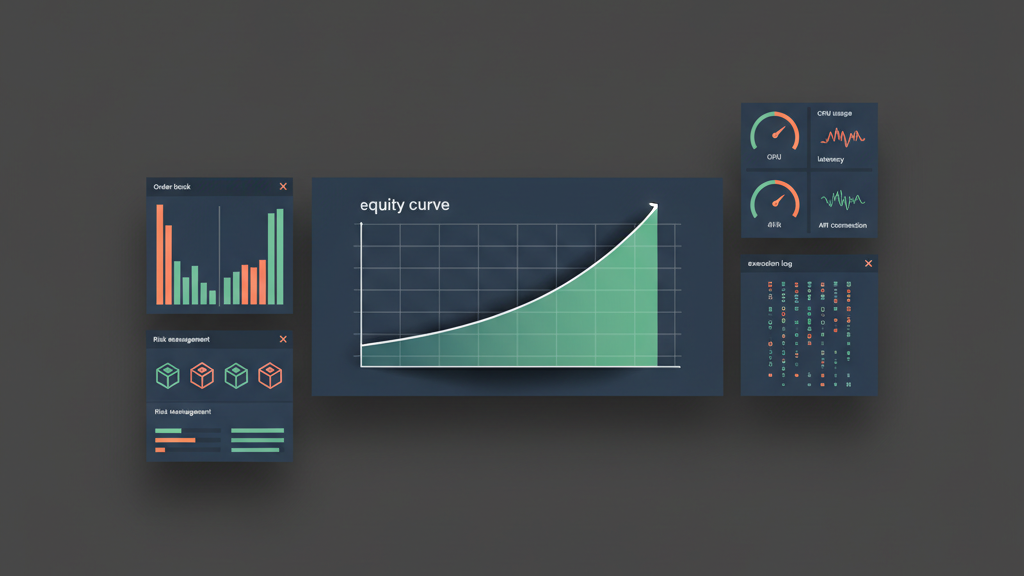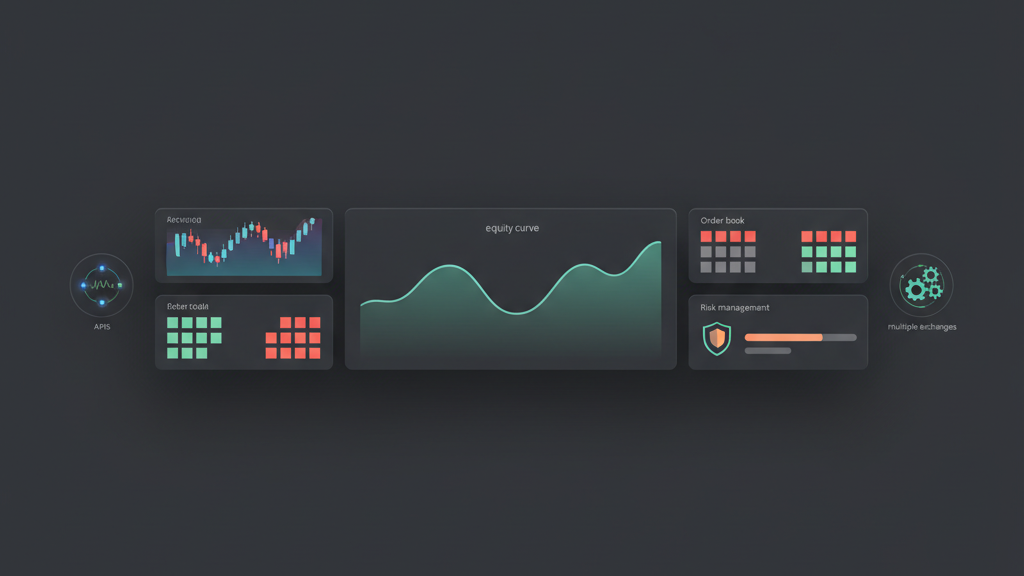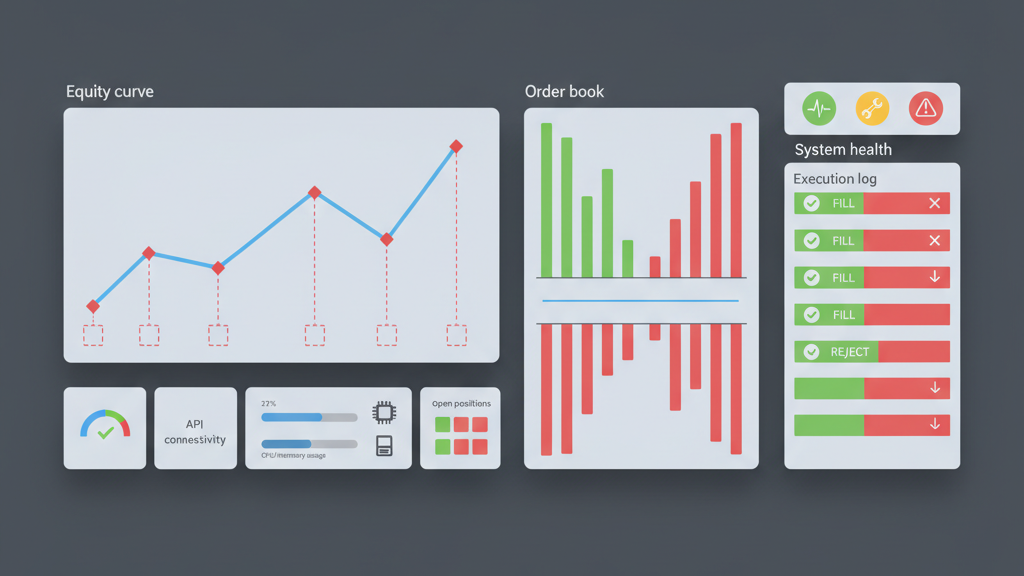
Operating an algorithmic trading system in production introduces a distinct set of challenges far beyond what backtesting can simulate. While a strategy might show impressive simulated returns, its real-world performance hinges critically on the stability and responsiveness of the underlying infrastructure and execution logic. This is where comprehensive trading system monitoring and execution alerting in production becomes indispensable. It’s not merely about knowing if your system is ‘on’; it’s about understanding its health, detecting anomalies immediately, and reacting effectively to prevent significant losses or missed opportunities. For Algovantis, building robust monitoring means empowering traders to maintain control and confidence even when the markets are most volatile, ensuring that any deviation from expected behavior is flagged instantly for human intervention or automated recovery.
The Imperative for Real-Time Production Visibility
Transitioning an algorithmic strategy from backtesting to a live production environment fundamentally changes the risk landscape. In a simulated world, data is perfect, latency is zero, and execution is guaranteed. Live trading, however, is messy; it involves unreliable network connections, API rate limits, exchange outages, market data glitches, and unexpected slippage. Without meticulous real-time trading system monitoring and execution alerting in production, a profitable strategy can quickly incur significant losses due to factors completely external to its core logic. Our focus shifts from merely analyzing historical performance to actively safeguarding capital, ensuring operational continuity, and validating that the system behaves precisely as designed under dynamic market conditions. This proactive stance is the only way to manage the inevitable complexities of live algo trading effectively.
Key Performance Indicators for Live Trading Systems
Identifying the right metrics to monitor is crucial for understanding the real-time health and performance of an algorithmic trading system. Beyond standard IT infrastructure metrics like CPU and memory usage, we focus on trade-specific KPIs that directly impact profitability and operational integrity. These include tracking real-time P&L against expected theoretical P&L, monitoring the latency of market data feeds and order acknowledgments, and observing the fill rate and slippage metrics on executed orders. Furthermore, we maintain a close watch on open positions, ensuring they align with the strategy’s intended exposure, and track margin utilization to prevent unexpected calls. Any significant deviation in these metrics acts as an early warning sign, indicating a potential issue with either the strategy, the market, or the underlying execution infrastructure.
- Realized and unrealized P&L deviation from theoretical targets.
- End-to-end latency for market data reception and order round-trip.
- Order fill rates, partial fills, and average slippage per order.
- Current open positions, exposure, and margin utilization.
- Connectivity status to exchanges, data providers, and internal services.
Designing Effective Alerting Mechanisms and Tiers
Effective execution alerting in production is about more than just sending notifications; it’s about context, urgency, and actionable information. We typically design multi-tiered alerting systems. Critical alerts, such as immediate connectivity loss to an exchange or a rapid drawdown exceeding a predefined threshold, trigger high-priority notifications (e.g., SMS, PagerDuty, dedicated audio alarms) requiring instant human intervention. Warning alerts, like elevated latency or unusually high message queue depths, might use email or Slack, prompting investigation before they escalate. Informational alerts simply log events or minor deviations that don’t require immediate action but are useful for post-mortem analysis. The goal is to minimize alert fatigue while ensuring critical issues are impossible to miss. Setting dynamic thresholds that adapt to market volatility or time of day can significantly improve the signal-to-noise ratio of these alerts, ensuring that operators are only disturbed when it truly matters.
- Critical alerts for immediate system failure, significant P&L deviation, or connectivity loss.
- Warning alerts for performance degradation, high latency, or unusual market data patterns.
- Informational alerts for operational events, minor deviations, or scheduled processes.
- Multiple notification channels (SMS, email, Slack, PagerDuty) based on alert criticality.
- Dynamic thresholds that adjust based on market conditions or trading hours.
Mitigating Execution Gaps and API Failures
In the real world, API calls can fail, orders might be rejected, and network packets can get dropped. These execution gaps are critical points of failure for any live trading system. Our monitoring setup includes specific checks for API response codes, timeout detections, and reconciliation processes. If an order submission fails, the system must immediately alert and potentially attempt a resubmission, or cancel existing open orders to avoid unintended exposure. A common mistake is to assume successful execution based solely on a sent order; instead, we always wait for an execution report or a clear acknowledgement from the exchange. Robust retry logic with exponential backoff and circuit breakers is essential, but it must be coupled with vigilant alerting to prevent an uncontrolled loop of failed attempts that could tie up resources or create phantom positions. Knowing when to escalate from automated retry to human intervention is a fine line determined by predefined risk parameters and the nature of the failure.
Ensuring Data Integrity and Feed Monitoring
The quality of incoming market data is paramount. A trading system operating on stale, corrupt, or missing data is essentially blind, making decisions based on incorrect information. Our trading system monitoring actively checks for data feed health, looking for gaps in tick data, unusually large price jumps, or prolonged periods of no updates from specific instruments. We implement sanity checks such as comparing the last traded price against the bid-ask spread, or cross-referencing prices from multiple data providers if available. An alert is triggered if data latencies exceed acceptable thresholds or if critical symbols stop providing updates. This isn’t just about preventing incorrect trades; it’s about maintaining trust in the foundation of the trading strategy. A common architectural decision is to have redundant data feeds and logic to switch sources automatically upon detection of data quality issues, all under the watchful eye of the monitoring system.
System Architecture for Resilient Monitoring
Building a robust monitoring and alerting infrastructure requires careful architectural considerations to ensure it remains operational even when the core trading system encounters issues. We typically isolate the monitoring service from the trading engine itself, often deploying it on separate hardware or in a distinct microservice container. This prevents a failure in the trading system from crippling the very tools designed to report that failure. Data points are collected via lightweight agents, exposed through metrics endpoints (like Prometheus), and aggregated by a central logging and observability platform (e.g., ELK stack, Grafana). Redundancy is key, with alert routing mechanisms that failover to alternative channels. The system also includes ‘heartbeat’ checks, where the monitoring system itself periodically confirms that critical components are still alive and reporting, providing an alert if the monitoring data stream unexpectedly ceases. This ensures that the watchdog system has its own watchdog.
Continuous Improvement Through Post-Incident Analysis
Trading system monitoring and execution alerting in production isn’t a set-and-forget task. Every alert, every incident, and even every non-event provides valuable data for refining the system. Post-incident analysis is a critical feedback loop. When an alert triggers, we conduct a thorough review to understand the root cause, assess the system’s response (both automated and human), and identify any weaknesses in the monitoring or alerting logic. This often leads to adjusting alert thresholds, adding new metrics, improving log verbosity, or implementing new automated recovery procedures. The goal is to continuously harden the system, reduce false positives, and ensure that alerts are always meaningful and actionable. This iterative process of detection, analysis, and refinement is fundamental to achieving high reliability and minimizing operational risk in live algorithmic trading.