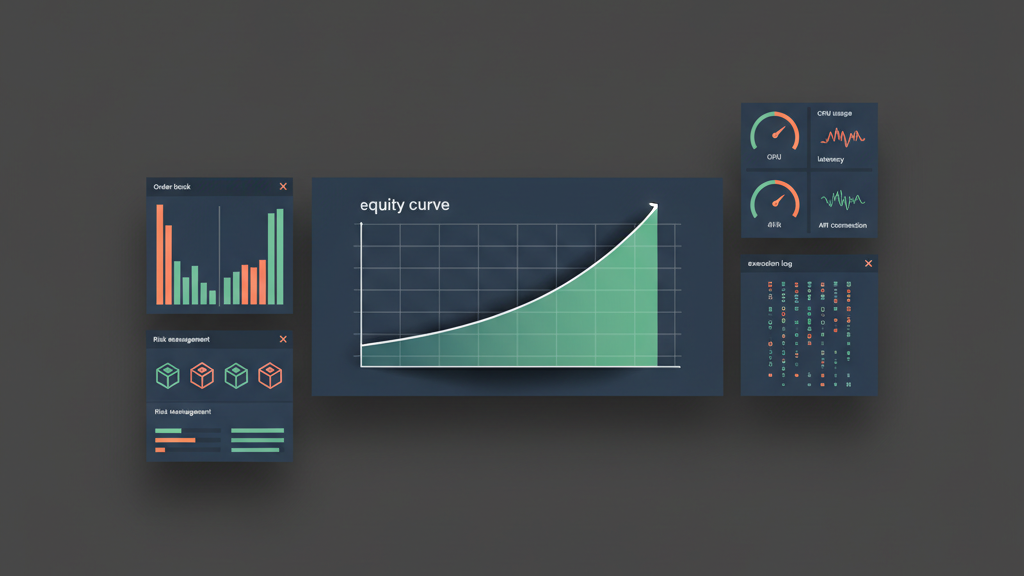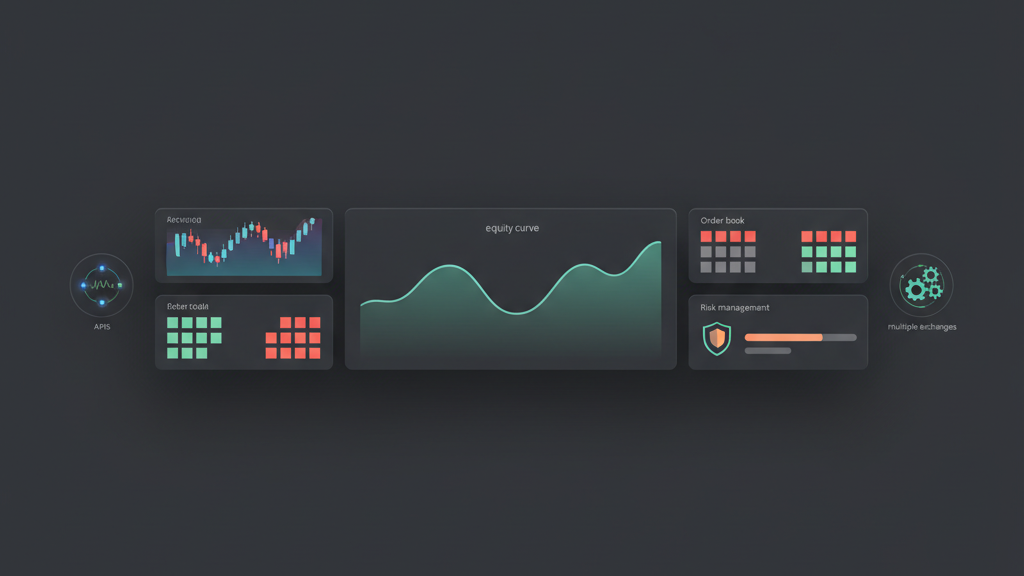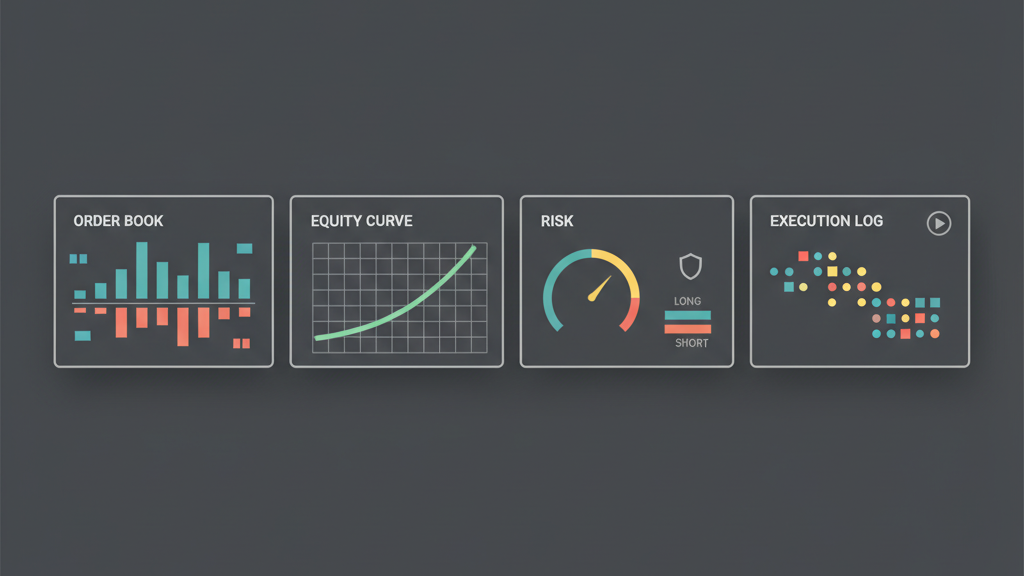
Developing an effective algo trading system goes far beyond just a profitable strategy; it requires a meticulously designed and robust architecture to translate theoretical signals into real-world executed trades. This entire journey, from raw market data ingestion to final order execution, forms what we call the signal-to-execution pipeline. Its complexity stems from the need for ultra-low latency, high data integrity, robust error handling, and sophisticated risk management, all while operating in a dynamic and often unpredictable market environment. A well-engineered pipeline ensures reliable operations, minimal slippage, and the capacity to adapt to evolving market structures and algorithmic demands. Understanding each component and its interplay is critical for any team looking to build or optimize their automated trading capabilities and achieve consistent performance under varying conditions.
The End-to-End Pipeline Overview
A comprehensive algo trading signal generation to execution pipeline architecture must manage a series of interconnected stages, each with its own specific requirements and challenges. It begins with ingesting vast quantities of real-time and historical data, which then feeds into a strategy layer responsible for generating trading signals. These signals are subsequently evaluated by a portfolio and risk management module, which determines position sizing and ensures adherence to predefined risk limits. Finally, approved trade instructions are routed to an order management and execution subsystem that interfaces directly with exchanges. Each component demands high availability, low latency, and robust fault tolerance. Designing for modularity is key, allowing individual components to be updated, scaled, or replaced without disrupting the entire system, which is critical for maintaining operational agility in fast-moving markets and adapting to new opportunities or regulatory changes. The entire setup needs comprehensive monitoring and logging to maintain visibility into its performance and health.
Data Acquisition and Preprocessing Layer
The foundation of any algorithmic trading system is its data. This layer is responsible for reliably sourcing, ingesting, and preparing market data, fundamental data, and sometimes alternative datasets in real-time or near real-time. Challenges abound, from managing diverse data formats and API rate limits across multiple vendors to ensuring data cleanliness, correct timestamping, and handling market data gaps or corruptions. Effective preprocessing involves normalization, de-duplication, and ensuring time synchronization across all data streams, often down to nanosecond precision, to prevent look-ahead bias in backtesting and stale data issues in live trading. A robust data pipeline incorporates mechanisms for data validation, error detection, and automated recovery, as flawed data will inevitably lead to flawed signals and potentially significant trading losses, regardless of strategy sophistication.
- Real-time market data feeds (e.g., tick, depth-of-market)
- Historical data storage and retrieval for backtesting and analysis
- Data cleaning, normalization, and outlier detection routines
- Time synchronization across multiple data sources using NTP or PTP
- Data integrity checks (checksums, sequence gaps) and automated re-request logic
Signal Generation and Strategy Engine
This is the brain of the algo trading system, where raw, processed data is transformed into actionable trading signals based on predefined strategies or machine learning models. The strategy engine needs to support various trading paradigms, from high-frequency arbitrage to longer-term statistical arbitrage or trend-following. It must be designed for performance, allowing strategies to process data and generate signals with minimal latency. Integration with backtesting capabilities is paramount; signals generated by the live engine should ideally be reproducible and testable against historical data to ensure their validity and robustness before deployment. The architecture often involves separating strategy logic from core infrastructure concerns, providing a flexible framework for developers to rapidly prototype, test, and deploy new algorithmic ideas without disrupting the existing pipeline. Ensuring that the state of the strategy engine is robustly managed and recoverable is also critical for seamless operation and avoiding potential data loss or miscalculations.
Portfolio and Risk Management Module
Once a signal is generated, it doesn’t automatically become an executed trade. The portfolio and risk management module acts as a critical gatekeeper, evaluating the signal within the context of the overall portfolio and current market exposure. This layer applies position sizing algorithms, assesses the impact of a potential trade on portfolio-level risk metrics (e.g., VaR, stress tests), and enforces hard limits on exposure, drawdowns, and maximum loss. It’s responsible for managing and updating the current portfolio state, tracking open positions, and ensuring that all trading activity adheres to compliance rules and internal risk mandates. This module often houses the ‘kill switch’ logic, which can automatically halt trading or close positions under extreme market conditions or system anomalies, protecting against runaway losses. Rigorous pre-trade and post-trade risk checks are essential to prevent over-exposure or execution of erroneous orders, making this perhaps the most critical component for capital preservation.
- Position sizing algorithms (e.g., fixed fractional, volatility-adjusted)
- Real-time exposure limits (per instrument, sector, total portfolio)
- Stop-loss and take-profit mechanisms at the position or portfolio level
- Circuit breaker and ‘kill switch’ logic for abnormal conditions
- Monitoring P&L, margin utilization, and liquidity impact
Order Management and Execution Subsystem
This layer is where approved trade instructions are transformed into actual orders sent to exchanges or liquidity venues. It typically comprises an Order Management System (OMS) and an Execution Management System (EMS). The OMS handles the lifecycle of an order: creation, modification, cancellation, and tracking its state (pending, partially filled, filled, canceled). The EMS focuses on optimizing the execution itself, often employing smart order routing (SOR) to find the best venue and execution algorithms (e.g., VWAP, TWAP, dark pool interaction) to minimize market impact and slippage. Interfacing with various brokerage APIs introduces challenges related to varying protocols, latency, reliability, and error handling. Robust error handling is paramount, as API failures, connectivity issues, or partial fills are common. The system must accurately report fills back to the portfolio management layer and handle reconciliation processes to ensure that internal records perfectly match broker statements, often requiring idempotent operations to prevent duplicate orders or missed fills.
Monitoring, Logging, and Alerting Infrastructure
Operational stability and rapid issue resolution depend heavily on a robust monitoring, logging, and alerting infrastructure. This component provides real-time visibility into every aspect of the algo trading signal generation to execution pipeline: system health, network latency, data feed quality, strategy performance, order fill rates, and P&L. Comprehensive logging captures every event, from raw market data ticks to strategy decisions, order messages, and execution responses, providing an invaluable audit trail for post-trade analysis and debugging. Alerts are critical for notifying operators of anomalies, such as data feed disruptions, exceeding risk limits, unexpected system errors, or significant deviations from expected strategy performance, enabling immediate human intervention. The system should provide customizable dashboards and integrate with communication tools to ensure that relevant personnel are informed and can act quickly to mitigate potential issues, preventing minor glitches from escalating into significant financial losses.
- Real-time dashboards for system metrics, network latency, and data freshness
- Comprehensive logging of market data, signals, orders, fills, and errors
- Automated alerts for critical events (e.g., API disconnects, risk limit breaches)
- Performance metrics tracking (e.g., fill rate, slippage, latency per trade)
- Integration with incident management and communication platforms
Operational Considerations and Deployment
Successfully deploying and operating an algo trading system 24/7 involves addressing numerous practicalities beyond just the trading logic. This includes infrastructure decisions (co-location for lowest latency vs. cloud for scalability), implementing robust failover mechanisms, and designing disaster recovery plans to ensure continuous operation in the face of hardware failures or regional outages. Deployment pipelines must be automated, incorporating rigorous testing, version control, and rollback capabilities to ensure new strategies or system updates are introduced reliably without downtime or unintended side effects. Security is also a major concern, encompassing network security, data encryption, and access controls to protect sensitive trading logic and client capital. Finally, regular system maintenance, performance tuning, and capacity planning are essential to scale the architecture with increasing trading volumes, more complex strategies, and evolving market demands, ensuring the long-term viability and efficiency of the entire automated trading operation.