In algorithmic trading, slippage represents the difference between the expected price of a trade and the price at which the trade is actually executed. It’s a critical factor that directly impacts profitability, especially in high-frequency strategies or those dealing with substantial order sizes. While some slippage is inherent to market dynamics, effective order routing logic is paramount for controlling and minimizing it. This article delves into practical best practices for building intelligent order routing systems, drawing from real-world challenges faced by quantitative teams and emphasizing technical considerations over theoretical concepts. Understanding how to manage and mitigate slippage through disciplined routing can be the difference between a profitable strategy and one that consistently underperforms.
Understanding Slippage Drivers and Market Microstructure
Before optimizing order routing logic, a deep understanding of what causes slippage is essential. Slippage isn’t just a random event; it’s often a consequence of market microstructure and the interaction of order flow with available liquidity. Key drivers include market volatility, insufficient liquidity at desired price levels, large order sizes relative to available depth, and the latency between decision and execution. For instance, attempting to execute a large market order in a thinly traded asset will almost guarantee significant slippage as the order sweeps through multiple price levels in the order book. Even in highly liquid markets, a sudden surge in order flow or a significant news event can rapidly shift available liquidity, making pre-trade price estimates quickly obsolete. Our systems typically track factors like spread, order book depth, and recent price velocity across various venues to build a real-time risk profile for potential slippage, informing subsequent routing decisions.
Pre-Trade Liquidity Assessment and Venue Selection
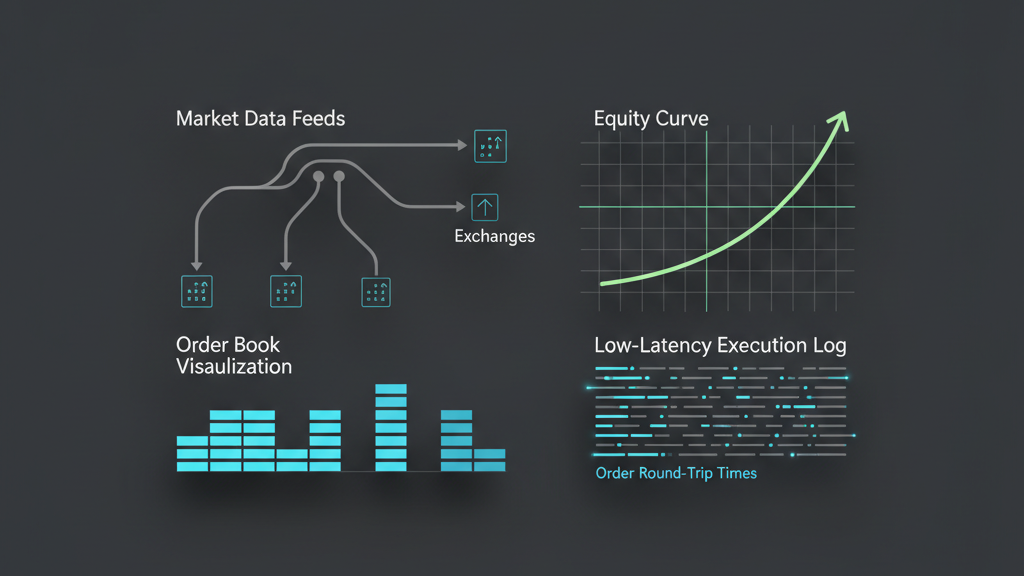
Effective order routing begins well before an order is placed. A critical best practice is to perform rigorous pre-trade liquidity assessment. This involves analyzing real-time order book data from multiple exchanges and alternative trading systems (ATS) to gauge available depth at various price points. Simply looking at the best bid/offer is often insufficient; understanding the full depth of the book across multiple price levels is crucial for larger orders. Our systems incorporate logic to dynamically profile venues based on factors like historical fill rates, typical latency, and explicit fees or rebates. This allows the routing engine to prioritize venues that offer better execution quality for a given order type and size, rather than simply routing to the venue with the displayed best price. The goal is to maximize the probability of achieving the desired execution price with minimal market impact.
- Aggregate order book data from primary exchanges and dark pools to assess true liquidity.
- Profile venue performance (latency, fill rates, fees) for different asset classes and order sizes.
- Implement dynamic weighting for venue selection based on real-time market conditions.
- Integrate ‘market impact models’ to estimate the cost of executing a specific order size on various venues.
Dynamic Order Sizing and Timing Strategies
Minimizing slippage often means breaking down large orders into smaller, more manageable child orders, but how these are sized and timed is critical. Instead of static slicing (e.g., fixed size every second), best practices for order routing logic involve dynamic adjustments based on real-time market conditions. Algorithms like TWAP (Time-Weighted Average Price) or VWAP (Volume-Weighted Average Price) are common starting points, but their effectiveness is significantly enhanced when they adapt to current volatility, liquidity, and even order book imbalances. For instance, if liquidity suddenly dries up or volatility spikes, the algo might pause execution or reduce child order sizes to avoid aggressive price movements. Conversely, during periods of high liquidity, it might accelerate execution. This adaptive approach requires constant monitoring of market data and the ability to dynamically adjust the order submission rate and size to mitigate adverse price movements.
Smart Order Routing (SOR) Implementation Nuances
Smart Order Routers (SORs) are the backbone of advanced execution, but their implementation requires careful consideration beyond just ‘finding the best price.’ A truly effective SOR minimizes slippage by considering a multitude of factors: displayed liquidity, hidden liquidity (dark pools), access fees, latency to the venue, and the probability of execution. For example, a basic SOR might only look at the top of the book across lit exchanges, potentially missing better prices or deeper liquidity in a dark pool. An advanced SOR, however, would have a sophisticated routing logic that might first probe a dark pool for a block, then sweep lit exchanges, and finally use an internalizer if conditions are optimal. Building this requires robust API integrations with various venues, capable of handling diverse message formats (like FIX), and a real-time database to track current market states and routing rules. We also implement circuit breakers within our SORs to prevent execution on venues that become unresponsive or report anomalous prices.
- Develop comprehensive routing rules considering displayed liquidity, hidden liquidity, fees, and latency.
- Prioritize venues based on real-time market data, not just static configuration.
- Implement internalizers or proprietary crossing networks where beneficial to reduce external market impact.
- Ensure robust API connectivity and error handling for all connected venues, monitoring for drops and rejections.
Execution Infrastructure and Latency Considerations
Even the most intelligent order routing logic can be undermined by poor execution infrastructure. Latency—the delay between a decision to trade and the order reaching the exchange—is a significant contributor to slippage. Co-location at exchange data centers is often a baseline requirement for low-latency strategies, dramatically reducing network delays. However, it’s not just about physical proximity; the entire data path, from market data ingestion to strategy logic, routing engine, and order management system, must be optimized for speed. This includes specialized network hardware, kernel-bypass technologies, and highly optimized code paths. We continuously profile the end-to-end latency of our trading systems, identifying bottlenecks and optimizing specific components. A few milliseconds of additional latency can mean the difference between getting a fill at the desired price and suffering adverse slippage due to market movement in the interim, especially in volatile markets or during high-frequency trading.
Post-Trade Analysis and Adaptive Learning Loops
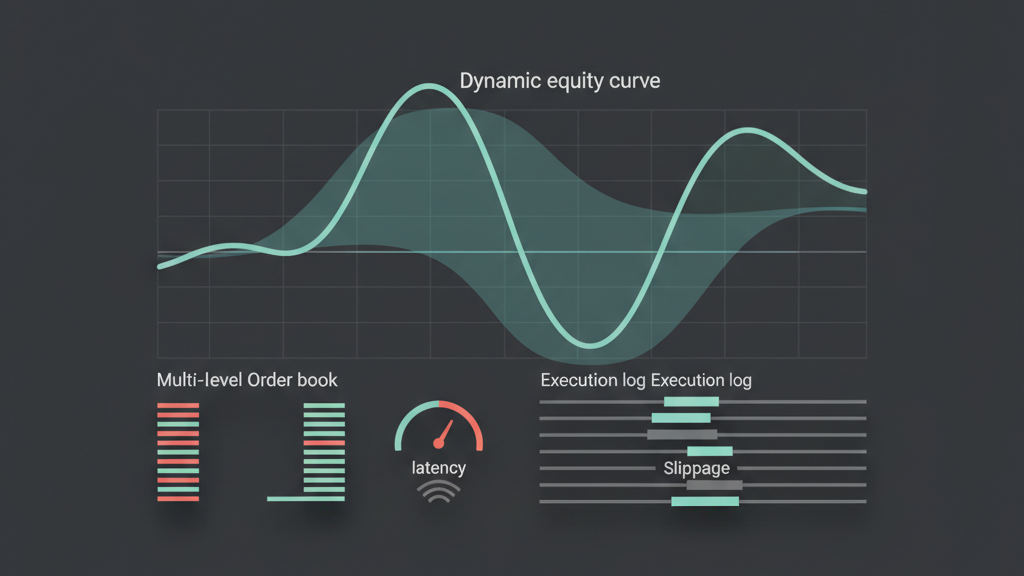
Minimizing slippage is an ongoing process that requires continuous measurement, analysis, and adaptation. Post-trade analysis is crucial for evaluating the effectiveness of your order routing logic. This involves accurately measuring realized slippage by comparing the executed price against various benchmarks, such as the mid-price at the time of order submission, VWAP for the execution period, or a custom pre-trade estimate. Analyzing execution quality reports (EQR) from brokers and directly from exchanges helps identify patterns in slippage – for example, if a particular venue consistently delivers worse-than-expected fills under specific market conditions. This feedback loop is then used to refine routing rules, update venue preferences, or even retrain adaptive algorithms. Without this iterative process, even the best initial design for order routing logic will eventually degrade in performance as market conditions evolve.
- Rigorously measure realized slippage against multiple relevant benchmarks for each executed order.
- Analyze execution quality reports to identify systematic issues with specific venues or routing paths.
- Implement A/B testing frameworks to compare different routing logic variations in live or simulated environments.
- Use post-trade data to train or fine-tune adaptive routing algorithms and venue selection models.
Robust Error Handling and Contingency Planning
No matter how sophisticated the order routing logic, failures will occur. Exchanges go down, network connections drop, and APIs return unexpected errors. Best practices dictate that the routing engine must incorporate robust error handling and contingency planning to prevent catastrophic slippage or missed opportunities. This includes implementing circuit breakers that can halt trading if slippage exceeds a predefined threshold or if connection to a critical venue fails. Fallback routing paths, such as rerouting orders to an alternative exchange or even temporarily reverting to manual execution, should be clearly defined and automatically triggered. Monitoring for partial fills, order rejections, and orphaned orders (orders that are sent but no confirmation is received) is also vital. The system needs to intelligently recover from these situations, often by canceling outstanding orders and reassessing the market before resubmitting. Unhandled errors in routing can quickly compound, turning minor slippage into significant losses.