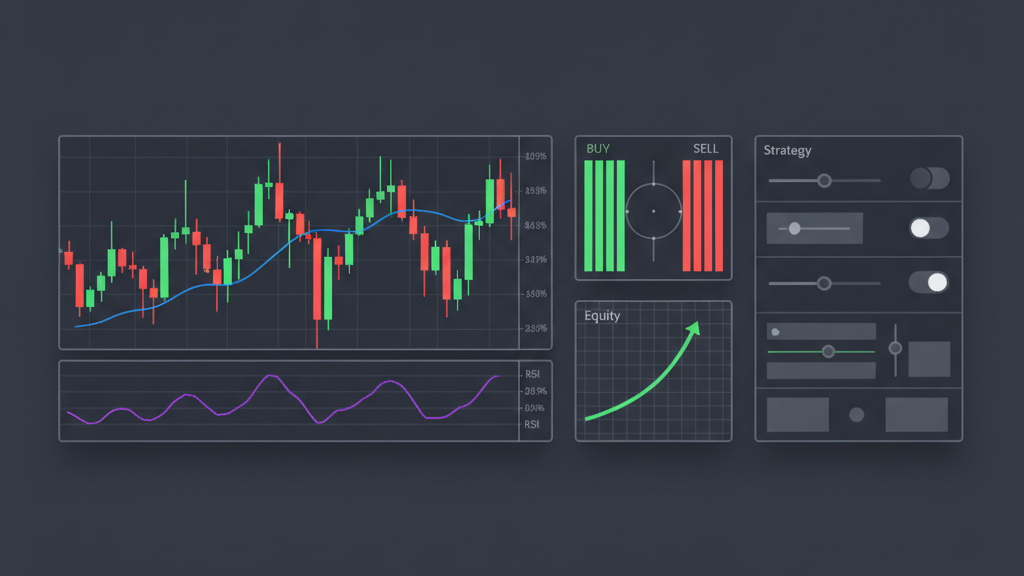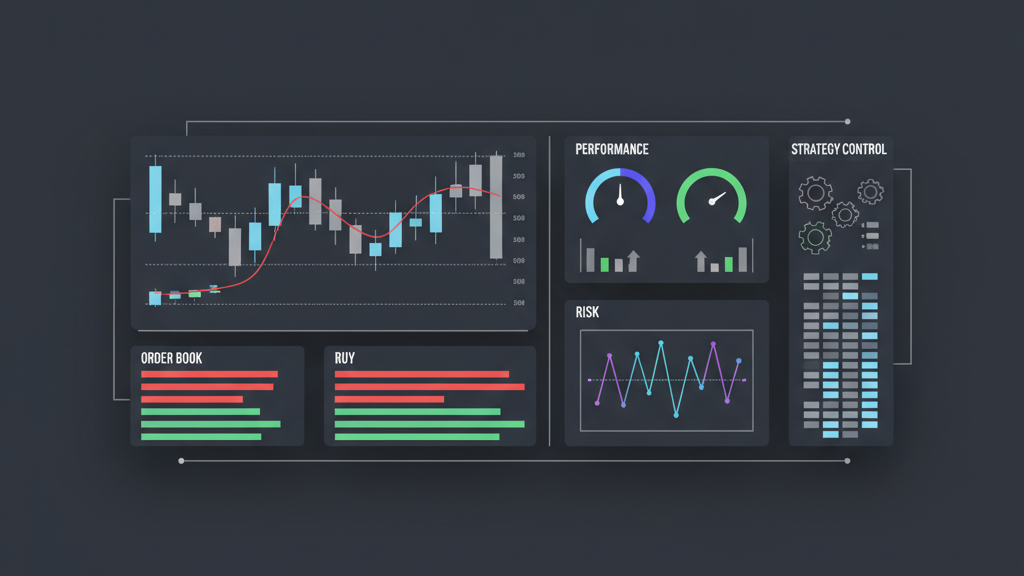
Developing a successful algorithmic trading strategy requires more than just an innovative idea. It demands a rigorous, data-driven approach, especially when aiming for consistent profitability. Many aspiring algo traders and seasoned quantitative teams face challenges in translating theoretical concepts into real-world gains. The cornerstone of this process lies in a robust validation framework. This article will guide you through the critical elements of Creating a Profitable Algo Trading Strategy Using Systematic Backtesting Methodologies. We will cover the phases from initial concept to pre-deployment validation, ensuring your strategy is not merely optimized for historical data but is also resilient to future market conditions. Understanding how to thoroughly test and refine your automated trading logic is paramount for mitigating risk and maximizing potential returns in dynamic financial markets.
The Foundation of Strategy Development
A profitable algo trading strategy begins with a clear hypothesis and robust data. Before any code is written or backtest initiated, traders must define their market edge, identify specific market inefficiencies, and formulate a logical framework that aims to exploit them. This initial phase involves extensive market research, understanding the characteristics of target assets, and outlining the conditions under which the strategy is expected to perform. High-quality historical data, properly adjusted for corporate actions and survivorship bias, is indispensable. Without a well-defined strategy and clean data, even the most sophisticated backtesting tools will yield misleading results. The goal is to build a strategy based on sound economic principles or quantifiable market behavior, not simply data-mined patterns that might not persist.
- Clearly define the trading hypothesis and market edge.
- Identify specific assets and market conditions for the strategy.
- Outline logical entry, exit, and position sizing rules.
- Ensure access to high-quality, clean historical market data.
- Prioritize economically rational strategies over purely statistical ones.
Implementing Systematic Backtesting Methodologies
Effective implementation of systematic backtesting methodologies is paramount for validating a trading strategy’s potential. This process involves simulating the strategy’s performance on historical data, adhering strictly to the logical rules defined, without any look-ahead bias. Proper backtesting requires an understanding of the chosen backtesting engine’s capabilities and limitations, including its handling of various order types, slippage, and commissions. It is not enough to simply run a backtest and look at the final PnL. Traders must analyze the strategy’s behavior across different market regimes, identify periods of underperformance, and understand the drivers behind wins and losses. This iterative process of testing, analyzing, and refining is central to building confidence in the strategy’s robustness.
- Select a reliable backtesting engine appropriate for your strategy.
- Configure realistic trading costs like commissions and slippage.
- Simulate market conditions accurately, avoiding look-ahead bias.
- Analyze strategy performance across diverse historical market regimes.
- Document backtesting assumptions and simulation parameters thoroughly.
Data Integrity and Pre-Processing for Backtesting
The integrity of your historical data directly impacts the validity of your backtesting results. Data pre-processing is a critical step, often underestimated, in creating a profitable algo trading strategy. It involves more than just downloading price series. This phase requires meticulous cleaning, handling missing values, adjusting for corporate actions like splits and dividends, and ensuring accurate timestamp synchronization across multiple data feeds. Addressing issues such as survival bias (excluding delisted instruments) and look-ahead bias (using future information inadvertently) is fundamental to prevent overly optimistic performance projections. The quality of your input data dictates the quality of your strategy insights, making robust data handling a cornerstone of any systematic backtesting effort.
- Meticulously clean historical data to remove errors and gaps.
- Adjust data for corporate actions like stock splits and dividends.
- Ensure precise timestamp synchronization for multi-instrument strategies.
- Actively mitigate survival bias by including delisted assets in tests.
- Implement safeguards against look-ahead bias in data preparation.
Advanced Validation and Robustness Testing
Beyond a single backtest run, advanced validation techniques are essential to confirm strategy robustness and minimize the risk of overfitting. Techniques such as walk-forward analysis systematically re-optimize parameters over rolling historical periods, testing them on subsequent out-of-sample data. Monte Carlo simulations introduce randomness into historical price paths or order execution, assessing performance under varying market scenarios. Sensitivity analysis explores how strategy performance changes when key parameters are slightly altered, revealing potential instability. True out-of-sample testing on completely unseen data, often a distinct segment of historical data or even live paper trading, provides the most reliable indication of future performance. These methods collectively help determine if the strategy’s profitability is a genuine artifact of its logic or merely a coincidental fit to historical noise.
- Conduct walk-forward optimization for parameter stability.
- Utilize Monte Carlo simulations to assess performance under various conditions.
- Perform sensitivity analysis on key strategy parameters.
- Reserve truly out-of-sample data for final validation.
- Implement cross-validation to assess parameter robustness.
Performance Metrics and Risk Assessment
Evaluating an algo trading strategy extends beyond simple profit and loss. A comprehensive assessment integrates a range of performance metrics and robust risk management indicators. Key metrics include Sharpe Ratio, Sortino Ratio, Maximum Drawdown, Calmar Ratio, and average trade size versus overall portfolio value. Understanding the distribution of returns, the frequency of winning versus losing trades, and the average holding period are also crucial. Risk assessment involves not just identifying potential drawdowns but also understanding their duration and recovery periods. Developing a coherent position sizing methodology that aligns with your risk tolerance and account size is vital, ensuring that no single trade can disproportionately impact your capital. A strategy might look profitable on paper, but if its risk profile is unacceptable, it is not viable for deployment.
- Calculate key performance metrics: Sharpe, Sortino, Max Drawdown.
- Analyze the distribution of returns and trade characteristics.
- Assess the strategy’s risk profile including drawdown duration.
- Develop a position sizing model aligned with capital and risk tolerance.
- Evaluate recovery periods from significant drawdowns.
Overfitting Prevention and Practical Deployment Considerations
Preventing overfitting is paramount in developing a profitable algo trading strategy. A strategy that is overly optimized to historical data, effectively “curve-fitted,” will almost certainly fail in live trading. Techniques like parameter regularization, restricting the number of tunable parameters, and favoring simpler models can help. Beyond backtesting, successful live deployment requires addressing practical concerns such as execution latency, potential slippage, and robust infrastructure. Ensuring low-latency connectivity to exchanges, implementing smart order routing, and establishing redundant systems for continuous operation are crucial. Furthermore, ongoing monitoring of live performance against backtest expectations is necessary to detect concept drift or market regime changes that might invalidate the strategy’s assumptions. This final stage bridges the gap between theoretical profitability and real-world trading success.
- Employ parameter regularization to reduce overfitting risks.
- Favor simpler, more interpretable strategy models.
- Plan for low-latency execution and reliable infrastructure.
- Implement robust slippage and commission models.
- Establish continuous monitoring for concept drift and performance.