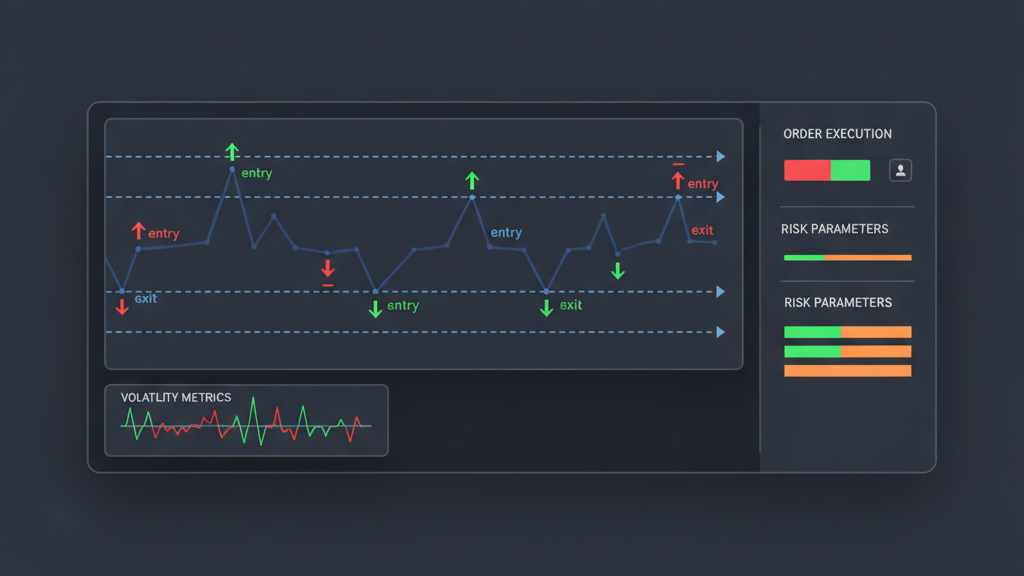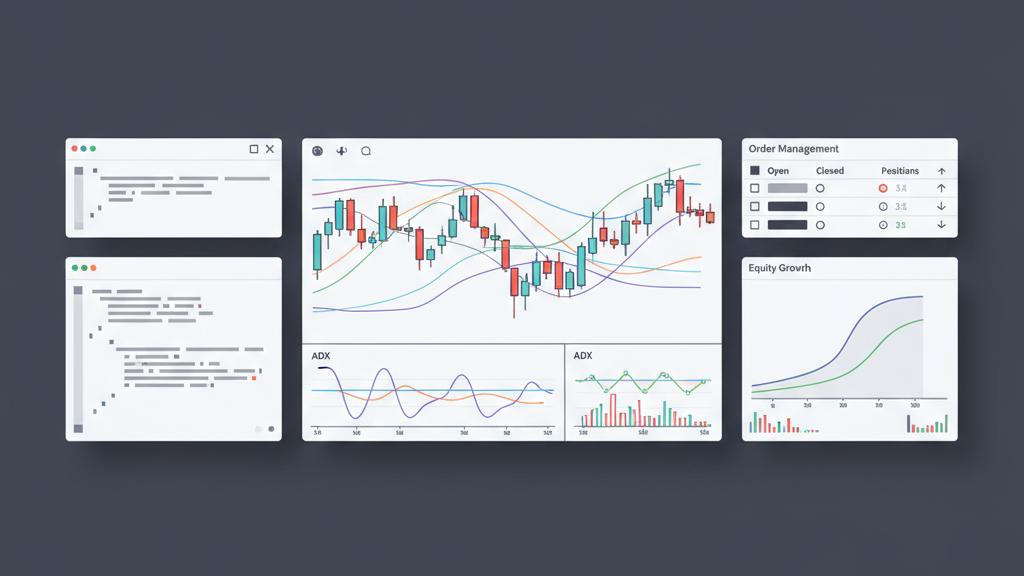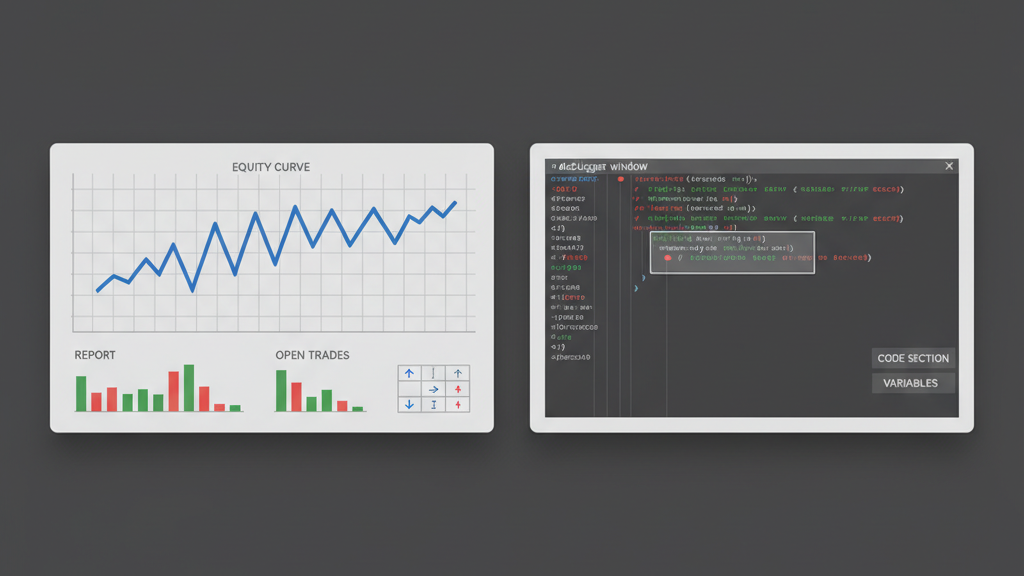
Developing robust algorithmic trading strategies in MQL4 for the MetaTrader 4 (MT4) platform involves more than just writing code; it demands a systematic approach to debugging and thorough backtesting. Many developers, especially those new to MQL4, often underestimate the complexities involved, leading to strategies that perform poorly in live trading despite seemingly good backtest results. This guide will walk through practical techniques for identifying and fixing logical errors, ensuring data quality, and conducting rigorous backtests that provide a more realistic expectation of a strategy’s performance in a real-world environment. We’ll cover the essential tools available within MT4 and discuss critical considerations that bridge the gap between simulation and live execution, helping you build more reliable automated trading systems.
Initial Debugging Workflow and Log Analysis in MT4
The first line of defense against MQL4 strategy errors typically involves simple logging and observation. While not as sophisticated as an IDE debugger, judicious use of `Print()`, `Comment()`, and `Alert()` statements can quickly reveal runtime behavior. `Print()` writes messages to the Experts tab in the Terminal window, which is crucial for tracking variable values, function calls, and conditional logic flow. `Comment()` displays information directly on the chart, ideal for real-time status updates, current trade details, or indicator values. `Alert()` serves to notify the user of specific events, like an order submission failure or a significant market condition change. Developers should learn to interpret the MT4 Journal tab for system-level errors, connection issues, or failed MQL4 compilations. Many subtle bugs, such as incorrect symbol handling or time zone discrepancies, often manifest first as unusual patterns in these logs before evolving into significant trading errors. Effective log management, perhaps by directing critical outputs to a file, also aids in post-mortem analysis of live trading incidents.
Leveraging the MT4 Strategy Tester for Deep Analysis
The Strategy Tester is MQL4’s primary environment for both debugging and backtesting. Its visual mode is invaluable for stepping through code execution bar by bar or tick by tick, offering a granular view of how your strategy reacts to historical data. This mode allows you to pause execution, inspect variables, and understand the precise sequence of events leading to a trade decision or an error. When a strategy isn’t behaving as expected, setting breakpoints at critical junctures, such as before an `OrderSend()` call or within indicator calculations, allows for forensic analysis. This is particularly useful for identifying issues like incorrect lot size calculations, slippage handling, or conditions that are never met. Without careful use of the visual tester, many complex logical bugs, especially those involving multiple indicators or intricate state machines, would be nearly impossible to diagnose effectively. It helps visualize price action against indicator signals and trade placements, making it clear where assumptions in the code might not match market reality.
- Set strategic breakpoints to halt execution and inspect variable states.
- Step through code line-by-line in visual mode to trace logic flow.
- Utilize the Watch window to monitor key variables and arrays.
- Confirm indicator calculations align with manual chart observations.
- Simulate specific market scenarios to reproduce hard-to-find bugs.
Ensuring Data Quality for Reliable Backtests
The quality of your historical data is paramount for realistic backtesting results; a strategy tested on flawed data will yield meaningless insights. MT4 typically uses M1 bar data for backtesting, but this can mask finer price movements that might impact entries, exits, or stop-loss/take-profit triggers, leading to discrepancies compared to live tick data. Many platforms offer tools to download and import higher-resolution tick data, which can then be converted into M1 bars with 99% modeling quality. However, even high-quality data can contain gaps, spikes, or missing periods that corrupt simulations. It’s crucial to visually inspect data for anomalies, fill gaps if possible, and understand how the MT4 engine handles missing data. Backtesting on data from a different broker than where you intend to trade live can also introduce bias due to differing historical price feeds, spreads, and even holiday hours. A thorough data preparation process, including verification against multiple sources, is a non-negotiable step for any serious algorithmic trader.
Mitigating Backtesting Biases and Over-Optimization
Beyond data quality, several biases can distort backtest results, making a strategy appear more profitable than it truly is. Look-ahead bias occurs when your strategy inadvertently uses future information that wouldn’t be available during live trading, often due to improper data handling or indicator lookbacks. Curve fitting, or over-optimization, is another common pitfall where a strategy’s parameters are tuned too precisely to past data, performing exceptionally well historically but failing in new market conditions. This typically happens when running too many optimization passes without sufficient out-of-sample testing. Survivorship bias can emerge when a backtest only includes currently trading assets, ignoring those that delisted or failed. To counter these issues, it’s essential to segment your historical data into in-sample (for development and optimization) and out-of-sample (for true validation) periods. Walk-forward optimization, which periodically re-optimizes parameters on new in-sample data and tests on subsequent out-of-sample data, provides a more robust measure of a strategy’s adaptability and predictive power.
- Divide data into in-sample, out-of-sample, and walk-forward validation sets.
- Avoid excessive parameter optimization that leads to curve fitting.
- Test strategy robustness across various market conditions, not just a single historical period.
- Scrutinize code for look-ahead bias, ensuring all data used is historically available at the time of calculation.
Performance Metrics, Risk Management, and Simulation Fidelity
Evaluating a strategy’s backtested performance requires more than just looking at total profit. Key metrics like the Sharpe Ratio, Sortino Ratio, Maximum Drawdown, Profit Factor, and Recovery Factor provide a comprehensive view of risk-adjusted returns and capital preservation. Understanding what constitutes an acceptable drawdown or a robust profit factor is subjective but critical for aligning with your risk tolerance. Beyond these, consider the number of trades, average trade duration, and win rate. These details offer insight into the strategy’s trading style and potential for execution slippage. Simulation fidelity also encompasses how closely the backtest environment mimics real trading conditions. This includes accurate spread modeling, incorporating realistic slippage costs (especially for high-frequency strategies), and accounting for commission structures. Many traders overlook the impact of execution gaps or API limitations, where an `OrderSend` might fail or return an unexpected error, which is rarely simulated effectively in a standard backtest. Incorporating these realistic constraints into your backtesting model significantly improves the predictive power of your simulations.
Bridging the Gap: From Backtest to Live MQL4 Execution
The transition from a perfectly performing backtest to live MQL4 execution often reveals a stark ‘reality gap.’ Market conditions, latency, and execution mechanisms differ significantly. Live spreads are variable, not fixed, as they might be during backtesting. Slippage, the difference between the expected and actual execution price, is a constant factor in live trading, especially during volatile periods or with large order sizes. High-frequency strategies, in particular, are extremely sensitive to execution latency; delays of even a few milliseconds can render a strategy unprofitable. MQL4 itself has limitations, such as the synchronous nature of `OrderSend()` and the need to handle `GetLastError()` return codes diligently. Brokers’ minimum stop loss/take profit levels, margin requirements, and trade execution policies also need to be accounted for. Robust MQL4 strategies incorporate error handling, re-try logic for failed orders, and mechanisms to monitor real-time spread and slippage. Careful monitoring of the Experts and Journal tabs during initial live deployment on a demo account is essential to identify these discrepancies before committing to real capital.
- Implement robust error handling for `OrderSend()` and other critical functions.
- Monitor real-time spread and slippage during live execution and compare to backtest assumptions.
- Account for broker-specific execution rules and minimum trade parameters.
- Test strategy thoroughly on a demo account before migrating to a live environment.
- Develop contingency plans for API failures or unexpected market conditions.