Automated trading systems offer significant advantages in speed and efficiency. However, their effectiveness hinges on consistent operation. Any interruption or failure can lead to missed opportunities, suboptimal trades, or even substantial losses. Therefore, a primary concern for any serious algo trader or quantitative team is ensuring high availability and reliability for your automated trading execution. This involves designing resilient systems that can withstand various failures, maintain continuous operation, and recover swiftly when issues arise. Implementing robust infrastructure and operational practices is not merely a technical requirement; it is a fundamental pillar of profitable and sustainable algorithmic trading.
Foundation of Redundant Infrastructure
The bedrock of a highly available automated trading system is a robust and redundant infrastructure. This means eliminating single points of failure across all critical components. Implementing dual internet lines from separate providers ensures network connectivity even if one line fails. Backup servers, whether hot or warm standbys, are crucial for taking over operations if a primary server experiences hardware issues. Uninterruptible Power Supplies (UPS) and redundant power sources protect against electrical outages. For ultimate resilience, geographically dispersed data centers can host mirrored systems, providing failover capabilities against regional disasters. This comprehensive approach to infrastructure design significantly enhances the reliability of your trading operations.
- Implement dual internet service providers for network diversity.
- Configure hot or warm backup servers to prevent primary system downtime.
- Deploy Uninterruptible Power Supplies and redundant power feeds.
- Utilize geographically diverse data centers for critical system components.
- Ensure network hardware, like routers and switches, also has redundancy.
Designing Resilient Trading Scripts
Beyond infrastructure, the trading scripts themselves must be engineered for resilience. This involves incorporating robust error handling mechanisms that anticipate and gracefully manage issues such as API disconnections, partial order fills, or unexpected market data formats. Defensive programming practices, including input validation and boundary checks, prevent common software failures. Scripts should maintain their state persistently or be designed to reconstruct it quickly upon recovery, ensuring that execution logic remains consistent even after an interruption. Implementing idempotent operations allows scripts to be re-run safely without unintended side effects, further bolstering the reliability of automated trading execution in dynamic market environments.
- Integrate comprehensive error handling for all external API calls.
- Implement defensive programming practices with thorough input validation.
- Design scripts for persistent state management or rapid state recovery.
- Ensure all trading operations are idempotent to prevent duplicate actions.
- Utilize circuit breaker patterns to prevent cascading failures in modules.
Comprehensive Monitoring and Alerting
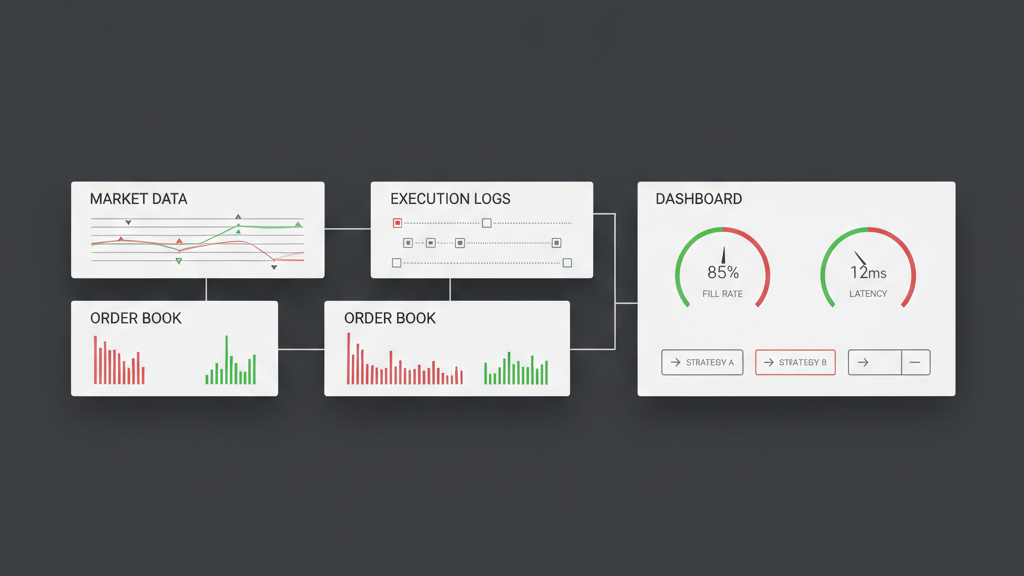
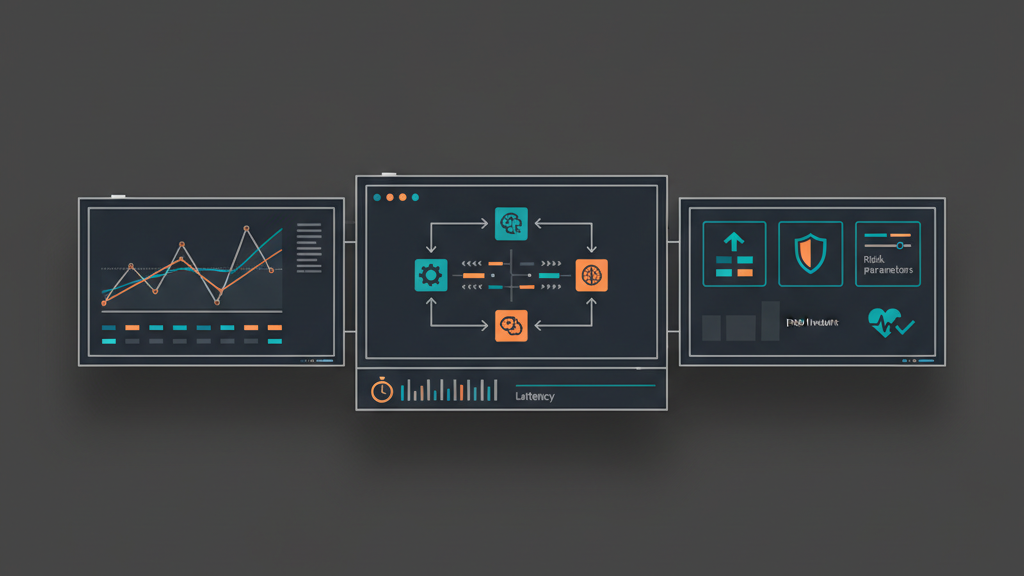
Effective monitoring is paramount for maintaining system reliability and quickly identifying potential issues. Real-time dashboards should provide a consolidated view of critical metrics, including network latency, server resource utilization, trading platform connectivity, order book depth, execution rates, and overall account balances. Establishing clear thresholds for these metrics triggers automated alerts, delivered via SMS, email, or internal messaging platforms, notifying operators immediately of any anomalies. Proactive monitoring, coupled with a robust alerting system, allows for rapid intervention, often preventing minor glitches from escalating into significant operational disruptions that could impact trading performance.
- Set up real-time dashboards for key system and trading metrics.
- Monitor network latency, server CPU/memory, and disk I/O usage.
- Track trading platform connectivity and API response times.
- Implement automated alerts for threshold breaches and unusual activity.
- Utilize centralized log management for forensic analysis post-incident.
Implementing Effective Failover and Disaster Recovery
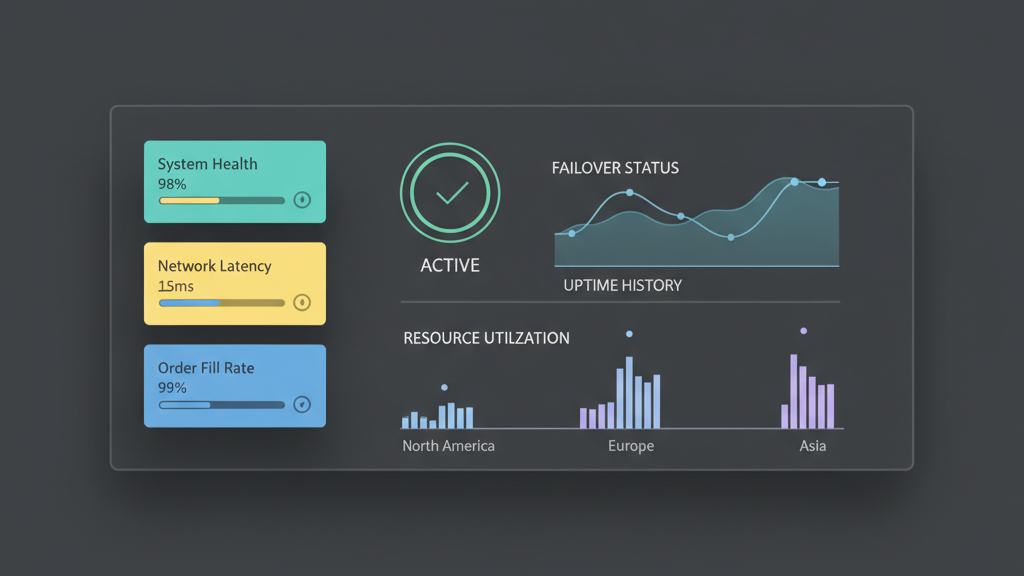
A well-defined failover and disaster recovery (DR) strategy is essential for mitigating the impact of severe system failures or catastrophic events. This includes automatic failover mechanisms that seamlessly transition operations to backup systems or alternative brokerages in the event of a primary system outage. Clearly defined Recovery Time Objectives (RTO), specifying the maximum acceptable downtime, and Recovery Point Objectives (RPO), indicating the maximum acceptable data loss, guide the design of these strategies. Regular, scheduled testing of DR plans ensures that the procedures are functional and that operational teams are proficient in executing them, thereby minimizing potential losses during a real-world incident and maintaining high availability.
- Develop automated failover procedures to backup servers or trading accounts.
- Define clear Recovery Time Objectives for minimal downtime.
- Establish Recovery Point Objectives to minimize data loss.
- Regularly test disaster recovery plans in a controlled environment.
- Implement robust data replication and synchronization processes.
Testing for Edge Cases and Stress Conditions
Rigorous testing is crucial for uncovering vulnerabilities and ensuring system resilience under extreme conditions. Beyond standard functional tests, conduct stress testing to evaluate performance under high message volumes, such as during volatile market openings or rapid price swings. Simulate network latency spikes and temporary API disconnections to verify how scripts handle degraded connectivity. Employ ‘chaos engineering’ principles to intentionally introduce failures into controlled environments, observing how the system reacts and recovers. This proactive approach to testing helps validate the fault tolerance of your automated trading execution system, confirming its ability to operate reliably even when faced with unexpected events and demanding loads.
- Conduct stress testing with simulated high message volumes and market volatility.
- Simulate network latency, packet loss, and temporary API outages.
- Implement ‘chaos engineering’ experiments to test system resilience.
- Perform extensive backtesting and forward testing in varied market conditions.
- Ensure all failover and recovery mechanisms are tested under load.
Managing External Dependencies and APIs
Automated trading systems heavily rely on external services, including broker APIs, market data feeds, and cloud providers. Managing these dependencies is a critical aspect of ensuring overall reliability. Implement rate limiters and retry mechanisms with exponential backoff for API calls to avoid overwhelming external services and to gracefully handle temporary service disruptions. Establish fallbacks to alternative data sources or broker connections when primary services become unavailable. A thorough understanding of third-party Service Level Agreements (SLAs) is essential, alongside having contingency plans for their outages. Proactively addressing these external factors is key to maintaining consistent and reliable automated trading execution.
- Implement API rate limiting to avoid exceeding external service limits.
- Utilize retry mechanisms with exponential backoff for transient API errors.
- Configure fallbacks to alternative market data providers or broker connections.
- Thoroughly understand and review Service Level Agreements of all external providers.
- Develop contingency plans for outages affecting critical third-party services.
Continuous Improvement and Post-Mortem Analysis
Achieving and maintaining high system reliability is an ongoing process, not a one-time task. After any incident, regardless of its perceived severity, conduct a thorough post-mortem analysis. The goal is to identify the root causes, understand contributing factors, and implement corrective actions to prevent recurrence. This includes reviewing code, infrastructure, and operational procedures. Regular system audits, performance reviews, and vulnerability assessments help adapt to evolving market conditions, new technologies, and emerging threats. A culture of continuous learning and improvement ensures that the automated trading system remains robust, secure, and highly reliable over time, consistently enhancing its operational integrity.
- Conduct detailed post-mortem analyses for all system incidents.
- Implement corrective actions based on root cause analysis.
- Perform regular system audits and security vulnerability assessments.
- Continuously review and update trading scripts and infrastructure.
- Foster a culture of learning and proactive improvement within the team.