Algorithmic trading demands precision and reliability. Even minor system glitches can lead to significant financial losses and operational disruptions. Therefore, implementing failsafe execution protocols for uninterrupted algo trading operations is not just a best practice; it is a fundamental requirement. These protocols act as critical safeguards, designed to detect and mitigate potential issues before they escalate, ensuring the stability and integrity of trading activities. This guide explores the essential components and strategic considerations for building resilient algo trading systems.
The Criticality of Failsafe Execution in Algo Trading
In high-speed, automated trading environments, the potential for errors is ever-present. From connectivity issues and data discrepancies to unexpected market events and software bugs, numerous factors can compromise an algorithmic strategy. Without robust failsafe execution protocols, these incidents can quickly cascade, leading to severe consequences such as over-execution, unintended market impact, significant financial losses, and regulatory penalties. Proactive implementation of these safeguards is crucial for maintaining operational integrity and protecting capital. It establishes a necessary layer of defense, allowing traders and firms to operate with confidence, knowing that contingencies are in place to prevent catastrophic failures and ensure continuous, controlled trading operations even under adverse conditions. This foundational approach supports long-term stability in dynamic markets.
- Prevent financial losses from system malfunctions.
- Avoid unintended market impact from erroneous orders.
- Ensure compliance with regulatory requirements.
- Protect firm reputation and client trust.
- Maintain operational continuity during adverse events.
- Minimize recovery time post-incident.
Core Components of Robust Failsafe Protocols
Effective failsafe protocols are multi-layered, addressing potential vulnerabilities at various stages of the trading lifecycle. These typically include pre-trade checks, in-trade monitoring, and post-trade verification. Pre-trade failsafes validate order parameters before submission, preventing invalid or excessively large orders. In-trade failsafes continuously monitor market conditions and strategy behavior, triggering interventions if anomalies occur. Post-trade failsafes reconcile executed trades and positions, identifying discrepancies that may have slipped past earlier checks. Integrating these diverse components creates a comprehensive safety net, ensuring that every order, from its inception to final settlement, operates within predefined risk parameters. This holistic approach is essential for robust and reliable algo trading systems.
- Pre-trade validation rules for order parameters.
- Real-time monitoring for market and strategy anomalies.
- Circuit breakers for extreme price movements.
- Maximum daily loss limits per strategy or portfolio.
- Latency and connectivity health checks.
- Automated position and exposure limits.
Implementing Pre-Trade Failsafes and Validation
Pre-trade failsafes are the first line of defense, designed to prevent potentially harmful orders from even reaching the market. These checks occur milliseconds before an order is sent to an exchange or dark pool. Key validations include ensuring the order size does not exceed predefined limits, checking that the instrument is valid and tradable, verifying sufficient available capital or margin, and confirming that trading occurs within permissible market hours. Additional checks can include validating price against current market bid/ask spreads to prevent stale quotes. These validations significantly reduce the risk of fat-finger errors or algorithmic miscalculations, offering crucial protection against immediate and avoidable trading errors. Their precise and rapid execution is paramount to maintaining system integrity.
- Validate order quantity against maximum limits.
- Verify order price against current market bounds.
- Confirm sufficient account capital or margin.
- Check instrument tradability and market hours.
- Prevent submission of duplicate orders.
- Ensure order type and venue are permitted.
In-Trade Monitoring and Real-time Failsafes
Once an order is live in the market, in-trade failsafes take over, providing continuous real-time oversight. These mechanisms actively monitor the strategy’s behavior, market conditions, and the execution of live orders. Examples include monitoring for excessive slippage beyond a defined threshold, checking that the strategy’s total exposure remains within set limits, and detecting unusual message rates to the exchange that might indicate a runaway algorithm. Implementing circuit breakers that pause or halt trading for specific instruments during extreme volatility is another critical component. These dynamic safeguards allow for immediate intervention, automatically adjusting or canceling orders when predefined risk boundaries are breached, thereby containing potential issues rapidly before they escalate into larger problems.
- Monitor order slippage against predefined thresholds.
- Track real-time exposure and position limits.
- Implement price collars to prevent extreme fills.
- Detect unusual order message rates or API errors.
- Automated pause or halt for volatile instruments.
- Cross-verify fills against expected execution prices.
Post-Trade Failsafes and Reconciliation Processes
Even after trades are executed, robust failsafe protocols extend to post-trade activities. These post-trade failsafes are crucial for identifying any discrepancies that may have occurred during the trading day and ensuring the accuracy of final positions and cash balances. This involves rigorous reconciliation of executed trades with broker confirmations, verifying that all fills match the expected quantities and prices. Automated checks also compare end-of-day positions against internal records and exchange statements. Any variances trigger alerts for immediate investigation, preventing incorrect P&L calculations or settlement issues. These procedures are vital for maintaining an accurate ledger, identifying potential operational errors, and ensuring the overall integrity of the trading system and financial reporting.
- Reconcile executed trades with broker statements.
- Verify end-of-day positions against internal records.
- Cross-check cash balances and P&L calculations.
- Log all trade activities for audit purposes.
- Identify and alert for unexpected trade cancellations.
- Automated process for correcting minor discrepancies.
Emergency Stop and System Recovery Mechanisms
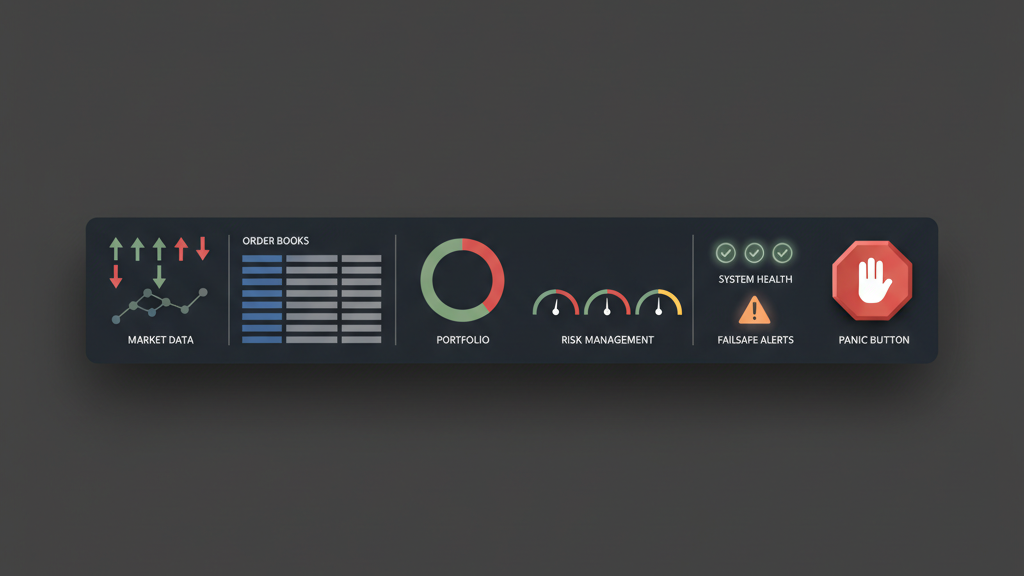
Despite comprehensive failsafe measures, unforeseen circumstances can arise. Therefore, incorporating clear emergency stop and system recovery mechanisms is paramount for overall system resilience. An ’emergency stop’ or ‘panic button’ allows for immediate cessation of all algorithmic trading activity, either globally or for specific strategies, in response to severe unforeseen events. This capability must be easily accessible and function reliably under stress. Coupled with this are detailed recovery procedures, which outline steps for restoring system functionality, re-establishing connectivity, and safely restarting strategies post-incident. These mechanisms ensure that even in the face of critical failures, the trading system can be brought under control and restored to an operational state with minimal impact and downtime, safeguarding capital and market integrity.
- Implement a global ‘kill switch’ for all strategies.
- Enable partial shutdown for specific problematic strategies.
- Define clear manual override procedures.
- Automated system health checks for recovery.
- Redundant systems for critical components.
- Documented step-by-step recovery playbooks.
Testing, Monitoring, and Continuous Improvement
Implementing robust failsafe execution protocols is an ongoing process that requires diligent testing, continuous monitoring, and iterative improvement. Protocols must be thoroughly tested in simulated environments that mimic real-world market conditions, including stress tests and edge-case scenarios. Regular drills should be conducted to ensure that both automated and manual recovery procedures function as expected. Continuous monitoring of system performance, log files, and alert systems provides real-time insights into potential vulnerabilities or anomalies. Furthermore, post-incident reviews are crucial for learning from any failures, refining existing protocols, and adapting to new market dynamics or technological advancements. This commitment to continuous improvement ensures the enduring effectiveness and reliability of the algo trading infrastructure.
- Conduct regular stress testing and simulation exercises.
- Perform incident response drills with trading teams.
- Monitor system logs and alerts for anomalies.
- Review and update protocols after any market disruption.
- Utilize audit trails for post-mortem analysis.
- Incorporate new risk parameters based on market changes.