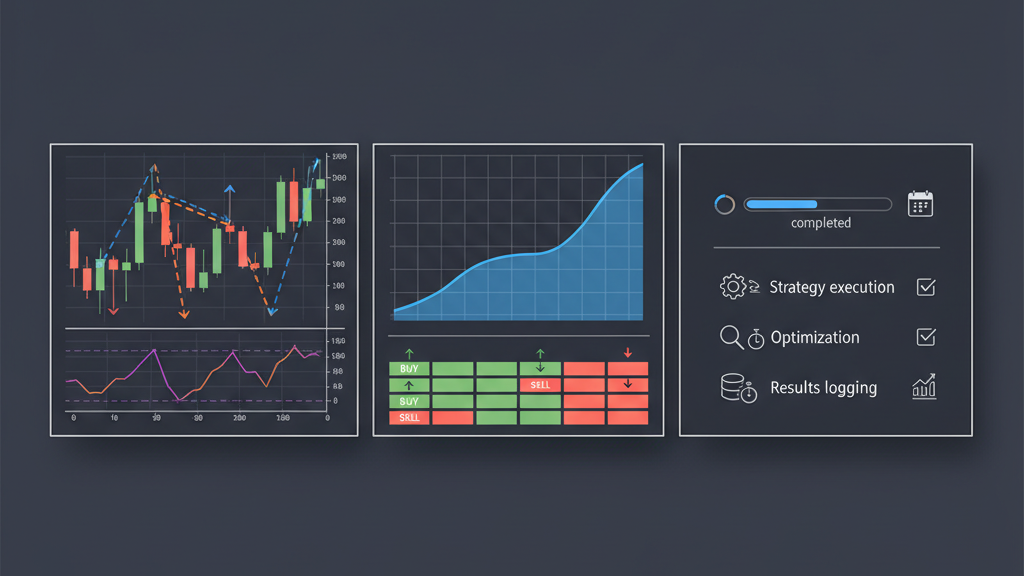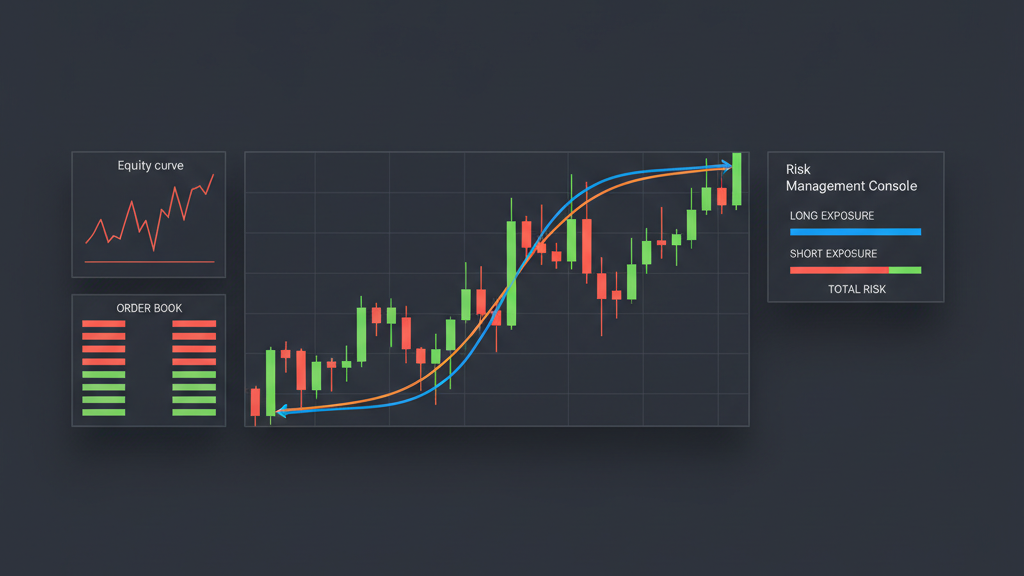
The Moving Average Convergence Divergence (MACD) histogram, a derivative component of the MACD indicator, offers a visual representation of the difference between the MACD line and its signal line. For algorithmic trading systems, this histogram can be a powerful tool, as its crossovers of the zero line, or shifts in its slope, often indicate changes in market momentum and potential trend accelerations or decelerations. However, integrating MACD histogram crossover signals effectively into automated strategies demands a deep understanding of its reactive nature, alongside meticulous consideration of data quality, execution latency, and robust risk management frameworks. This isn’t about finding a magic signal; it’s about engineering a system that leverages momentum shifts pragmatically, while accounting for the inherent complexities of live market operations. We’ll delve into the practicalities of signal generation, backtesting considerations, and the critical aspects of live execution, focusing on the real-world challenges faced by quantitative teams.
Understanding the MACD Histogram in an Algorithmic Context
The MACD histogram fundamentally quantifies the distance between the MACD line (a fast EMA subtracted from a slow EMA of price) and the Signal line (an EMA of the MACD line itself). When the histogram is positive and increasing, it signals that the MACD line is moving further above its signal line, implying an acceleration of bullish momentum. Conversely, a negative and decreasing histogram indicates an acceleration of bearish momentum. For an algorithm, this means converting a continuous variable into discrete actionable events. The most common signal derived is the zero-line crossover, where the MACD line crosses its signal line. A positive crossover implies increasing bullish momentum, while a negative crossover suggests growing bearish momentum. However, interpreting these shifts programmatically requires careful definition of what constitutes a ‘cross’ – a single bar event, or a sustained period of divergence, especially considering the indicator’s inherent lag.
Developing Entry and Exit Logic with Histogram Crossovers
Translating MACD histogram crossover signals into executable trading logic is a primary design task. A common approach for an automated strategy is to generate a ‘buy’ signal when the histogram crosses above the zero line from below, and a ‘sell’ signal when it crosses below the zero line from above. However, relying solely on these basic crossovers often leads to excessive whipsaws in choppy markets due to the lagging nature of moving averages. More robust strategies might require additional conditions, such as the histogram staying above (or below) the zero line for a specified number of bars, or confirming the signal with other indicators like volume spikes, price breaking a key support/resistance level, or alignment with a higher timeframe trend. For exits, one could reverse the entry conditions, or implement trailing stops and target profit levels that are independent of the histogram, mitigating the risk of giving back gains while waiting for a full reversal signal.
- Use zero-line crossovers for initial directional bias, but require multi-bar confirmation.
- Filter signals with volume, relative strength, or price action to reduce false positives.
- Implement dynamic stop-losses and take-profit levels, rather than solely indicator-based exits.
Backtesting MACD Histogram Strategies Effectively
Effective backtesting is crucial for validating any strategy using MACD histogram crossover signals. Beyond simply coding the entry/exit logic, rigorous backtesting demands accurate historical data, free from survivorship bias and look-ahead bias, extending over diverse market conditions. Account for realistic transaction costs, including commissions, exchange fees, and estimated slippage, especially for strategies that generate frequent trades. Even minor slippage of a few basis points per trade can erode profitability significantly over thousands of executions. When optimizing parameters (e.g., EMA periods), avoid overfitting by using walk-forward analysis or ensuring robust out-of-sample performance across multiple market regimes. A strategy that performs exceptionally well on historical data but fails out-of-sample is often over-optimized and unlikely to succeed in live trading. This iterative process of refinement and validation is central to developing any robust algorithmic system.
Real-time Execution Challenges and Latency
The transition from a perfectly backtested MACD histogram strategy to live execution introduces a new set of challenges, primarily centered around latency and execution reliability. Market data feeds, API response times, and network latency all contribute to delays between a signal generation and actual order placement. A signal identified at bar close might be stale by the time the order reaches the exchange, leading to significant price slippage if the market has moved. Implementing robust order management logic is critical, including handling partial fills, order rejections, and API connection failures. Automated systems need fail-safes: clear timeout mechanisms for orders, position monitoring with circuit breakers, and immediate notifications for unusual activity. Without careful attention to these operational details, even the most theoretically sound strategy can underperform or even incur significant losses in a live trading environment.
Risk Management and Dynamic Position Sizing
Integrating MACD histogram crossover signals into an algorithmic strategy without a robust risk management framework is a recipe for failure. Relying on a histogram reversal as the sole exit condition is often too late, exposing the strategy to significant drawdowns. Implement hard stop-loss orders that are placed concurrently with entry, defined by either a percentage loss, an absolute price level, or volatility-adjusted bands. Position sizing should be dynamic, adapting to current market volatility and the strategy’s equity curve. For instance, reducing position size during periods of high volatility or after a significant drawdown can help preserve capital. Furthermore, set overall portfolio-level risk limits, such as maximum daily loss or total account drawdown, to ensure that the entire trading operation remains within acceptable risk tolerances. These layers of control act as critical safeguards, preventing catastrophic losses even when signals perform unexpectedly.
- Define clear, non-negotiable stop-loss levels for every trade, independent of the histogram.
- Implement dynamic position sizing based on account equity, market volatility, or strategy performance metrics.
- Establish portfolio-level risk controls like maximum daily loss or total drawdown limits.
Advanced Implementations and Signal Filtering Techniques
To enhance the robustness of strategies leveraging MACD histogram crossover signals, advanced filtering and implementation techniques are often employed. One powerful method involves multi-timeframe analysis: confirming a signal on a shorter timeframe (e.g., 5-minute chart) with the trend or momentum direction indicated by the histogram on a higher timeframe (e.g., 60-minute or daily chart). This helps filter out noise and improve conviction. Another technique is to combine the histogram with other, non-correlated indicators, such as volume profiles, support/resistance levels, or volatility measures like Average True Range (ATR). Furthermore, adapting the MACD’s internal parameters (fast EMA, slow EMA, signal EMA) to current market conditions (e.g., higher volatility might require longer periods) can make the indicator more responsive and less prone to whipsaws. While more complex, these layered approaches typically yield more reliable and robust trading signals compared to standalone histogram crossovers.
- Utilize multi-timeframe confirmation, aligning a shorter-term histogram signal with a longer-term trend.
- Integrate volume analysis or key price level breakthroughs to validate crossover strength.
- Explore adaptive MACD parameters to dynamically adjust to changing market volatility regimes.