Drawdown is an inevitable part of trading, yet unmanaged it can severely impair capital and confidence. For algorithmic traders, understanding and proactively addressing drawdown is paramount. This article explores strategies for mitigating drawdown with dynamic risk management in algo trading, shifting from static, rigid controls to adaptive systems that respond to evolving market conditions. By integrating sophisticated risk models, real-time adjustments, and automated safeguards, traders can enhance the resilience and longevity of their trading systems, preserving capital through adverse market phases.
Understanding Drawdown in Algorithmic Trading
Drawdown represents the peak-to-trough decline in an investment, account, or fund value, often expressed as a percentage. In algorithmic trading, drawdowns are an inherent risk, indicating periods where a strategy underperforms its previous high-water mark. While some level of drawdown is unavoidable, its magnitude and duration significantly impact capital preservation and psychological stamina. Static risk management approaches, such as fixed stop-loss levels or constant position sizes, often prove inadequate because they do not adapt to changing market volatility, correlation shifts, or overall portfolio exposure. Effective capital preservation requires a more sophisticated, responsive framework that can adjust risk parameters in real-time, preventing small losses from escalating into significant capital impairments. Recognizing the limitations of static models is the first step toward building more resilient trading systems capable of enduring various market environments.
- Define maximum allowable drawdown for each strategy and portfolio.
- Identify common triggers for historical drawdowns in past performance.
- Assess the impact of different market regimes on strategy drawdown characteristics.
- Evaluate the inadequacy of fixed risk parameters in dynamic markets.
Core Principles of Dynamic Risk Management
Dynamic risk management shifts away from static rules to an adaptive framework that continuously assesses and adjusts risk exposure based on current market conditions and strategy performance. Its core principle is to align risk capital and position sizing with prevailing volatility, liquidity, and correlation. This involves using real-time data to inform decisions on trade entry, exit, and sizing, rather than relying solely on pre-defined, fixed parameters. For instance, in periods of high volatility, a dynamic system might reduce position sizes or temporarily halt trading, while in calmer markets, it might cautiously increase exposure. The goal is to optimize the risk-reward profile by reducing exposure when risk is high and increasing it when opportunities are more favorable, thereby protecting capital during adverse market phases and optimizing returns during favorable ones. This adaptive approach is crucial for long-term algorithmic trading success.
- Implement real-time market data analysis for volatility and correlation.
- Develop adaptive algorithms to adjust position sizing based on risk metrics.
- Define clear triggers for scaling risk up or down.
- Integrate system-wide checks for portfolio-level exposure.
- Prioritize capital preservation during periods of elevated uncertainty.
Volatility-Adaptive Position Sizing
Position sizing is a critical component of risk control. In a dynamic risk management framework, position sizing is not fixed but adjusts based on the current market volatility of the asset being traded. For example, during periods of high volatility, a strategy would reduce its position size to maintain a consistent risk dollar amount per trade, preventing outsized losses from large price swings. Conversely, in low volatility environments, the system might increase position size, capitalizing on tighter price ranges. This approach, often implemented using metrics like Average True Range (ATR) or historical standard deviation, ensures that the capital at risk per trade remains relatively constant, regardless of market conditions. This prevents a strategy from being overexposed during unpredictable periods and under-exposed when market movements are more contained, significantly contributing to a smoother equity curve and reduced drawdown potential.
- Calculate position sizes using volatility metrics like ATR or standard deviation.
- Adjust trade unit size inversely proportional to market volatility.
- Implement capital preservation rules for extreme volatility spikes.
- Ensure consistent risk-per-trade across varying market conditions.
- Automate position sizing adjustments within the trading script.
Implementing Portfolio-Level Drawdown Limits
Beyond individual trade risk, managing portfolio-level drawdown is essential for capital protection. This involves setting hard limits for maximum acceptable drawdown across the entire trading account or a specific portfolio of strategies. When this pre-defined threshold is breached, the system automatically triggers protective actions. These actions can range from reducing overall exposure, closing all open positions, or even pausing all trading activity until conditions improve or a manual review is conducted. These portfolio-level circuit breakers serve as a critical last line of defense, preventing catastrophic losses during ‘black swan’ events or extended periods of adverse market conditions. Such limits ensure that even if individual strategy risk controls fail, the total capital remains protected within defined parameters, maintaining investor confidence and long-term viability.
- Establish explicit maximum portfolio drawdown thresholds.
- Program automated alerts for approaching drawdown limits.
- Define specific actions upon reaching drawdown thresholds, e.g., reduce exposure, halt trading.
- Implement system-wide circuit breakers for extreme market moves.
- Regularly review and adjust portfolio drawdown limits based on performance and risk appetite.
Real-Time Monitoring and Alerting
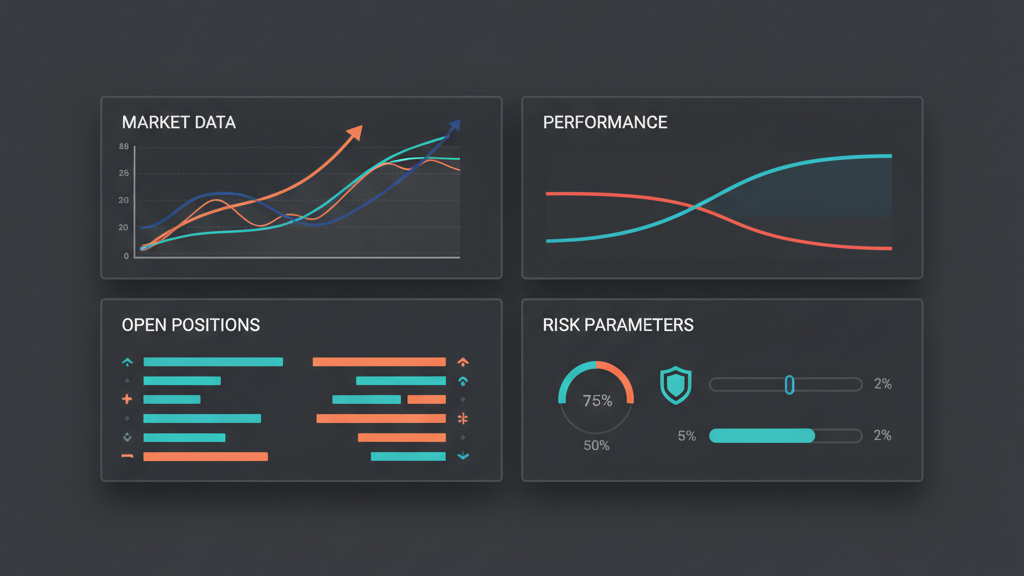
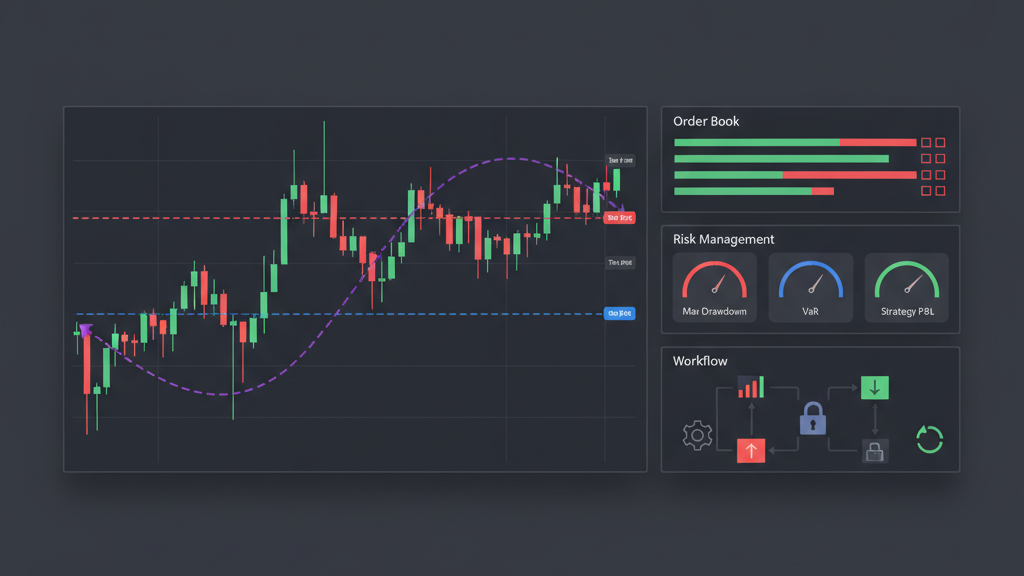
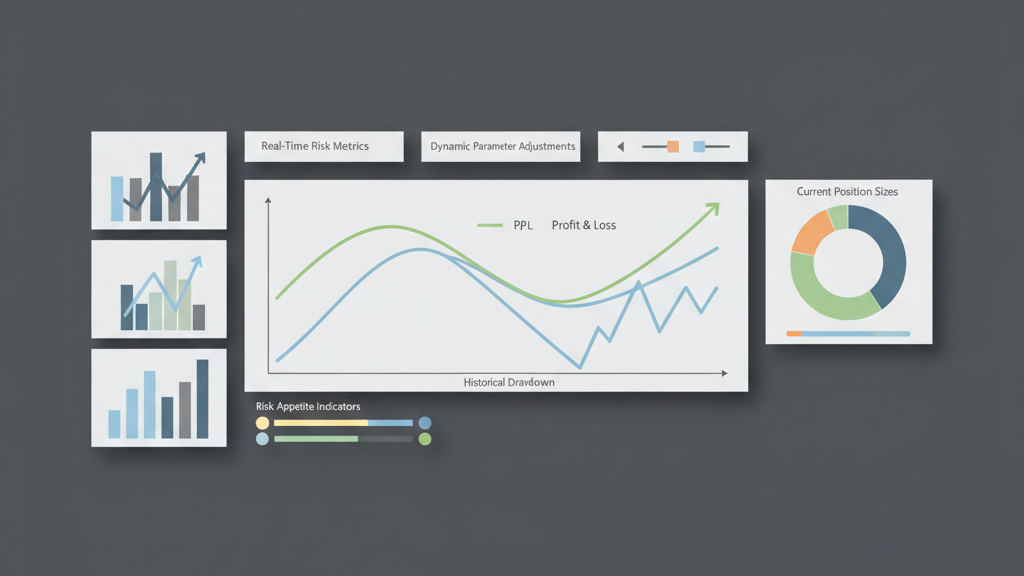
Effective dynamic risk management requires robust real-time monitoring and alerting systems. These systems continuously track key performance indicators (KPIs) and risk metrics across all active strategies and the entire portfolio. This includes monitoring current drawdown, profit and loss, exposure per instrument, margin utilization, and overall market volatility. When any of these metrics deviate beyond pre-defined thresholds, the system generates immediate alerts to the trading team. These alerts can be delivered via email, SMS, or integrated dashboard notifications, allowing human oversight to intervene if automated controls are insufficient or an anomaly is detected. Proactive alerting enables rapid response to unfolding risks, helping to prevent minor issues from escalating into significant capital impairments. It acts as a critical interface between automated controls and human decision-making, ensuring comprehensive risk coverage.
- Develop a dashboard for real-time visualization of all relevant risk metrics.
- Configure automated alerts for breaches in P&L, drawdown, or margin thresholds.
- Implement notification systems for unusual market behavior or data feed issues.
- Ensure alerts differentiate between informational and critical risk events.
- Provide audit trails for all risk-related system actions and human interventions.
Leveraging Machine Learning for Predictive Risk Adjustment
Advanced dynamic risk management can integrate machine learning (ML) models to predict future market states and proactively adjust risk. ML algorithms can analyze vast datasets, identifying complex patterns and correlations that human analysts might miss. For instance, an ML model could predict periods of increased market instability or regime shifts based on macro-economic data, sentiment analysis, or inter-market relationships. This predictive capability allows the trading system to anticipate potential drawdowns before they fully materialize, enabling pre-emptive risk reductions, such as decreasing position sizes or hedging certain exposures. By continuously learning from new data, these models refine their predictions and adapt risk parameters more intelligently than rule-based systems, offering a significant advantage in navigating complex and evolving market landscapes. This forward-looking approach enhances the system’s ability to maintain capital during challenging periods.
- Utilize ML to forecast market volatility and regime changes.
- Train models on historical data to identify early warning signs of drawdown.
- Implement ML-driven signals to adjust strategy exposure and position sizing.
- Continuously retrain ML models with new market data for ongoing adaptation.
- Validate ML risk predictions through out-of-sample testing.
Backtesting and Stress Testing Dynamic Risk Models
Developing dynamic risk management systems is only half the battle; rigorous backtesting and stress testing are crucial for validating their effectiveness. Backtesting involves simulating the risk model’s performance on historical market data, assessing how well it would have protected capital during past drawdowns or volatile periods. This helps identify weaknesses and refine parameters. Stress testing pushes the model to its limits by simulating extreme, hypothetical market events that may not have occurred historically, such as sudden market crashes, liquidity dry-ups, or rapid shifts in correlations. By evaluating the model’s resilience under these adverse conditions, traders can gain confidence in its ability to perform when it matters most. Both backtesting and stress testing provide essential insights into the robustness and reliability of the dynamic risk framework, ensuring it performs as intended under a wide range of market scenarios.
- Conduct extensive backtesting of dynamic risk parameters across diverse market conditions.
- Simulate ‘black swan’ events through stress testing to assess system resilience.
- Analyze the impact of different risk model configurations on historical drawdown.
- Measure key risk metrics like Max Drawdown and Ulcer Index during testing.
- Regularly re-validate risk models against new market data and evolving conditions.
Operationalizing Dynamic Risk Management
Operationalizing dynamic risk management involves integrating these adaptive controls seamlessly into the existing algo trading infrastructure. This means developing robust, low-latency code that can process real-time market data, execute risk adjustments, and communicate with trading platforms without delay. It also requires clear protocols for human intervention, including alert escalation paths and procedures for manual overrides. A well-designed operational framework ensures that the dynamic risk system functions reliably under all circumstances, minimizing the chances of errors or missed risk events. Regular maintenance, system audits, and performance reviews are also critical to ensure the risk controls remain effective as market conditions and trading strategies evolve. Implementing a comprehensive operational strategy is key to fully realizing the benefits of adaptive risk management and maintaining system integrity.
- Develop low-latency risk management modules integrated with trading scripts.
- Establish clear protocols for human oversight and manual intervention.
- Ensure robust data feeds and error handling for real-time risk calculations.
- Implement continuous logging and auditing of all risk adjustments.
- Conduct regular system health checks and performance reviews of risk controls.