Leveraging moving average crossovers as trend filters is a foundational technique in algorithmic trading, offering a straightforward approach to identify market direction. However, the effectiveness of this method hinges entirely on the astute selection and ongoing management of its underlying parameters. Beyond the textbook definition, real-world application demands a deep understanding of how different period lengths influence signal generation, lag, and sensitivity to market noise. Our focus here isn’t just on defining a crossover, but on the practical implications of parameter choices, the rigorous backtesting required to validate them, and the operational challenges encountered when deploying these filters in live trading environments where factors like latency, slippage, and data integrity can significantly alter performance.
The Core Mechanics of Moving Average Crossovers as Trend Filters
Moving average crossovers operate on the principle that a short-term average crossing a long-term average signals a potential shift in market momentum. For instance, a 50-period simple moving average (SMA) crossing above a 200-period SMA often indicates the start of an uptrend, while the reverse suggests a downtrend. The ‘parameters’ in question are primarily the lookback periods for these averages. Choosing these periods isn’t arbitrary; they dictate the filter’s responsiveness and lag. Shorter periods react faster to price changes, increasing sensitivity but also susceptibility to false signals or whipsaws. Longer periods provide a smoother, more lagged signal, filtering out noise but potentially missing early trend reversals. The choice inevitably involves a trade-off between capturing early moves and minimizing noise, a decision often informed by the target asset’s volatility and the desired trading frequency. These filters are not meant for precise entry/exit timing but rather to define the prevailing market context, directing a system to favor long or short trades.
Parameter Selection: Sensitivity vs. Lag Trade-offs
The most critical aspect of implementing moving average crossover indicator parameters for trend filters is understanding their direct impact on the strategy’s behavior. A rapid filter, employing short periods like a 9-period EMA crossing an 18-period EMA, will generate more frequent signals, suitable for shorter-term trend identification but prone to generating ‘noise’ in sideways markets. Conversely, longer period combinations, such as a 50-period SMA crossing a 200-period SMA, provide a much smoother and delayed signal, typically used for identifying longer-term macro trends. This delay means you often enter a trend later but are less likely to be caught in minor fluctuations. The specific values you choose should align with your strategy’s intended holding period and the volatility characteristics of the instruments being traded. Too short, and you’re whipsawed; too long, and you miss a significant portion of the move, leading to suboptimal performance, especially when accounting for transaction costs.
- **Short Periods (e.g., 9/18, 10/20):** High sensitivity, frequent signals, prone to whipsaws, suitable for shorter-term trend capture.
- **Medium Periods (e.g., 20/50, 50/100):** Balanced sensitivity, moderate signal frequency, good for intermediate trends.
- **Long Periods (e.g., 50/200, 100/200):** Low sensitivity, delayed signals, effective for identifying long-term macro trends.
- **Exponential Moving Averages (EMA):** Give more weight to recent prices, reducing lag compared to Simple Moving Averages (SMA).
- **Weighted Moving Averages (WMA):** Assigns specific weights to data points, often reducing lag further than EMAs for the same period.
Rigorous Backtesting and Walk-Forward Optimization
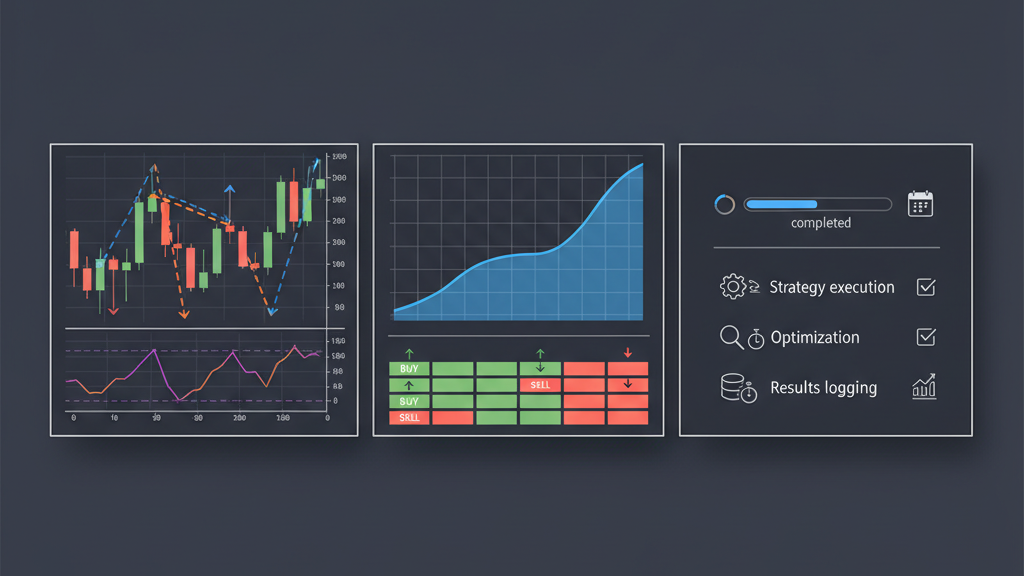
Effective selection of moving average crossover indicator parameters for trend filters demands rigorous backtesting. Simply optimizing parameters over a single historical data set is a classic overfitting trap. Instead, we employ walk-forward optimization, where the strategy is optimized on a training window, then tested on a subsequent out-of-sample period. This process is repeated sequentially across the entire dataset to simulate live market conditions more accurately. During backtesting, it’s crucial to account for real-world constraints like commissions, slippage, and sufficient liquidity, as these factors can dramatically erode any theoretical edge. Data quality is also paramount; missing data, erroneous ticks, or corporate actions can corrupt results. A robust parameter set should demonstrate consistent performance across varying market regimes (trending, sideways, volatile), minimizing sensitivity to minor parameter tweaks. The goal is to find parameter ranges that are stable, not just single ‘optimal’ points.
Execution Challenges and Practical Adjustments
Even with well-optimized moving average crossover indicator parameters for trend filters, executing live trades introduces a new set of challenges. Latency in receiving data or sending orders can cause significant slippage, especially in fast-moving markets or illiquid assets. A signal generated at a specific price might be stale by the time the order reaches the exchange, leading to execution gaps. Furthermore, API failures or unexpected system downtimes can leave positions exposed or prevent timely entries/exits. To mitigate these, robust execution logic is essential, including smart order routing, partial fills handling, and retry mechanisms. Systems must also monitor execution quality metrics in real-time. Sometimes, a theoretically perfect parameter might underperform in live conditions due to these practical frictions, necessitating slight adjustments or a broader tolerance band for entry signals to absorb minor price discrepancies inherent in real-time execution.
- **Latency Impact:** Delays in data feed or order submission can result in significant slippage, eroding profit margins.
- **Slippage Management:** Implement limit orders or use intelligent order types to control execution price, even if it means missing some trades.
- **API Reliability:** Develop robust error handling and retry logic for broker API calls; anticipate and manage disconnects.
- **Data Integrity:** Continuously validate live data feeds against known good sources to prevent acting on corrupted or delayed information.
- **Market Microstructure:** Understand how your chosen parameters interact with bid/ask spreads, order book depth, and dark pools for your target instruments.
Integrating MA Filters with Advanced Risk Management
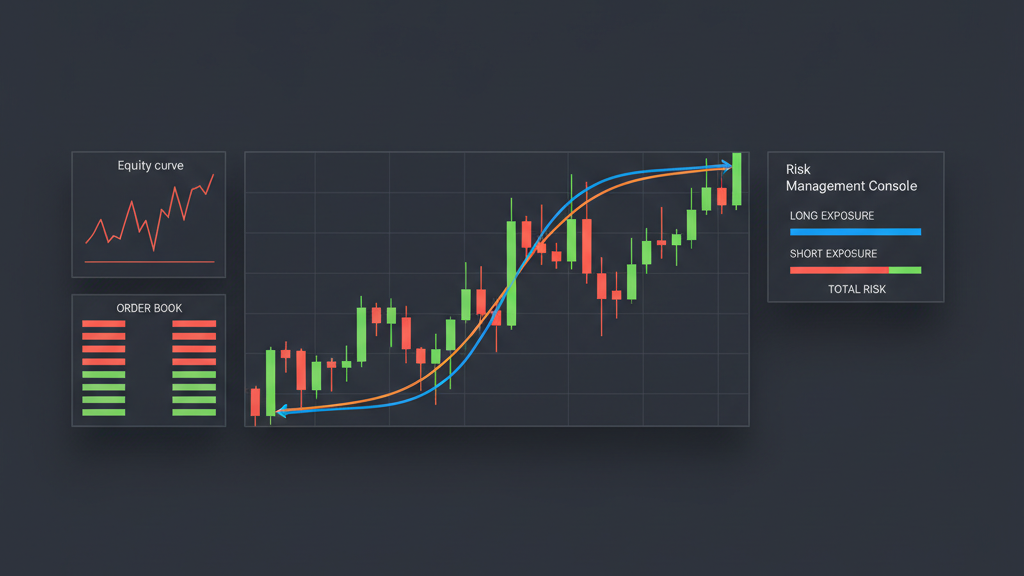
Using moving average crossover indicator parameters for trend filters inherently involves risk, as no indicator is infallible. The choice of parameters directly influences how frequently a system enters a trend and how long it stays, thereby shaping exposure. Integrating these filters with robust risk management logic is crucial. This includes dynamic position sizing based on portfolio equity and volatility, clearly defined stop-loss levels (e.g., percentage-based, volatility-adjusted, or based on a counter-crossover), and take-profit targets. For instance, if a long-term MA crossover signals an uptrend, a system might only enter long positions, but each trade within that trend still requires its own protective stop. The filter itself might act as a larger ‘circuit breaker,’ exiting all positions if a major trend reversal is signaled by a full crossover in the opposite direction, rather than relying solely on individual trade stops. This multi-layered approach helps preserve capital during adverse market shifts or prolonged sideways consolidation.
Beyond Static Parameters: Adaptive Moving Average Techniques
While static moving average crossover indicator parameters for trend filters are common, advanced systems often explore adaptive techniques to improve responsiveness across varying market conditions. Instead of fixed periods, adaptive moving averages (AMAs) adjust their lookback period based on market volatility or noise. For example, Kaufman’s Adaptive Moving Average (KAMA) uses an Efficiency Ratio to dynamically change its smoothing constant, making it more responsive in trending markets and less reactive in choppy ones. Another approach involves using machine learning models to dynamically select the optimal MA parameters in real-time, based on a feature set describing current market characteristics (e.g., volume, recent volatility, bid-ask spread). Implementing such adaptive logic adds significant complexity but can yield superior performance by reducing whipsaws in ranging markets and improving trend capture during strong directional moves, pushing beyond the limitations of fixed parameter sets.