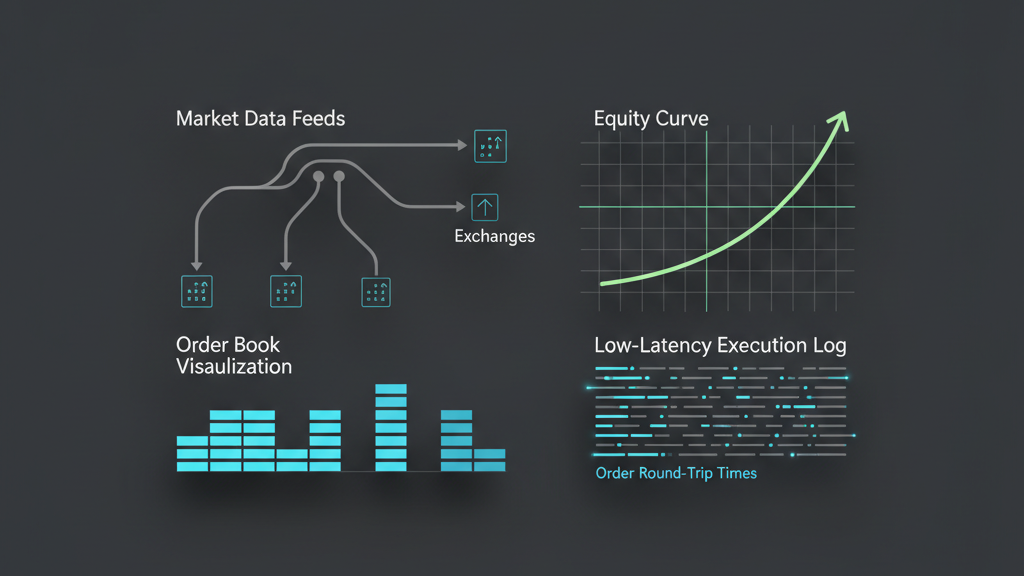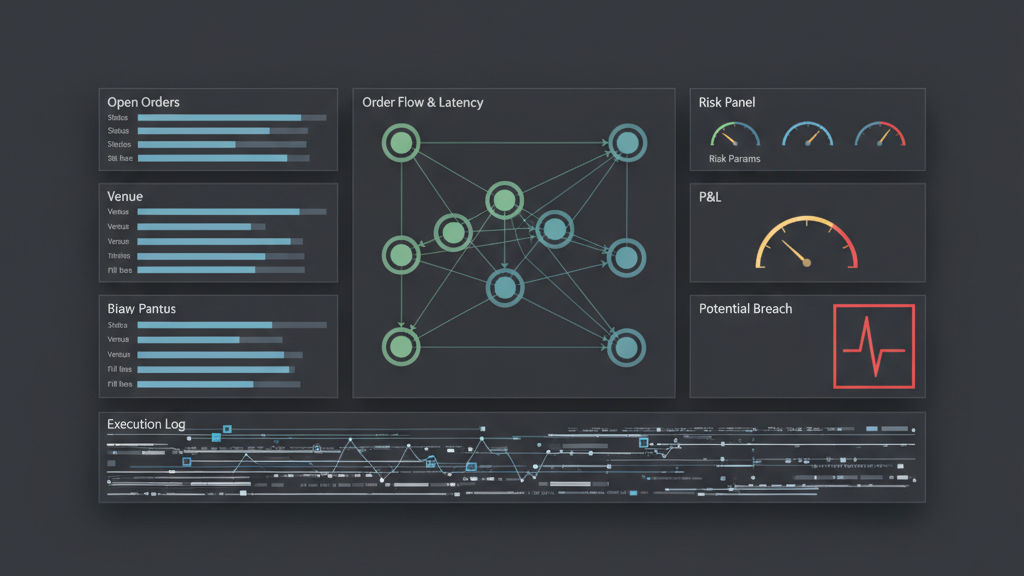
In the high-stakes world of algorithmic trading, an Order Management System (OMS) isn’t just a utility; it’s the nervous system that connects strategy to market. The architecture of this system directly dictates how reliably orders are placed, modified, and cancelled, especially when operating under stringent latency requirements. A poorly designed OMS can lead to missed opportunities, significant slippage, or even catastrophic fat-finger errors, regardless of how brilliant the underlying trading strategy might be. Achieving reliable execution under latency demands a sophisticated, resilient, and highly optimized architecture that accounts for every millisecond and every potential point of failure. This article delves into the core components and design considerations necessary to build an OMS that stands up to the rigors of modern electronic markets.
The Foundational Challenge: Speed, Reliability, and Market Interaction
Designing an effective Order Management System architecture begins with acknowledging the inherent tension between raw speed and unwavering reliability. Every decision, from language choice to database selection, impacts this balance. A low-latency system prioritizes minimizing the time from signal generation to order placement, often demanding proximity to exchanges and highly optimized network paths. However, this speed cannot come at the cost of execution integrity. Orders must be correctly routed, filled, and confirmed, with proper state management maintained across potential network hiccups, API rate limits, or exchange-side rejections. Furthermore, the system needs to intelligently interact with various market venues, each presenting its own API quirks, message formats, and operational nuances. The goal is not just fast execution, but fast *correct* execution, ensuring that the desired trading intent is realized without unexpected consequences, even when dealing with unpredictable market volatility or temporary connectivity issues.
Modular Design for Scalability and Resilience
A monolithic OMS quickly becomes a bottleneck for development, deployment, and performance tuning. A microservices-oriented architecture, where distinct functionalities are decoupled into independent services, offers superior scalability and resilience. This approach allows components like order routing, position management, risk checking, and market data processing to operate autonomously. If one service experiences an issue, it doesn’t necessarily bring down the entire system. Communication between these services typically occurs asynchronously via low-latency message queues (e.g., Apache Kafka or ZeroMQ), which buffer messages and provide a reliable communication backbone. This also facilitates horizontal scaling, allowing specific components to be scaled up or down based on load, without impacting others. Careful consideration of inter-service communication protocols and data serialization formats is crucial to minimize overhead and maintain performance targets.
- Order Router Service: Manages order placement, modification, and cancellation requests to various venues.
- Position Manager Service: Tracks real-time positions, P&L, and exposure across all instruments.
- Risk Engine Service: Enforces pre-trade and post-trade risk limits, rejecting orders that breach thresholds.
- Market Data Handler Service: Ingests and normalizes real-time market data for strategy and OMS use.
- Execution Report Service: Processes fills and rejections, updating order state and notifying other services.
Embedded Pre-Trade Risk and Compliance Checks
Reliable execution isn’t just about getting orders out fast; it’s about getting *valid* orders out fast. Robust pre-trade risk and compliance checks must be an integral part of the Order Management System architecture, ideally integrated as close to the order entry point as possible to minimize latency. These checks should run in real-time, evaluating parameters such as maximum order quantity, notional value limits, position limits, instrument eligibility, and ‘fat finger’ error detection. Instead of being an afterthought, these modules should be designed for extremely low-latency execution, often using in-memory data stores for position and risk-related metrics. The challenge lies in performing these complex computations without introducing significant delays that negate the benefits of a fast trading strategy. Proper caching and efficient data structures are critical here, ensuring that risk decisions can be made within microseconds.
Smart Order Routing and Venue Agnosticism
A critical function of an advanced OMS is Smart Order Routing (SOR). This component dynamically determines the optimal venue for an order based on factors like price, liquidity, fees, and execution quality. The OMS architecture must support integration with multiple exchange APIs, dark pools, and alternative trading systems, each potentially having different connectivity methods (FIX, native binary protocols), message specifications, and rate limits. Achieving venue agnosticism means abstracting these differences behind a common internal API, allowing trading strategies to submit orders without needing to know the specifics of the target exchange. Implementing effective SOR requires real-time market data feeds, often from multiple sources, to make informed routing decisions. The routing logic itself must be highly optimized, potentially involving custom algorithms or external services, to avoid becoming a latency bottleneck when order flow is high or market conditions are volatile.
- Direct Market Access (DMA) Integration: Native protocol connectivity for lowest latency to primary exchanges.
- Broker API Integration: Standardized (FIX) or proprietary APIs for accessing broker-managed dark pools and smart routing.
- Dynamic Routing Logic: Algorithms that select venues based on current market depth, spread, and historical fill rates.
- Rate Limit Management: Mechanisms to track and adhere to per-venue API call limits to prevent temporary bans or rejections.
Resilient Error Handling and State Consistency
In algorithmic trading, failures are not a matter of ‘if,’ but ‘when.’ A robust Order Management System architecture must be built with comprehensive error handling, retry logic, and mechanisms to maintain state consistency even in the face of network outages, exchange disconnections, or internal service failures. This involves implementing idempotent operations where possible, designing reliable message delivery patterns, and employing circuit breaker patterns to prevent cascading failures. Crucially, the OMS must always know the definitive state of every order, which means meticulous logging and persistent storage of all order lifecycle events. If a connection drops, the system needs to quickly reconcile its internal state with the exchange’s reported state upon re-connection, often by querying open orders directly. This reconciliation process must be fast and accurate to avoid duplicate orders or orphan positions, which can be incredibly costly to manage manually.
Backtesting and Simulation for OMS Validation and Optimization
Before deploying any Order Management System architecture to a live trading environment, rigorous backtesting and simulation are paramount. This involves not just testing the trading strategy, but validating the OMS’s performance under various market conditions and failure scenarios. A sophisticated backtesting engine can simulate exchange latencies, slippage models, order rejection rates, and even API failures. It should be able to replay historical market data, feeding it into the OMS as if it were a live feed, and track how the system reacts to different order types, sizes, and market volatility. This allows developers to fine-tune execution parameters, evaluate the impact of different smart order routing rules, and stress-test the risk management framework. Realistic backtesting provides invaluable insights into potential bottlenecks and helps optimize the OMS for reliable execution under latency before any real capital is at risk.