Developing sophisticated algorithmic trading strategies involves more than just identifying an edge; it requires rigorous validation of the underlying execution logic. Before deploying any bot to a live environment, a well-structured paper trading workflow for validating algorithmic execution logic is indispensable. This isn’t just about checking if your strategy makes money in a simulated environment; it’s about meticulously ensuring that your order placement, management, and fill processing mechanisms behave exactly as intended under realistic market conditions. Many experienced quantitative developers will attest that the nuances of execution often determine profitability more than the signal itself. This article outlines a practical approach, grounded in real-world challenges faced by algo trading systems engineers, to thoroughly test your execution layer.
Establishing a Realistic Paper Trading Environment
The first step in any effective paper trading workflow for validating algorithmic execution logic is to set up an environment that closely mirrors your intended live trading setup. This means using the same data feeds, connecting to the same broker APIs (or their simulation endpoints), and configuring similar network pathways where possible. We’re not just looking for a simple ‘mock’ execution; we need realistic latency, order rejection behaviors, and partial fill dynamics. Without this fidelity, many subtle bugs related to race conditions or API rate limits will remain hidden until a live deployment, which is a costly lesson. Ensure your simulated exchange provides accurate market data, and that its fill engine attempts to mimic real market depth and liquidity conditions, rather than just filling every order instantly at the mid-price. This often involves collaborating with your brokerage’s API team to understand their sandbox limitations and capabilities, as not all paper environments are created equal.
- Utilize production-like market data feeds, not just simplified historical data.
- Configure simulated broker APIs to replicate common live challenges like rate limits and rejections.
- Ensure your system handles realistic latency profiles for order submission and market data reception.
- Verify the paper trading engine simulates partial fills and slippage based on market depth.
Validating Core Order Management and Execution
Once the environment is set, the focus shifts to validating the core order management and execution logic. This involves systematically testing every order type your algorithm might issue: market, limit, stop, stop-limit, and potentially more complex types like OCO (one-cancels-the-other) or trailing stops. We scrutinize how the system handles immediate fills, partial fills, order modifications (amendments), and cancellations. A critical part of this is observing the state transitions of orders—from `PENDING_NEW` to `NEW`, `PARTIALLY_FILLED`, `FILLED`, `CANCELED`, or `REJECTED`. Any deviation from the expected sequence or an unexpected final state points to a bug in your execution wrapper or strategy logic. It’s not enough to see a ‘Filled’ status; you need to verify the fill price, quantity, and timestamp against the simulated market data at that moment. This micro-level verification is paramount for strategies sensitive to timing and price.
- Test all order types your strategy uses, including market, limit, and various stop orders.
- Verify accurate processing of order amendments, cancellations, and state transitions.
- Cross-reference fill prices and quantities against simulated market data at the time of execution.
- Validate the logic for handling partial fills and the remaining quantity of an order.
Implementing Comprehensive Logging and Monitoring
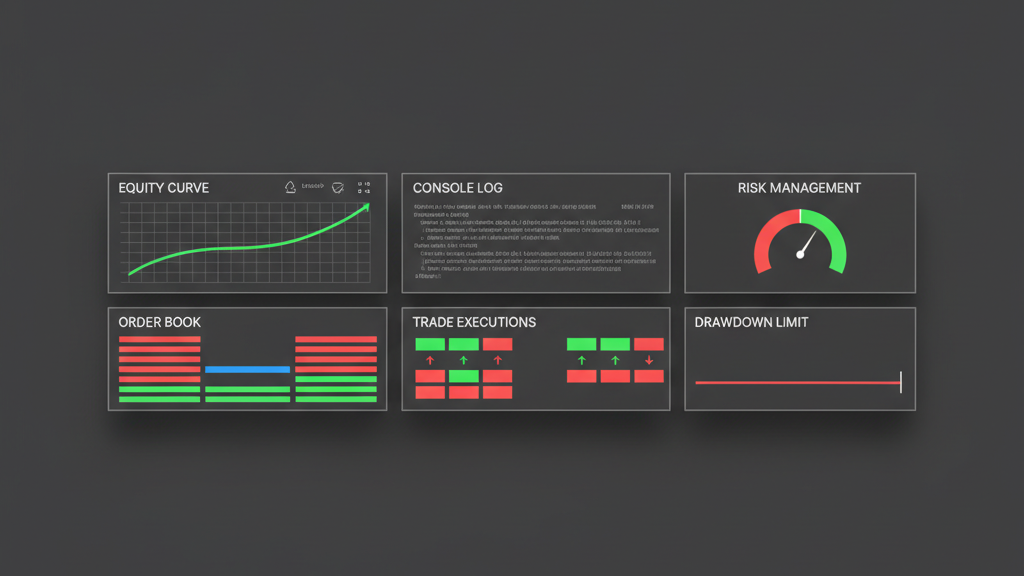
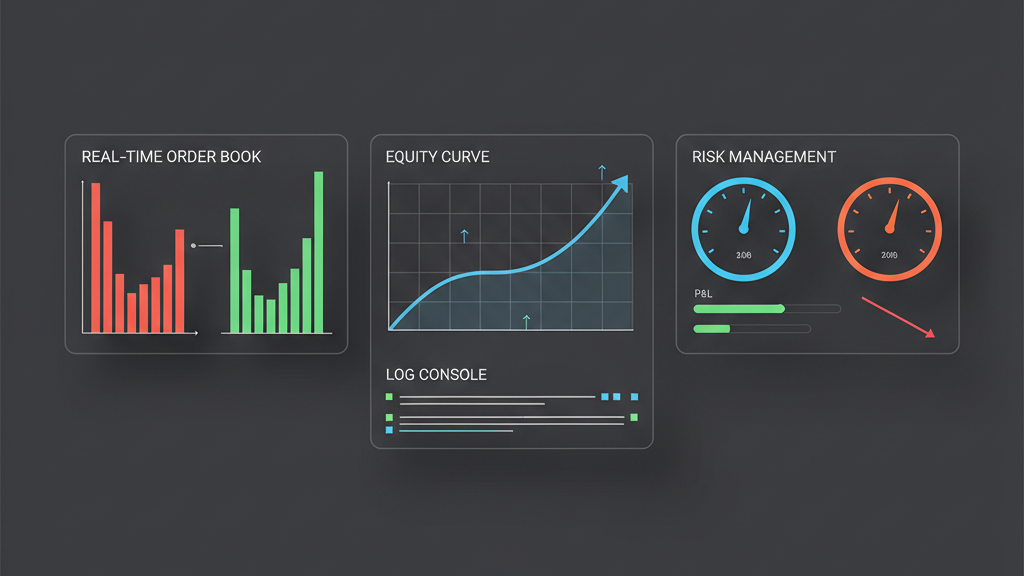
A robust paper trading workflow for validating algorithmic execution logic absolutely depends on detailed logging and real-time monitoring. Every significant event—market data receipt, signal generation, order submission, order update, fill notification, and P&L calculation—must be logged with high precision timestamps. These logs become the primary tool for post-mortem analysis when unexpected behavior occurs. Beyond raw logs, a real-time dashboard displaying key metrics like open positions, realized and unrealized P&L, order book depth, and a visual representation of active orders on a chart is crucial. This allows human oversight to quickly identify issues that automated tests might miss. For instance, an order sitting `NEW` for an unusually long time in a fast market, or a position accumulating beyond defined limits, are immediate red flags that a comprehensive monitoring setup can highlight. This also helps in calibrating alert thresholds for automated anomaly detection.
Stress Testing Edge Cases and Failure Scenarios
The true test of an algo’s robustness comes when it encounters conditions it wasn’t explicitly designed for, or when external systems fail. This means deliberately introducing stress and failure scenarios into your paper trading environment. Simulate API disconnects, market data feed outages, sudden spikes in volatility, or periods of extreme illiquidity. How does your algorithm react when an order is submitted but no acknowledgment is received for an extended period? Does it retry, cancel, or assume a fill? What happens if a critical dependency, like a database connection, momentarily drops? These are not theoretical concerns; they are daily realities in live trading environments. Validating your algorithm’s graceful degradation and recovery mechanisms in paper trading prevents catastrophic losses when these events inevitably occur in production. This often involves developing specific test harnesses that can inject faults or simulate degraded network conditions, pushing beyond simple functional testing.
- Simulate API connectivity issues and market data feed outages.
- Test algorithm behavior during periods of high volatility or extremely low liquidity.
- Validate error handling and recovery logic when external dependencies fail.
- Verify the system’s ability to maintain state and recover positions after a restart or connection loss.
Performance Evaluation and Parameter Calibration
While paper trading is primarily for execution logic validation, it also serves as a crucial intermediate step for performance evaluation and parameter calibration after backtesting. Metrics such as execution slippage, latency from signal generation to fill, and the percentage of missed fills due to race conditions or rejection are important. We analyze the difference between the ‘intended’ fill price (e.g., the limit price or mid-price at signal) and the actual fill price received. This provides a realistic estimate of the execution cost not captured by pure historical backtesting. Adjustments to parameters like order sizing, retry logic timeouts, or even the choice of order type (e.g., using aggressive limit orders instead of market orders) can be rigorously tested here. This iterative process of observing performance, identifying inefficiencies, and refining the execution parameters is a core component of moving from a theoretically profitable strategy to a practically viable one, often revealing limitations of the strategy itself when confronted with real-world execution friction.
Transitioning from Paper to Live Deployment
The final phase of the paper trading workflow for validating algorithmic execution logic involves preparing for a live transition. This isn’t just flipping a switch; it’s a carefully managed process. Begin with a ‘micro-live’ or ‘shadow trading’ phase where the algorithm runs with minimal capital or in a purely observational mode, submitting orders but not actually executing them (or executing tiny, insignificant quantities). This allows a final check against real market conditions and live API interactions without significant risk. Verify that all risk management parameters – stop-loss triggers, position size limits, daily loss limits – are correctly enforced and communicate effectively with the live broker account. Ensure your logging, monitoring, and alerting infrastructure is fully integrated and tested in the live environment. Even after a successful paper trading period, unexpected behaviors can surface in live markets due to subtle differences in API environments, network routing, or market microstructure that are impossible to fully replicate in any simulation. A cautious, phased rollout with tight monitoring is always recommended.
- Implement a ‘shadow trading’ phase to observe algorithm behavior against live market data without real capital.
- Conduct final verification of all risk management parameters within the live environment.
- Confirm seamless integration and functionality of live logging, monitoring, and alerting systems.
- Plan a cautious, phased rollout, starting with minimal capital or an observational mode.
- Be prepared for subtle differences between paper and live environments, particularly in API response times.