Managing risk effectively is paramount for any investment fund, especially in the volatile landscape of algo trading. A critical metric fund managers track is maximum drawdown, representing the largest peak-to-trough decline in portfolio value. Implementing robust portfolio-level risk management to control maximum drawdown in funds is not merely a best practice; it is a necessity for capital preservation and maintaining investor confidence. This approach moves beyond individual trade risk, focusing on the cumulative impact of all strategies and positions to safeguard overall fund performance. By integrating advanced risk frameworks with automated trading systems, funds can achieve more stable equity curves and weather market turbulence more effectively.
Understanding Maximum Drawdown as a Core Risk Metric
Maximum Drawdown (MDD) quantifies the largest historical loss from a peak to a trough in an investment portfolio before a new peak is achieved. It provides a stark measure of downside volatility and potential capital impairment, making it a critical metric for fund managers, investors, and risk committees. While individual trade losses are inevitable, an uncontrolled MDD can severely impact investor confidence, trigger redemptions, and make it significantly harder to recover previous highs due to the compounding effect of losses. Effective portfolio risk management strategies specifically target the mitigation and control of MDD to ensure long-term fund viability and attract stable capital. Understanding the drivers behind MDD, such as correlated strategies, concentrated positions, or unexpected market shocks, is the first step in building a resilient risk framework that can sustain fund performance across diverse market cycles.
- Define MDD as the peak-to-trough decline in portfolio value.
- Recognize MDD as a key indicator of downside risk and capital exposure.
- Assess historical MDD to understand strategy resilience under stress.
- Set acceptable MDD thresholds for the overall fund and individual components.
- Differentiate MDD from daily volatility, focusing on sustained capital impairment.
Core Principles for Effective Portfolio-Level Risk Management
Effective portfolio-level risk management involves a multi-faceted approach that extends beyond simple stop-loss orders on individual positions. Key principles include strategic diversification across asset classes, trading styles, and uncorrelated strategies to reduce idiosyncratic risks. Proper capital allocation ensures that no single strategy or asset class poses an existential threat to the entire fund. Position sizing models, whether fixed fractional or volatility-adjusted, prevent overexposure to any single trade idea. These principles are foundational in building a robust framework designed to absorb market shocks and prevent minor losses from cascading into significant drawdowns. Implementing these systematically requires sophisticated tools and custom script development to automate the application of these rules across diverse portfolios and trading environments.
- Diversify across multiple uncorrelated strategies and asset classes.
- Implement robust capital allocation rules per strategy and market.
- Apply dynamic position sizing based on risk contribution and volatility.
- Establish clear risk limits at the portfolio, strategy, and individual trade levels.
- Utilize correlation analysis to identify and mitigate hidden risks.
Implementing Dynamic Risk Controls with Custom Algo Scripts
Dynamic risk controls are essential for modern algo trading, allowing systems to adapt in real time to changing market conditions and emerging risks. Custom algo scripts are instrumental in automating these controls, enabling the rapid adjustment of position sizes, scaling back exposure, or even pausing strategies when predefined risk thresholds are breached. For instance, if overall portfolio volatility exceeds a set limit or a specific strategy experiences an unusual cluster of losses, an automated script can reduce its allocated capital or restrict new trades. This proactive approach prevents small issues from escalating into significant portfolio drawdowns. Integrating these dynamic controls directly into trading platforms ensures swift, unemotional responses, protecting capital far more effectively than manual oversight alone could achieve.
- Develop custom scripts to automate real-time risk adjustments.
- Implement adaptive position sizing based on live market volatility.
- Programmatically scale back strategy exposure during adverse conditions.
- Set up circuit breakers or kill switches for critical risk breaches.
- Ensure rapid, automated responses to evolving market risks.
Stress Testing and Scenario Analysis for Drawdown Resilience
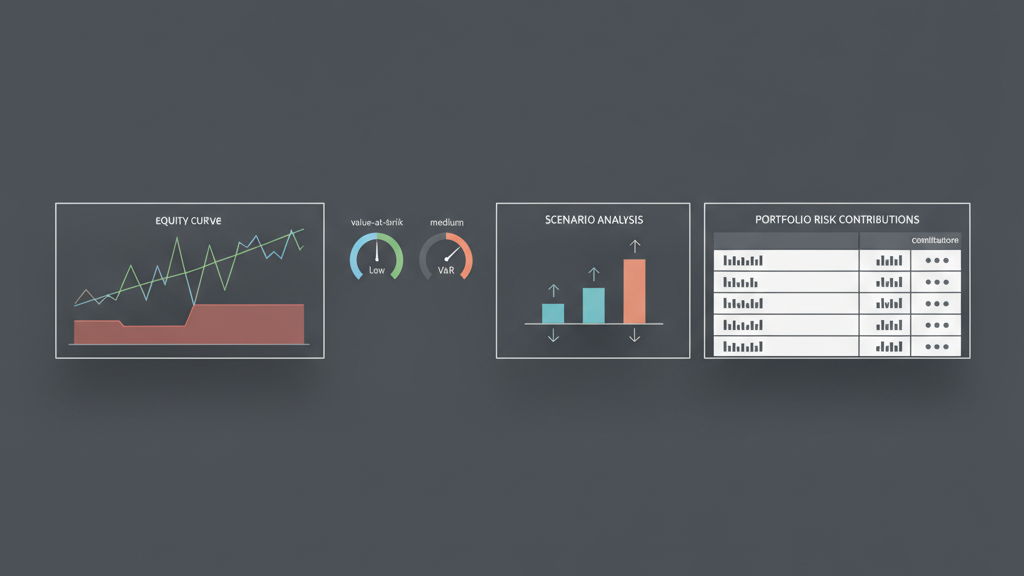
Preparing for extreme market events is a cornerstone of robust portfolio risk management. Stress testing involves subjecting the portfolio to historical crisis scenarios, such as the 2008 financial crisis or the dot-com bubble burst, to evaluate its theoretical resilience. Scenario analysis expands on this by modeling hypothetical, plausible future events, including unexpected geopolitical shocks or sudden commodity price collapses, to understand their potential impact on fund performance. These analyses help identify vulnerabilities, quantify potential drawdowns under duress, and inform adjustments to strategy allocation or hedging instruments. Integrating these tests into the development cycle of algo trading scripts ensures that strategies are not just profitable in benign conditions but also robust enough to survive and potentially thrive in highly volatile and unpredictable markets.
- Conduct historical stress tests using past market crisis data.
- Perform hypothetical scenario analysis for potential future shocks.
- Identify portfolio vulnerabilities under extreme market conditions.
- Quantify potential maximum drawdown under various stress scenarios.
- Adjust strategy allocations and hedging based on test outcomes.
Automated Drawdown Control Mechanisms for Capital Preservation
Specific automated mechanisms are vital for controlling maximum drawdown in funds. These include trailing stop-losses applied at the portfolio level, which move with the equity curve and trigger reductions in exposure if the fund value retraces by a set percentage. Profit-taking mechanisms can also be automated to lock in gains and reduce overall portfolio risk exposure after significant upward moves. Basket-level hedges, implemented through options or futures, can provide broad market protection without requiring individual position adjustments. Furthermore, system-wide risk limits, such as daily or weekly loss limits, can automatically halt trading activity if breached, preventing further losses. These mechanisms are precisely coded into algo trading scripts, ensuring consistent and disciplined execution of risk policies.
- Implement portfolio-level trailing stop-losses.
- Automate profit-taking to secure gains and reduce exposure.
- Utilize dynamic hedging strategies (e.g., options, futures).
- Establish system-wide daily or weekly loss limits.
- Trigger automatic strategy scaling or pausing based on fund performance metrics.
Integrating Risk Controls with Algo Trading Platforms
The effectiveness of portfolio-level risk management hinges on its seamless integration with the underlying algo trading platforms. Custom script development plays a crucial role here, allowing for direct communication between risk engines and execution systems. This integration ensures that risk parameters, such as VaR limits, MDD triggers, or maximum exposure caps, are enforced automatically at the point of trade execution or position adjustment. APIs and custom modules facilitate the flow of real-time data from various market sources and internal risk models into the trading system. This tight integration minimizes latency in risk responses, ensures compliance with pre-defined rules, and prevents human error, thereby significantly enhancing the fund’s ability to control maximum drawdown and maintain capital stability.
- Develop custom APIs for seamless risk engine-platform integration.
- Enforce risk parameters directly at the execution level via scripts.
- Ensure real-time data flow from market and risk models to trading systems.
- Minimize latency in risk response through automated workflows.
- Implement pre-trade risk checks to prevent rule violations.
Continuous Monitoring, Reporting, and Improvement
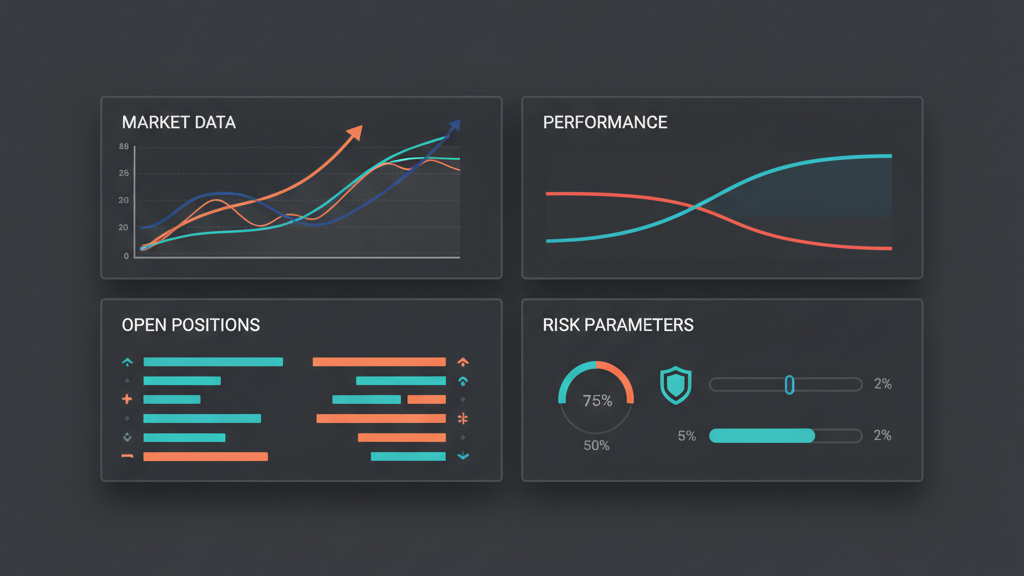
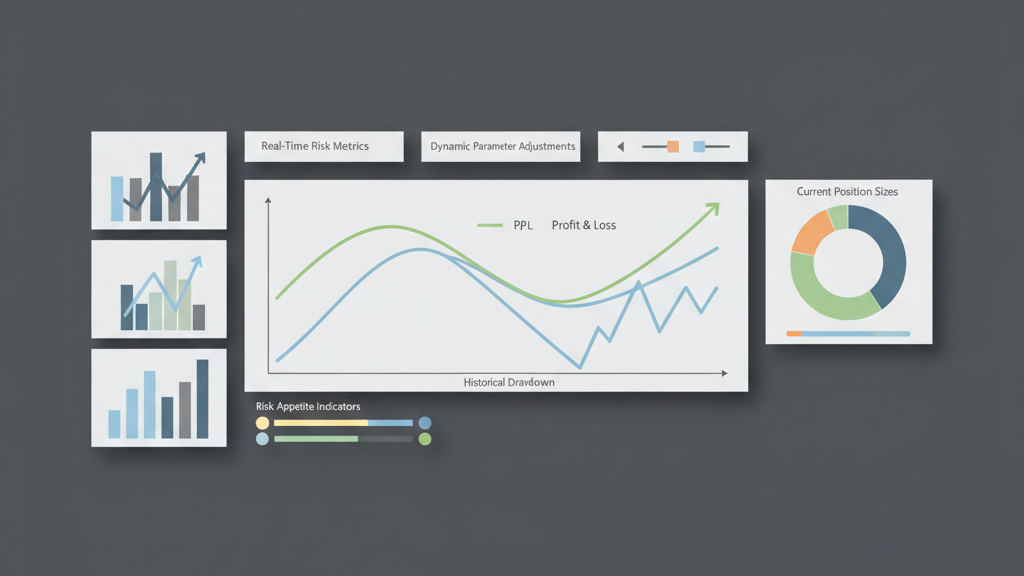
Portfolio-level risk management is an ongoing process, not a one-time setup. Continuous monitoring of all risk metrics, including real-time drawdown, VaR, stress test results, and individual strategy performance, is essential. Automated reporting systems provide fund managers and risk officers with immediate insights into the fund’s risk profile and any potential breaches. Regular reviews of risk models and parameters are critical to ensure they remain relevant to current market conditions and strategy evolutions. Post-mortem analysis of any significant drawdowns, even within acceptable limits, offers valuable lessons for refining risk controls and enhancing the overall resilience of the algo trading system. This iterative process of monitoring, reporting, and refinement is key to maintaining effective capital preservation.
- Establish real-time dashboards for continuous risk metric monitoring.
- Generate automated daily/weekly risk reports for stakeholders.
- Conduct regular reviews and calibration of risk models and parameters.
- Perform post-mortem analysis on significant drawdown events.
- Iteratively refine risk controls based on performance and market changes.