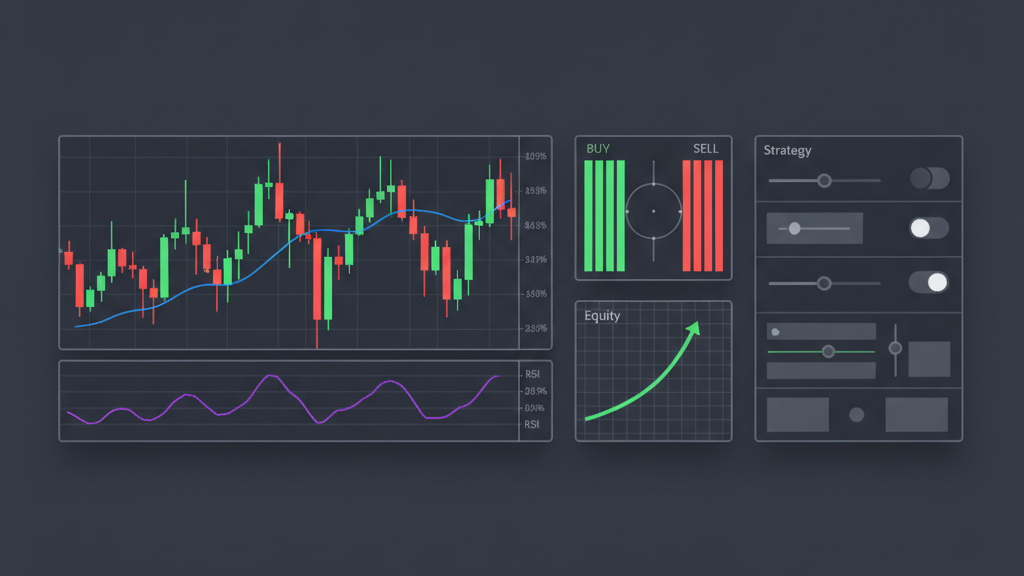
Even well-designed algo trading strategies require continuous refinement. Market conditions evolve, and initial assumptions can become outdated. This necessitates a robust approach to strategy validation and optimization. Refining existing algo trading strategy with advanced backtesting techniques goes beyond simple historical simulations. It involves employing sophisticated methodologies to ensure your algorithms are resilient, adaptable, and profitable in diverse market environments. Advanced backtesting helps identify hidden risks, improve parameter stability, and ultimately boost confidence before live deployment.
Limitations of Basic Backtesting Methodologies
Basic backtesting often relies on simple historical data simulations over a single period. This approach, while a good starting point, frequently falls short in predicting real-world performance. It can lead to severe issues like overfitting, where a strategy performs exceptionally well on past data but fails in live markets due to being overly tailored to specific historical patterns. Furthermore, basic methods often neglect transaction costs, slippage, and latency, which are critical components of actual trading profitability. The assumption of unlimited liquidity at historical prices also distorts potential outcomes. Recognizing these limitations is the first step toward building more robust and reliable automated trading systems that can withstand dynamic market conditions and unforeseen events.
- Overfitting to historical data leads to poor live performance.
- Single-period simulations fail to capture market evolution.
- Ignoring real-world transaction costs distorts profitability metrics.
- Lack of liquidity modeling creates unrealistic fill assumptions.
- Look-ahead bias can inadvertently incorporate future information.
- Sensitivity to minor parameter changes indicates fragility.
Implementing Walk-Forward Optimization for Adaptive Strategies
Walk-forward optimization is a powerful advanced backtesting technique designed to combat overfitting and enhance strategy adaptability. Instead of optimizing parameters once over the entire dataset, walk-forward analysis divides the historical data into multiple segments. Parameters are optimized on an ‘in-sample’ training period, and then the strategy is tested on a subsequent, unseen ‘out-of-sample’ period. This process is repeated sequentially across the entire dataset. This method simulates how a trader would periodically re-optimize parameters in a live environment, providing a more realistic assessment of a strategy’s long-term viability and its ability to adjust to evolving market regimes. It confirms that the chosen parameters remain effective over diverse market conditions.
- Divide data into sequential in-sample optimization and out-of-sample test periods.
- Optimize strategy parameters on the in-sample segment only.
- Test the optimized parameters on the subsequent out-of-sample segment.
- Repeat the process by ‘walking forward’ through the entire dataset.
- Evaluates strategy’s ability to adapt to changing market conditions.
- Reduces overfitting by testing on unseen data segments.
Leveraging Monte Carlo Simulations for Robustness Validation
Monte Carlo simulations introduce an element of randomness to backtesting, providing a comprehensive view of a strategy’s potential performance range rather than a single deterministic outcome. This technique involves generating numerous hypothetical price paths or market scenarios by randomly sampling historical data or by applying statistical models to observed market behavior. By running the strategy against these varied simulations, traders can assess its robustness across a wide spectrum of possibilities, including unexpected market fluctuations. Monte Carlo analysis helps quantify the probability of various outcomes, identify potential worst-case scenarios, and understand the strategy’s stability under stress. This moves beyond simple average returns to evaluate risk distribution.
- Generate multiple synthetic market price paths based on historical data distributions.
- Run the trading strategy against each generated path to simulate diverse outcomes.
- Assess the distribution of profit and loss, drawdowns, and other performance metrics.
- Quantify strategy robustness under varied and unpredictable market conditions.
- Identify the probability of extreme events and potential downside risks.
- Provides a probabilistic forecast of future strategy performance.
Integrating Realistic Market Microstructure in Backtesting
Accurate backtesting requires moving beyond idealized fills at mid-prices. Incorporating realistic market microstructure effects is paramount for obtaining credible performance estimates. This includes modeling bid-ask spreads, order book depth, latency, and the impact of large orders on price. Simulating execution slippage, which is the difference between the expected price and the actual fill price, and commission costs are vital for understanding true profitability. High-frequency strategies, in particular, depend heavily on precise microstructure modeling. Ignoring these factors can lead to wildly optimistic backtest results that bear little resemblance to live trading, resulting in significant underperformance when deployed. Detailed tick data and order book snapshots are essential for this level of granularity.
- Model bid-ask spreads and dynamic order book liquidity.
- Account for execution slippage based on trade size and market conditions.
- Incorporate realistic latency models for order placement and cancellation.
- Factor in variable commission structures and exchange fees.
- Simulate market impact for large order executions.
- Utilize high-resolution tick and order book data for accuracy.
Stress Testing and Scenario Analysis for Extreme Conditions
No strategy is immune to extreme market events. Stress testing and scenario analysis are crucial advanced backtesting components for evaluating how a strategy performs during significant market dislocations or ‘black swan’ events. This involves exposing the strategy to historical periods of high volatility, sudden market crashes, or periods of low liquidity, which might not be adequately represented in standard backtests. Alternatively, hypothetical scenarios can be constructed, such as sudden geopolitical events or unexpected economic shocks, to gauge resilience. Understanding a strategy’s behavior under such duress allows for proactive risk management adjustments, including position sizing, stop-loss levels, and overall capital allocation. It identifies vulnerabilities before they cause substantial losses.
- Simulate strategy performance during known historical market crashes or crises.
- Create hypothetical adverse market scenarios (e.g., sudden interest rate hikes).
- Test strategy under extreme volatility, liquidity shocks, or regulatory changes.
- Analyze maximum drawdown, recovery time, and risk metric stability.
- Identify potential breaking points and hidden vulnerabilities in the strategy.
- Develop contingency plans and risk mitigation rules for severe events.
Ensuring Data Quality and Mitigating Backtesting Biases
The accuracy of any backtest is fundamentally dependent on the quality and integrity of the underlying data. Poor data can introduce significant biases, rendering backtest results meaningless. Common issues include survivorship bias, where only data from currently existing assets is used, ignoring delisted or failed ones. Look-ahead bias occurs when future information is accidentally included in historical simulations. Data errors, such as missing values, incorrect prices, or splits/dividends not being adjusted, can also skew results. Rigorous data cleaning, validation, and using comprehensive, adjusted datasets are critical. Acknowledging and actively working to mitigate these biases is essential for generating reliable insights from any advanced backtesting framework, forming the bedrock of sound strategy development.
- Use comprehensive, survivorship-bias-free historical data.
- Ensure all corporate actions (splits, dividends) are correctly adjusted.
- Validate data integrity, identify and rectify missing or erroneous values.
- Prevent look-ahead bias by strictly isolating historical information.
- Verify data sources and ensure consistency across multiple providers.
- Understand the limitations of available data and its potential impact on results.
Parameter Sensitivity and Robustness Mapping for Optimization
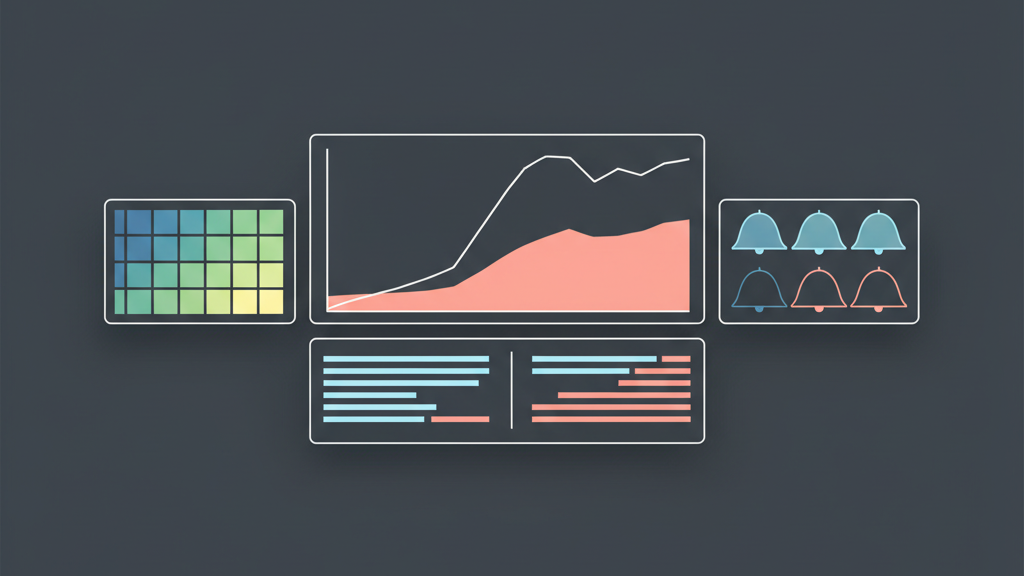
Optimizing strategy parameters involves finding the sweet spot where performance is maximized without sacrificing robustness. Parameter sensitivity analysis, often visualized through robustness maps or heatmaps, explores how a strategy’s performance metrics (e.g., profit factor, Sharpe ratio, maximum drawdown) change across a grid of parameter values. Instead of pinpointing a single ‘optimal’ parameter set, this method aims to identify ‘robust regions’ where performance remains consistently strong over a range of parameter inputs. This reduces the risk of overfitting to a single, fragile parameter combination. A wide, flat peak on a robustness map suggests a more resilient strategy, less susceptible to minor market shifts than a narrow, sharp peak.
- Perform multi-dimensional grid searches across relevant strategy parameters.
- Map performance metrics (e.g., net profit, drawdown) for each parameter combination.
- Identify ‘robust regions’ where performance is consistently good, not just peak.
- Avoid selecting parameters at isolated peaks, which often indicate overfitting.
- Assess the stability of strategy performance across varying parameter inputs.
- Visualize results using heatmaps to understand parameter interdependence.
Translating Advanced Backtest Insights to Live Execution
The ultimate goal of refining existing algo trading strategy with advanced backtesting techniques is to build confidence for live deployment. Transitioning from backtest to live trading requires careful planning and a disciplined approach. It involves translating optimized parameters and risk controls into the live trading environment, often beginning with a paper trading or simulation phase to validate real-time behavior. Continuous monitoring of live performance against backtest expectations is crucial for identifying discrepancies or new market conditions that necessitate further refinement. Regular re-evaluation and re-optimization, guided by advanced backtesting, ensure that the strategy remains aligned with market realities, maintaining its edge over time and adapting to new challenges.
- Validate backtest findings in a simulated or paper trading environment.
- Implement robust risk management rules directly informed by backtest stress tests.
- Develop clear protocols for strategy monitoring and performance tracking.
- Establish criteria for when to re-optimize parameters based on live market data.
- Ensure execution infrastructure matches backtest assumptions (latency, feeds).
- Maintain continuous feedback loop between live performance and backtesting.