Developing an algorithmic trading strategy is only the first step; validating its real-world performance before committing capital is crucial. Paper trading, often overlooked as a mere simulation, is a critical phase in the deployment lifecycle. It bridges the gap between theoretical backtest results and live market execution, offering a controlled environment to stress-test your code, connectivity, and risk management logic. A well-structured paper trading workflow for algorithmic strategy validation before live deployment is not just about confirming profitability; it’s about uncovering hidden bugs, exposing infrastructure weaknesses, and building confidence in your entire trading system under realistic market conditions. This stage is where you truly understand how your strategy interacts with real-time data feeds, order books, and broker APIs, preparing it for the unpredictable nature of live markets.
Setting Up the Simulation Environment
The foundation of an effective paper trading workflow for algorithmic strategy validation before live deployment is replicating the production environment as closely as possible. This involves more than just a synthetic data feed; you need to connect to your broker’s paper trading API, which ideally mimics their live API in terms of latency, rate limits, and supported order types. Discrepancies between paper and live APIs are common, so understanding these differences is vital. Ensure your execution engine handles real-time market data subscriptions, order placement, cancellation, and position management exactly as it would in a live setting. This includes proper error handling for API timeouts, rejected orders, or unexpected disconnections. A robust setup also accounts for network latency, ensuring your system processes data and sends orders with a delay profile similar to what you’d experience with real funds.
- Utilize broker-provided paper trading APIs that mirror live functionality.
- Configure data feeds to match production data sources and update frequencies.
- Implement a logging system for all system events, orders, and market data snapshots.
- Integrate the same order types (e.g., limit, market, stop, OCO) and execution logic.
- Ensure robust error handling for API failures, network issues, and invalid orders.
Strategy Deployment and Initial Monitoring
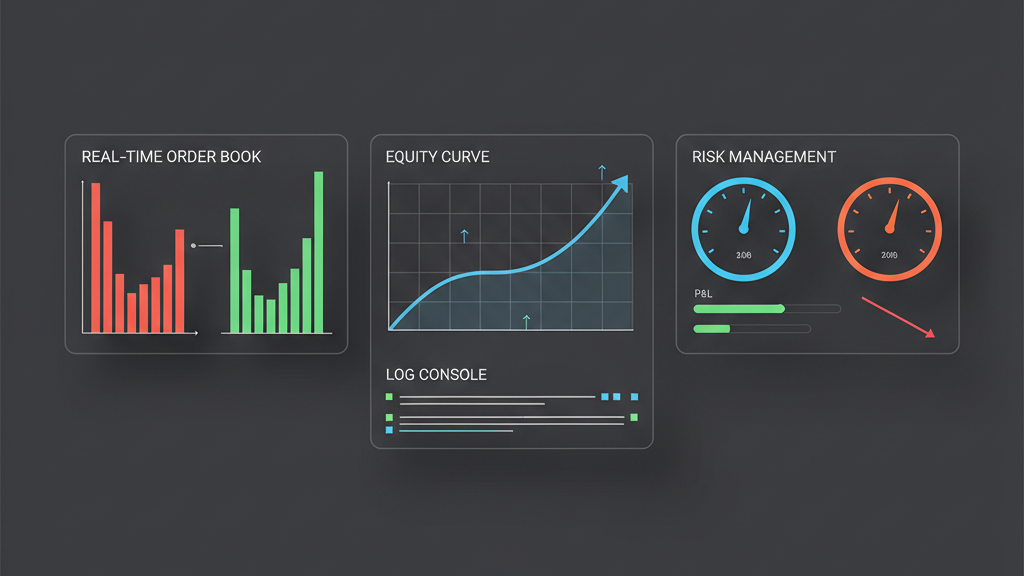
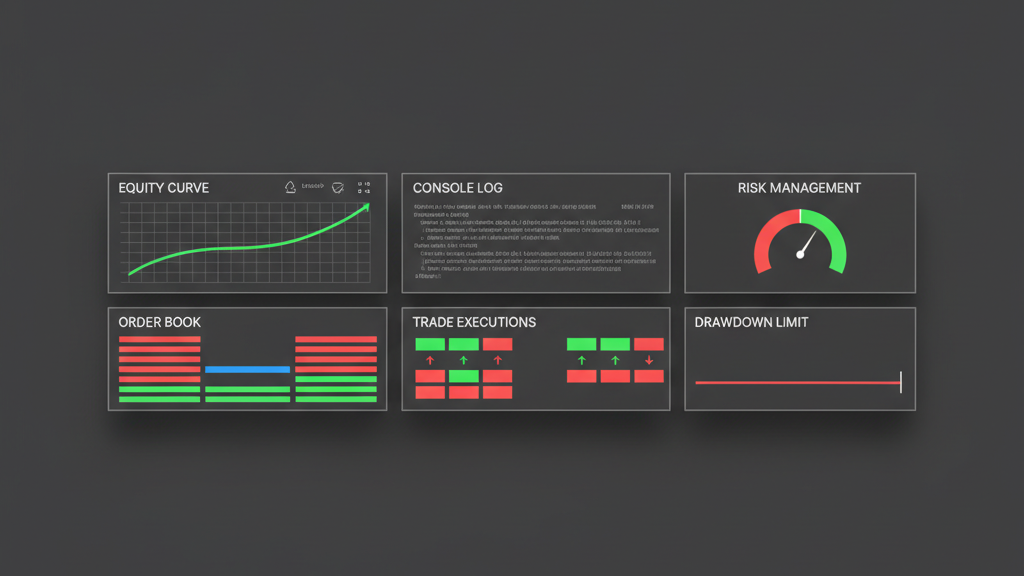
Once the environment is configured, deploy your algorithmic strategy into the paper trading ecosystem. The initial phase focuses on confirming basic functionality and identifying immediate operational issues. Monitor the strategy’s P&L, equity curve, and overall system health in real-time. This isn’t about judging profitability yet, but about verifying that trades are being placed correctly, positions are being managed as intended, and risk controls are active. Pay close attention to logs for any unhandled exceptions, unexpected data parsing errors, or inconsistencies in order state. Backtest results provide a baseline, but paper trading often reveals subtle differences due to micro-slippage, market impact, or unexpected partial fills that simulation engines might abstract away. It’s common to see a slight degradation in performance during this stage, which signals areas for further investigation and refinement.
Identifying Discrepancies and Edge Cases
This is where the paper trading workflow truly differentiates itself from backtesting. Focus on uncovering discrepancies between simulated and actual (paper) performance. A common issue is execution slippage, which is often zero in backtests but very real in paper trading due to market liquidity and order book dynamics. Watch for scenarios where your strategy’s assumptions about immediate fills at specific prices are violated. Test edge cases: what happens during periods of extreme volatility, flash crashes, or sudden news events? Does your system handle data gaps or corrupted ticks gracefully, or does it crash? These are critical failure points that a comprehensive paper trading validation workflow should expose. Many strategies fail not because their core logic is flawed, but because they can’t adapt to the messy reality of live market conditions, API limitations, or unexpected server responses.
Iterative Refinement and Robustness Testing
The paper trading phase is highly iterative. After identifying discrepancies and issues, the next step is to refine the strategy and infrastructure. This might involve adjusting entry/exit logic to account for realistic slippage, improving error handling for API failures, or optimizing parameters based on observed market behavior. Conduct robustness tests by deliberately introducing adverse conditions: temporarily disconnect your data feed, simulate a sudden price spike, or even manually inject a bad order to see how your system recovers. Experiment with varying market regimes—run the strategy during quiet periods, active sessions, and around economic announcements to gauge its adaptability. Document every bug found and every fix implemented, creating a clear audit trail that will be invaluable for future strategy iterations and system maintenance. This continuous loop of observation, analysis, and adjustment is key to building a resilient trading system.
- Adjust strategy parameters and execution logic based on observed slippage and fill rates.
- Enhance error handling for API timeouts, rate limits, and unexpected server responses.
- Introduce artificial market stress (e.g., data feed interruptions, price shocks) to test recovery.
- Verify risk management components like stop-losses and position sizing function as intended.
- Optimize logging and alerting to quickly identify and diagnose issues in real-time.
Risk Management and Scalability Projections
Paper trading is instrumental in fine-tuning your risk management framework. While backtesting can provide historical risk metrics, paper trading validates their real-time application. Observe how your P&L and drawdowns behave under realistic execution. Test various position sizing algorithms and ensure that your exposure limits are correctly enforced, even with partial fills or market gaps. Beyond current performance, use this phase to project scalability. Can your strategy handle significantly larger capital without negatively impacting its performance due to increased market impact from your own orders? Will your infrastructure (data processing, order routing capacity) scale proportionally? Understanding these constraints during paper trading helps set realistic expectations for live deployment and prevents unexpected performance degradation or capital loss when you increase allocation.
Transitioning from Paper to Live Trading
The decision to move from paper to live trading should be based on a clear set of predefined criteria, not just an arbitrary timeframe. Your algorithmic strategy validation checklist should include consistent paper trading performance over a statistically significant period, zero critical bugs or unhandled errors, and verified risk management functionality. Even then, the transition should be gradual. Start with a minimal capital allocation, often referred to as ‘micro-live’ or ‘alpha trading,’ and slowly scale up as confidence grows. Monitor performance with even greater scrutiny during this initial live phase, comparing it against your paper trading benchmarks. The psychological aspect of real money can also affect decision-making if manual intervention is still a possibility, making a fully automated and thoroughly paper-tested system even more crucial to maintain objectivity.