In algorithmic trading, the integrity of market data is paramount. While most focus on high-frequency tick data or historical price series, a frequently overlooked yet critically impactful area is the accurate handling of corporate actions, especially stock splits and reverse splits. These events fundamentally alter an instrument’s characteristics, impacting everything from historical backtest validity to live order execution and position sizing. Failing to implement robust market data quality checks for corporate actions and splits can lead to severely flawed strategy performance evaluation, unexpected P&L deviations, and significant operational risk. Our discussion will delve into practical methodologies for identifying, validating, and correctly processing these events to maintain data fidelity across your entire trading ecosystem.
The Critical Impact of Corporate Actions on Algo Strategies
Corporate actions like stock splits, reverse splits, and even significant dividends fundamentally change the per-share value and outstanding share count of an equity. For algorithmic trading strategies, ignoring these events is a recipe for disaster. A typical scenario involves backtesting a strategy on unadjusted historical data, which might show stellar performance. However, when deployed live, the strategy encounters prices or volumes that don’t align with its historical perception, leading to incorrect signal generation, mispriced orders, or even massive over-leveraging. Imagine a simple moving average crossover strategy where prices suddenly halve due to a 2-for-1 split; without adjustment, the strategy would incorrectly interpret this as a massive price drop, triggering erroneous trades and severe P&L impact. The direct financial implications of such data discrepancies can rapidly erode capital and trust in the system.
Navigating Data Sourcing Challenges for Corporate Action Information
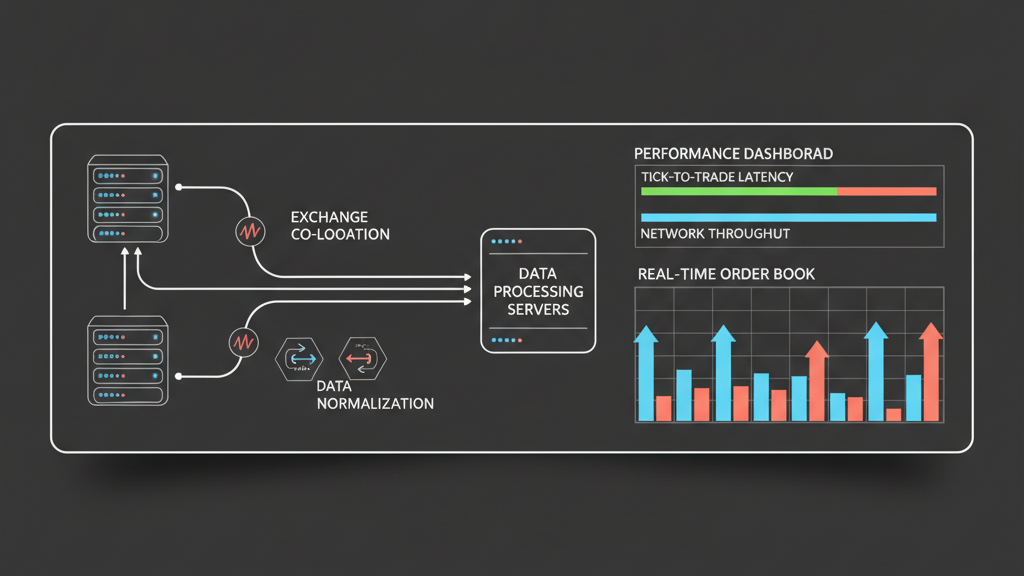
Obtaining accurate and timely corporate action data presents its own set of engineering challenges. Information typically originates from exchange announcements, regulatory filings, or specialized market data vendors. Each source often has different reporting formats, effective dates, and levels of detail. Aggregating these disparate sources and normalizing the data into a consistent internal schema is a complex task. Furthermore, latency is a significant concern; waiting for official regulatory filings can delay critical updates, while relying solely on vendor feeds introduces dependency risk. It’s not uncommon for data discrepancies to arise between vendors, or even between a vendor and direct exchange notices, particularly for less common corporate action types or instruments traded across multiple venues. Robust market data quality checks for corporate actions and splits must account for these multi-source inconsistencies and temporal lags.
- Cross-referencing announcements from multiple primary and secondary sources (e.g., exchange notices, SEC filings, major data vendors).
- Establishing strict effective date validation, including ex-date and payment date alignment.
- Monitoring for late or revised corporate action announcements that require immediate data reprocessing.
- Developing parsers to normalize disparate data formats into a unified internal representation.
Implementing Robust Market Data Quality Checks for Splits
Effective quality checks for stock splits go beyond merely applying a factor. They involve a multi-layered validation process to ensure the integrity of both historical and live data. Once a split announcement is received, the first step is to validate the split ratio against multiple sources. Then, examine the market’s reaction around the effective date: do prices adjust proportionally? Are volumes behaving as expected (e.g., higher on the ex-date)? Automated checks can flag instances where the reported split factor doesn’t align with observed price movements or where trading activity deviates significantly from historical patterns. For reverse splits, particular attention must be paid to rounding issues with fractional shares and how these are handled by brokers and clearinghouses, as this can affect position reconciliation and P&L. These rigorous market data quality checks for corporate actions and splits are vital for preventing subtle data corruption that could impact strategy performance.
Automated Data Adjustment and Backtesting Integrity
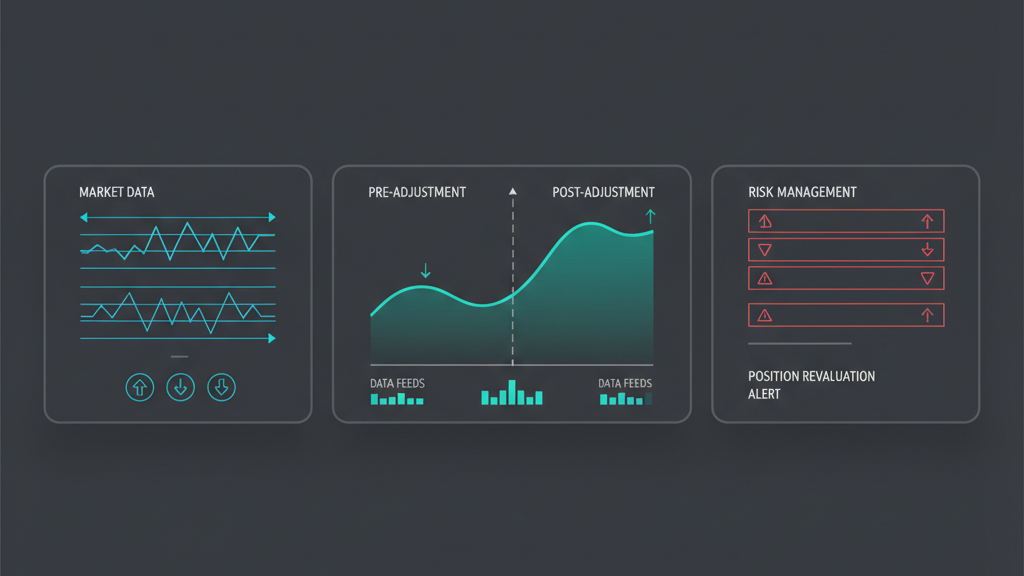
Once a corporate action, such as a split, is validated, the next crucial step is to apply the necessary adjustments to historical market data. This typically involves scaling historical prices (open, high, low, close) and volumes by the inverse of the split factor. For instance, a 2-for-1 split means historical prices are halved, and historical volumes are doubled. This adjustment must be applied consistently across all timeframes and data series relevant to your backtesting engine. The critical part is ensuring these adjustments are irreversible and consistently applied across all data versions used for backtesting, as even minor inconsistencies can invalidate comparative performance analysis. Our backtesting engines at Algovantis explicitly track the corporate action history for each instrument, ensuring that any historical data retrieval automatically provides the correctly adjusted series, preventing ‘look-ahead bias’ from future splits influencing past strategy signals. This meticulous handling of market data quality for corporate actions and splits is non-negotiable for reliable simulation.
- Applying split factors to historical OHLC (Open, High, Low, Close) prices and volume data.
- Adjusting historical dividends and earnings per share to maintain consistency.
- Ensuring all derived indicators (e.g., moving averages, Bollinger Bands) are calculated on adjusted data.
- Implementing idempotent adjustment routines to prevent cumulative errors from reprocessing.
- Version control for historical data snapshots with applied corporate action adjustments.
Live Execution Management and Risk Mitigation
The impact of corporate actions extends beyond historical data to live trading operations. On the ex-date of a stock split, existing open orders must be carefully managed. A limit order to buy at $50 for 100 shares might become meaningless after a 2-for-1 split halves the price to $25. Automated systems must either cancel and re-submit adjusted orders, or the broker’s smart order router must handle these adjustments transparently. Similarly, existing positions need to be revalued and re-sized. If an algo holds 100 shares of a stock undergoing a 2-for-1 split, its position effectively becomes 200 shares, but with a proportionally lower cost basis per share. Failure to update internal positionkeeping systems can lead to incorrect P&L calculations, inaccurate risk metrics, and potential over-exposure if the system then places new orders based on an outdated position size. Comprehensive market data quality checks for corporate actions and splits are paramount for seamless execution and robust risk management.
Post-Event Monitoring and Anomaly Detection
Even with sophisticated pre-processing and adjustment mechanisms, post-event monitoring is essential to catch any residual issues or unexpected market behaviors. After a split, for example, we implement real-time anomaly detection systems that monitor price behavior, volume spikes, and liquidity shifts for the affected instrument. These systems can flag instances where the observed post-split price deviates significantly from the expected adjusted price, indicating a potential data feed error or an unusual market reaction not fully accounted for. This could involve comparing the adjusted closing price on the day before the ex-date with the opening price on the ex-date, accounting for the split factor. Similarly, checking for unusual bid-ask spread widening or order book depth changes can signal issues that might affect subsequent trading decisions. This continuous feedback loop ensures that any data quality issues for corporate actions and splits are quickly identified and rectified, protecting live strategies.
- Real-time monitoring of post-event price action for alignment with applied split factors.
- Analyzing trading volume and liquidity patterns immediately following the corporate action effective date.
- Implementing alerts for unexplained price gaps or significant deviations from expected price ranges.
- Cross-verification of adjusted P&L and position values against known broker statements.