Developing and operating an algorithmic trading system demands more than just sophisticated strategies; it requires a robust data engineering foundation. The integrity, speed, and reliability of your data pipelines directly impact execution quality, backtesting accuracy, and overall system resilience. From capturing market ticks to ensuring consistent data across environments, the engineering effort behind data flow is paramount. This article delves into the practical aspects of crafting a data infrastructure capable of supporting high-frequency decision-making and automated execution, highlighting critical considerations for any quantitative trading operation aiming for truly robust execution.
Architecting Data Ingestion for Market Data Feeds
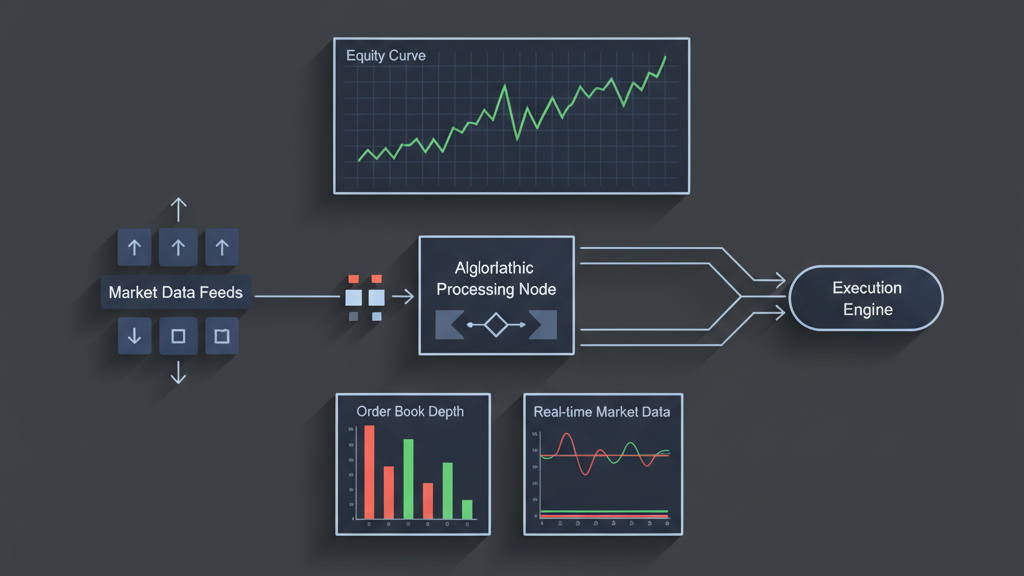
The first step in any algo trading system data engineering for robust execution is establishing reliable data ingestion. This involves connecting to multiple market data vendors or directly to exchange APIs, often via specialized protocols like ITCH or FIX. Latency is a primary concern, so co-location with exchanges and direct network peering become critical for minimizing transit times for tick-level data. Beyond raw speed, handling various data formats, managing sequence numbers to detect dropped packets, and buffering high-volume streams without overwhelming downstream services are constant challenges. We typically implement a fan-out architecture where raw feeds are captured, time-stamped as close to the source as possible using hardware-level clocks, and then distributed to different processing stages, ensuring no single point of failure introduces data loss or significant delay. Robust error handling and automatic reconnection logic are non-negotiable for maintaining continuous data flow.
- Direct exchange feed integration (e.g., ITCH, OUCH, FIX).
- Hardware time-stamping for precise event ordering.
- High-throughput buffering and sequencing for data integrity.
- Multi-source redundancy and failover mechanisms.
Data Normalization and Validation in Real-Time
Once ingested, raw market data from disparate sources needs immediate normalization and rigorous validation. Different exchanges might report prices, volumes, and instrument identifiers in varying formats, requiring a unified schema. This real-time transformation must be highly optimized to avoid adding significant latency, often implemented in low-level languages or specialized hardware. Validation checks go beyond simple type conformity; they include price sanity checks (e.g., bid < ask, price within reasonable bounds), volume consistency, and detecting stale or corrupted ticks. A single malformed data point can trigger erroneous trading signals or even system crashes, emphasizing the need for robust execution by discarding or quarantining suspect data immediately. Implementing checksums or cryptographic hashes for data packets can help detect tampering or corruption during transit.
Building Backtesting Data Warehouses with High Fidelity
An effective algo trading system data engineering strategy extends to historical data management for backtesting. The backtesting dataset must precisely mirror the data that would have been available in real-time, down to the exact tick and order book state. This means meticulous cleaning, de-duplication, and ensuring no look-ahead bias is introduced during the construction of the historical archive. Storing full order book depth, not just top-of-book, is crucial for simulating market impact and execution slippage accurately. We typically employ columnar databases or specialized time-series databases for storing this data, optimizing for fast query performance over large historical windows. The challenge is ensuring that the historical data environment is as close as possible to the live data processing environment, including network latencies and processing delays, to prevent ‘overfitting to history’ that doesn’t translate to live performance.
- Capture and store full historical order book depth.
- Implement strict data cleaning and de-duplication processes.
- Mitigate look-ahead bias and survivorship bias in historical data sets.
- Utilize columnar or time-series databases for efficient querying.
Data Consistency Across Development, Backtesting, and Production
Maintaining data consistency across various environments — development, backtesting, simulation, and live production — is a continuous data engineering challenge critical for robust execution. Discrepancies often lead to strategies performing differently in live trading than they did in backtests, even with identical code. This can stem from different data sources, normalization rules, time synchronization errors, or even subtle differences in hardware and network configurations. Our approach involves establishing a ‘single source of truth’ for master data (e.g., instrument definitions) and versioning historical data sets used for specific backtests. Automated data integrity checks and reconciliation tools run daily, comparing samples across environments to flag inconsistencies immediately. A deployment should only proceed if the data used for final backtesting aligns perfectly with the data available in the live pre-production environment.
Handling Data Gaps, Outages, and Failovers
Real-world data feeds are imperfect; gaps, corrupted packets, and complete vendor outages are inevitable. Robust execution demands a sophisticated approach to handle these events gracefully. Data engineering for this involves more than just logging errors. We implement strategies like data interpolation (carefully and only where appropriate, e.g., for lower-frequency data), fetching missing data from alternative sources, or temporarily pausing strategies dependent on compromised feeds. Critical systems often use multiple, redundant data feeds from different providers, with intelligent failover logic to switch sources automatically when one feed degrades or fails. This requires continuous monitoring of data quality metrics, such as message rates, latency, and completeness, to proactively identify and react to issues before they impact trading decisions or cause execution gaps.
- Implement real-time data quality monitoring (latency, completeness, freshness).
- Automated failover to redundant data sources.
- Intelligent gap filling or strategy pausing mechanisms.
- Graceful degradation during partial data outages.
Data Engineering for Post-Trade Analysis and Performance Attribution
The data engineering effort doesn’t stop at execution. Capturing, storing, and analyzing post-trade data is vital for understanding strategy performance, conducting performance attribution, and ensuring regulatory compliance. This involves persisting detailed execution logs, filled orders, cancellations, P&L calculations, and market conditions at the time of each event. High-resolution timestamps are crucial here to precisely link trade actions to specific market states. This rich dataset then fuels reporting dashboards, anomaly detection systems, and machine learning models aimed at identifying areas for strategy improvement or detecting potential system issues. The schema design for post-trade analytics must be flexible enough to accommodate evolving reporting requirements and new performance metrics, making it a critical aspect of holistic algo trading system data engineering for robust execution.