Developing robust algorithmic trading strategies hinges on access to high-fidelity market data, specifically replayable tick data. Without the ability to accurately simulate market conditions as they unfolded in the past, any backtesting effort becomes inherently flawed, leading to strategies that perform poorly, or even catastrophically, in live trading. Building a market data pipeline with replayable tick data isn’t just about collecting raw information; it’s about engineering a system that preserves the exact sequence and timing of market events, enabling precise replication of historical scenarios. This foundational infrastructure is crucial for reliable strategy development, parameter optimization, and understanding the true edge of an algorithm before deploying capital.
The Criticality of Replayable Tick Data for Algorithmic Strategy Development
For any serious algorithmic trading operation, relying on aggregated or snapshot data for strategy development and validation is a critical error. Replayable tick data provides the granular detail necessary to accurately simulate order book dynamics, micro-slippage, and the precise timing of trade executions that define high-frequency and even medium-frequency strategies. Without this fidelity, backtests become overly optimistic, failing to account for real-world phenomena like queue position, liquidity fluctuations, or the precise impact of large orders. Imagine a strategy that profits from identifying fleeting imbalances in the order book; if your backtesting data only provides minute-level aggregates, you’re essentially testing a different strategy altogether. This level of detail is paramount for properly evaluating entry and exit points, assessing latency sensitivity, and refining execution logic, directly impacting the profitability and robustness of deployed algorithms. It’s about building confidence that what worked historically has a realistic chance of working again, accounting for all the minor market movements that define profitability in high-velocity trading.
Architectural Blueprints for Tick Data Ingestion and Storage
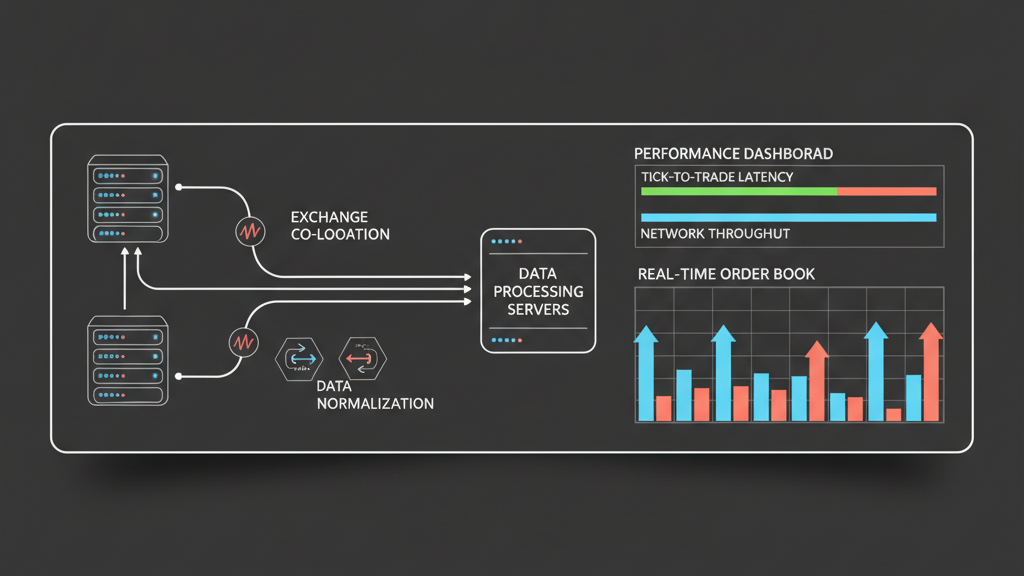
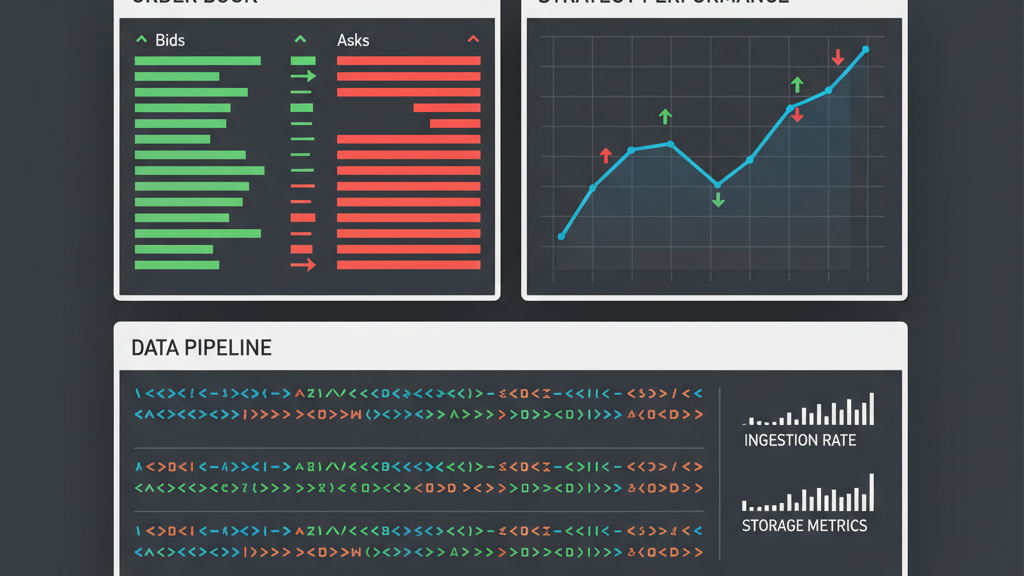
Building a market data pipeline starts with designing an architecture capable of high-throughput, low-latency ingestion and efficient storage. The primary challenge is handling the sheer volume and velocity of data, especially for multiple instruments across various exchanges. Our typical approach involves dedicated ingestion services, often written in C++ or Go for raw speed, that subscribe to exchange direct feeds or vendor APIs. These services then funnel the raw tick stream into a persistent message queue, like Apache Kafka, which acts as a buffer and decoupler. From Kafka, consumers write the data to durable storage. We lean towards columnar formats like Parquet or HDF5 for historical data, often partitioned by date and instrument, allowing for efficient queries and analysis. For very high-speed, frequently accessed recent data, specialized time-series databases like KDB+ or TimescaleDB on PostgreSQL can offer superior query performance, but they introduce higher operational overhead and licensing costs, so it’s a trade-off based on specific access patterns and budget constraints.
- **Ingestion Layer:** Low-latency collectors (C++/Go) subscribing to direct exchange feeds or normalized vendor APIs.
- **Messaging Layer:** Apache Kafka or similar distributed log for robust buffering, decoupling, and fan-out to multiple consumers.
- **Storage Layer (Historical):** Parquet or HDF5 files on object storage (S3-compatible) with partition schemes (e.g., /symbol/year/month/day/file.parquet) for optimized analytical queries.
- **Storage Layer (Real-time/Hot):** TimescaleDB, KDB+, or custom memory-mapped files for recent, frequently accessed data with high-speed query requirements.
- **Compression:** Aggressive compression (Snappy, Zstd) applied during storage to manage the immense data volume and reduce I/O.
Navigating the Labyrinth of Market Data Quality and Cleansing
Raw market data is rarely pristine; it’s a messy stream fraught with anomalies that can severely distort backtesting results. Common issues include out-of-sequence ticks due to network jitter or exchange processing quirks, duplicate entries, corrupted records, and ‘bad prints’—erroneous price or size values reported by the exchange that are quickly corrected. Developing robust data cleansing logic is an integral part of the pipeline. This involves implementing rules to identify and rectify these issues, such as timestamp-based reordering, deduplication, outlier detection for price and volume, and applying specific exchange correction protocols. For instance, some exchanges might send a ‘trade cancellation’ or ‘correction’ message, which must be correctly applied to the historical stream to maintain integrity. Failure to properly cleanse data often leads to phantom profits in backtests or, worse, strategies that exploit non-existent market conditions, only to blow up in live trading. This is where real-world experience building a market data pipeline with replayable tick data truly pays off, as generic solutions often miss critical edge cases that impact profitability.
Engineering the Tick Replay Mechanism for Precision Simulation
The ‘replayable’ aspect of the data pipeline is where the rubber meets the road for backtesting. A robust replay mechanism must accurately reconstruct historical market conditions, delivering ticks to the strategy as if they were arriving in real-time. This involves reading data sequentially from storage, maintaining accurate timestamps, and reconstructing the order book state at each tick. Our replay engines are typically event-driven, processing market events (trades, quotes, order modifications) in their exact historical sequence. Critical considerations include managing the ‘speed’ of replay—can it run faster than real-time for rapid backtesting, or slower for detailed debugging? We implement configurable speed factors and ensure that internal clock synchronization within the backtesting framework mirrors the historical clock. Furthermore, handling concurrent events with identical timestamps, a common occurrence, requires a deterministic tie-breaking rule to ensure consistent replay across different runs. The goal is to make the backtest environment as close to the live trading environment as possible, down to the microsecond, so that the strategy’s logic and performance characteristics are truly representative.
- **Event-Driven Architecture:** Process market events (trades, bids, asks, order modifications) in their exact timestamped sequence.
- **Order Book Reconstruction:** Maintain a granular, historical order book state at each tick to accurately reflect available liquidity and price levels.
- **Time Synchronization:** Implement a virtual clock within the backtesting engine that precisely follows the historical timestamps from the replayable tick data.
- **Replay Speed Control:** Allow configurable acceleration (e.g., 100x real-time) for rapid backtesting cycles, or step-through for detailed debugging.
- **Deterministic Event Ordering:** Establish clear rules for tie-breaking events with identical timestamps to ensure consistent, repeatable backtest results.
Backtesting Fidelity, Execution Gaps, and Operational Resilience
Integrating the replayable tick data pipeline with the backtesting engine requires careful attention to fidelity and realistic execution modeling. A common pitfall is assuming instantaneous order execution at the exact tick price. In reality, market orders incur slippage, and limit orders face queueing risk. Our backtesting framework incorporates configurable slippage models, latency simulation based on historical network conditions, and queue position modeling to mimic real-world execution gaps. This means understanding that even with perfect replayable tick data, the strategy’s simulated fills won’t always match the tick immediately, but might occur at a slightly worse price or after a delay. Operationally, maintaining such a pipeline demands vigilance. Monitoring data ingestion rates, storage health, data integrity checks, and regularly comparing sampled historical data against live feeds is crucial. API changes from exchanges or vendors necessitate rapid adaptation. The costs associated with storage and processing large volumes of tick data also scale quickly, making efficient data management and judicious data retention policies essential for long-term sustainability. Without robust operational practices, even the best-designed pipeline can fail, leaving your strategies vulnerable to blind spots.