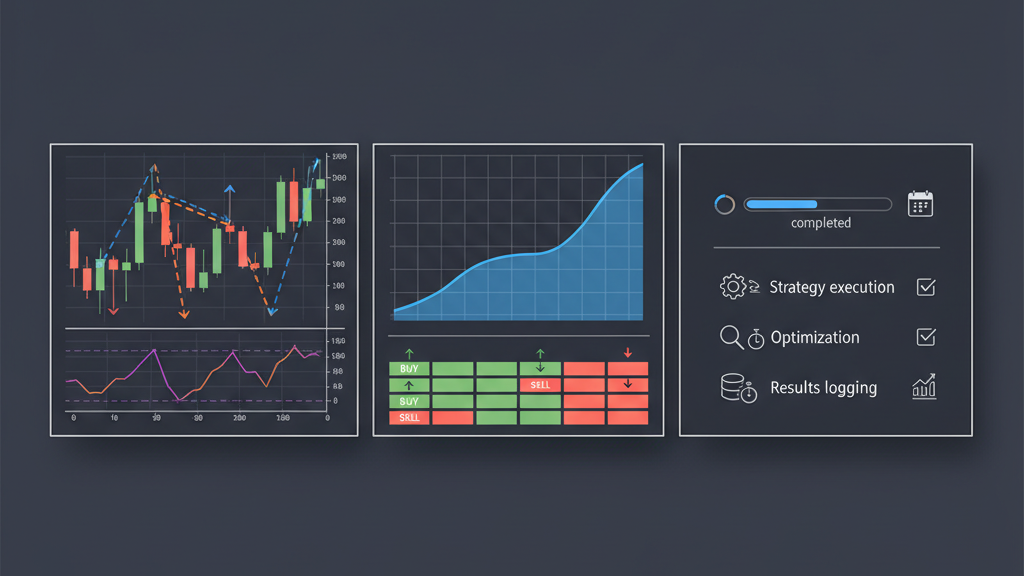
The Moving Average Convergence Divergence (MACD) is a foundational momentum indicator, widely used in technical analysis to identify trend direction and strength. While its simplicity is appealing, the effectiveness of any MACD-based trading strategy hinges critically on its parameter settings. A static set of parameters, often the default (12, 26, 9), rarely performs optimally across all market conditions. Market dynamics are constantly shifting between trending, ranging, volatile, and low-volatility environments. This necessitates a more sophisticated approach to MACD indicator parameter selection for different market regimes, moving beyond one-size-fits-all solutions to an adaptive framework. For robust algorithmic trading, understanding how to dynamically tune these parameters is key to maintaining strategy edge and mitigating performance decay over time.
The Core Mechanics of MACD Parameters and Their Impact
The MACD is derived from three Exponential Moving Averages (EMAs): a fast EMA, a slow EMA, and a signal line which is an EMA of the MACD line itself. The default parameters (12-period fast EMA, 26-period slow EMA, and 9-period signal line EMA) are historical artifacts, often originating from daily chart analysis and specific market behaviors in earlier eras. These numbers dictate the indicator’s sensitivity. A shorter fast EMA makes the MACD more responsive to recent price changes, potentially generating more signals but also more noise. A longer slow EMA smooths out the trend component more significantly, making the indicator lag price but providing stronger trend confirmation. The signal line’s period determines how quickly the MACD line’s crossovers are confirmed, impacting the timing of entry and exit signals. Our goal is not just to find ‘good’ parameters, but parameters that are contextually optimal for a specific market environment.
Quantifying and Classifying Market Regimes for Adaptation
Effective dynamic MACD parameter selection for different market regimes begins with accurately identifying those regimes. This is not a trivial task and requires a quantitative approach rather than subjective observation. A market regime can be broadly defined by its volatility, trend strength, or even liquidity characteristics. Algorithmic systems need robust, real-time methods to classify the current market state. For instance, a highly volatile, ranging market might benefit from tighter MACD parameters to capture rapid reversals, while a strong, sustained trend might require looser settings to avoid premature exits. Misclassifying the current regime will lead to applying suboptimal parameters, potentially eroding any strategic edge and increasing exposure to unfavorable market conditions.
- Volatility Index (VIX) or Average True Range (ATR) to classify high/low volatility.
- Average Directional Index (ADX) to gauge trend strength and differentiate trending from ranging conditions.
- Bollinger Bands or Keltner Channels to identify periods of expansion and contraction.
- Historical price patterns or machine learning models trained on market features to predict regime shifts.
Robust Backtesting for Regime-Specific Parameter Optimization
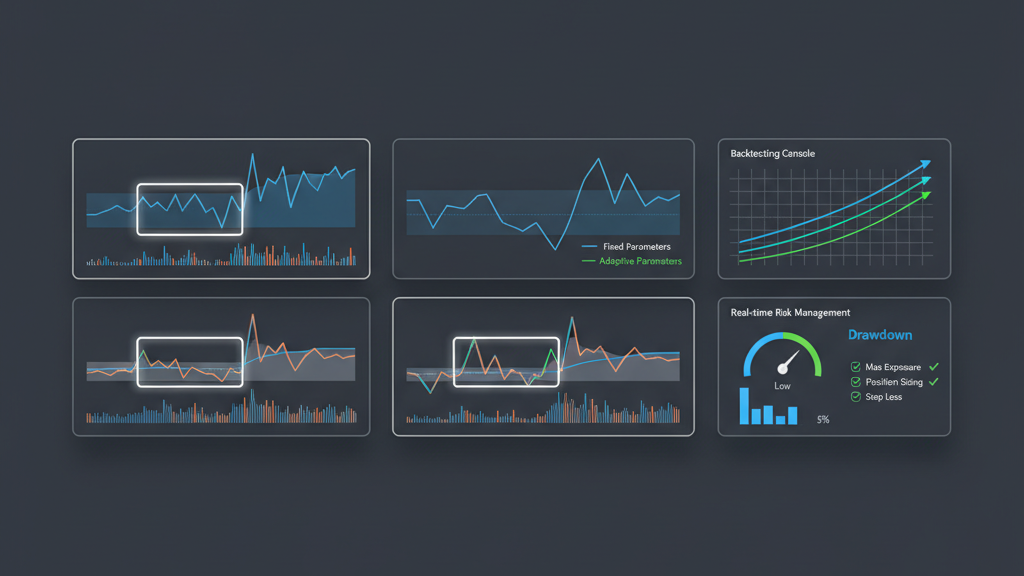
Once market regimes are defined, the next critical step is to backtest and optimize MACD parameters for each specific regime. This process must go beyond simple in-sample optimization, which often leads to overfitting. Instead, we typically employ walk-forward optimization techniques. This involves segmenting historical data, optimizing parameters over an ‘in-sample’ period, and then testing those optimized parameters on a subsequent, unseen ‘out-of-sample’ period. This simulates how a live system would adapt over time. For each identified regime, we’d conduct separate optimization runs, ensuring that the best MACD parameters are specifically tailored to those distinct market conditions, not just a general historical average. This rigorous backtesting methodology is essential to build confidence in the robustness and adaptability of the strategy.
Architectural Considerations for Live Parameter Adjustment
Implementing dynamic MACD parameter selection in a live trading environment introduces significant architectural challenges. Our algorithmic trading platform needs a dedicated ‘regime classification service’ that continuously monitors market data and updates the current market regime in real-time. This service must be robust, low-latency, and handle data quality issues gracefully. When a regime shift is detected, the trading engine must atomically switch to the pre-optimized set of MACD parameters for the new regime. This involves careful state management, especially regarding open positions. A common pitfall is changing parameters mid-trade, leading to inconsistent signal generation or unexpected trade closures. We need clear logic for handling transitions, such as waiting for current positions to close before applying new parameters, or immediately recalculating existing indicator values and potential signals based on the new settings, with careful risk assessment.
Performance Evaluation and Risk Management in Adaptive MACD Strategies
Evaluating the performance of an adaptive MACD strategy requires a nuanced approach. Beyond overall P&L, it’s crucial to analyze performance metrics specific to each market regime. For instance, a strategy might show high Sharpe ratios in trending markets but suffer drawdowns in ranging conditions, even with optimized parameters for both. We must track key performance indicators (KPIs) for each regime individually, such as profit factor, maximum drawdown, and average trade size. Risk management logic must also be regime-aware. During periods of high volatility, for example, position sizing might need to be reduced, or stop-loss levels adjusted more aggressively, regardless of the MACD signal. Monitoring the frequency of regime changes and the strategy’s behavior immediately following these changes is also vital to detect potential instability or increased slippage during transitions.
- Regime-specific Profit Factor and Sharpe Ratio to assess localized performance.
- Maximum Drawdown for each market regime to understand risk exposure.
- Slippage analysis during regime transitions to quantify execution costs.
- Frequency of parameter changes and their correlation with overall strategy performance.
Data Quality, Latency, and Execution Gaps in Dynamic Systems
The effectiveness of dynamic MACD parameter selection for different market regimes is heavily dependent on the quality and timeliness of incoming market data. Stale or corrupted data can lead to incorrect regime classification or inaccurate MACD calculations, triggering suboptimal trades. Latency is another critical factor: if the regime classification or parameter update process introduces significant delays, the system might react to a regime that has already passed, leading to missed opportunities or adverse entries. Execution gaps can also arise; if a parameter change occurs while an order is being placed or filled, the order might execute based on an outdated strategy context, resulting in unexpected outcomes or partial fills. Robust error handling, data validation pipelines, and a low-latency execution infrastructure are non-negotiable for successfully deploying such adaptive strategies in production.
- Impact of stale market data on regime classification accuracy.
- Latency introduced by recalculating indicator values and re-evaluating trading signals.
- API rate limits and their effect on real-time data ingestion for regime models.
- Slippage amplification during high-volatility regime transitions due to delayed execution.