Developing profitable algorithmic trading strategies hinges on accurate backtesting. However, a common pitfall is the optimistic simulation of execution realities. The delta between theoretical backtested profits and live trading results often boils down to two critical factors: transaction costs and slippage. Neglecting or underestimating these can create an illusion of alpha, leading to strategies that appear robust on paper but fail in a live environment. Our focus here is on understanding how to effectively model, and more importantly, validate these backtesting transaction costs and slippage assumptions, ensuring your strategies have a genuine edge when deployed.
The Imperative of Realistic Cost Modeling
The ‘alpha’ generated by a trading strategy is a net concept; it’s what remains after all costs are accounted for. Many backtesting environments default to zero transaction costs or apply a simplistic, often underestimated, fixed percentage. This approach dramatically inflates perceived profitability, making marginal strategies appear viable. Real-world costs include commissions, exchange fees, regulatory fees, and even clearing charges, all of which can erode profits, especially for high-frequency or high-volume strategies. Understanding that these costs vary by asset class, broker, and even trading volume, is fundamental. An iterative process of refining your cost models based on actual broker statements and exchange fee schedules is not a luxury, but a necessity, particularly when working with different asset classes or trading large quantities.
Deconstructing Transaction Costs Beyond Basic Commissions
Transaction costs encompass more than just a flat fee per share or contract. They are a complex mosaic of charges that can significantly impact the net profitability of an algorithmic strategy. Beyond the standard broker commissions, which can be fixed, tiered, or percentage-based, there are exchange fees levied for market access and order matching. Regulatory fees, often small per transaction, can accumulate rapidly with high trading volumes. For specific assets like futures or options, clearing fees also come into play. It’s crucial to obtain detailed fee schedules from your brokers and exchanges, recognizing that these can change, and your backtesting system must be flexible enough to update these parameters. Simply put, a comprehensive cost model needs to reflect the full spectrum of actual charges you will incur during live trading, which can vary based on trading volume, membership tiers, and even time of day.
- Fixed vs. Percentage-Based Broker Commissions
- Exchange and Regulatory Fees (e.g., SEC fees, TAF)
- Clearing House Fees and Settlement Costs
- Data Licensing Fees (indirect transaction cost)
- Tiered Pricing Structures Based on Volume
Simulating Slippage: A Multidimensional Execution Challenge
Slippage, the difference between an order’s expected price and its actual execution price, is a stealthy profit killer. It’s not a direct fee, but an implicit cost arising from market dynamics. Common sources include market impact (when your order size consumes available liquidity, moving the price against you), latency between your system and the exchange, and the natural bid-ask spread. A simplistic backtest might apply a fixed ‘X basis points’ of slippage, but this rarely mirrors reality. Highly liquid instruments might experience minimal slippage for small orders, while less liquid assets or large block orders can incur substantial price deviations. For high-frequency strategies, even a few microseconds of latency can mean the difference between getting a fill at the desired price or being routed to a different price level, especially in volatile markets.
Advanced Slippage Models and High-Fidelity Data Requirements
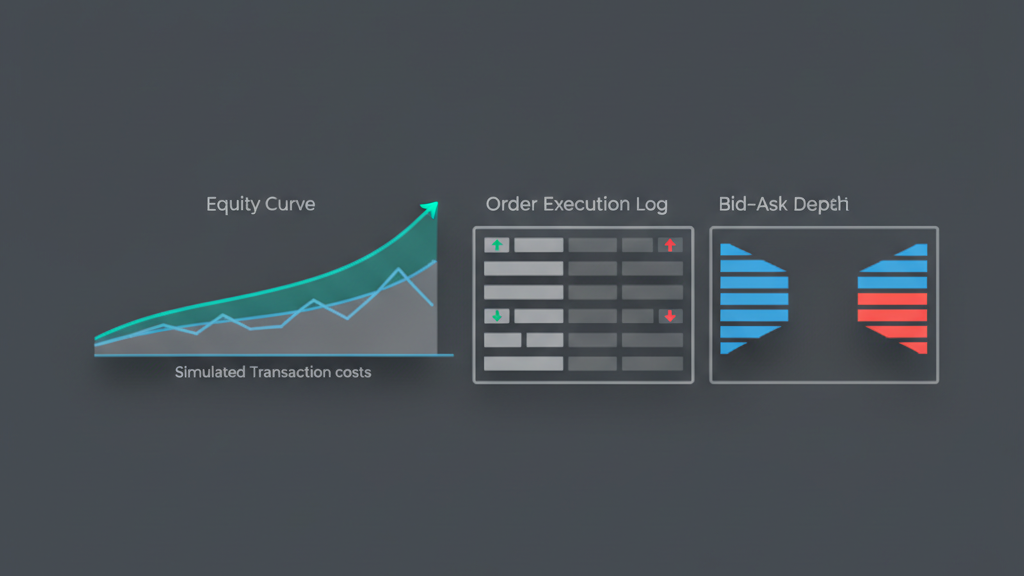
To move beyond simplistic fixed slippage, sophisticated models are essential. These models typically rely on high-fidelity market data, such as tick data and Level 2/3 order book snapshots, to simulate market impact and liquidity dynamics more accurately. A robust approach involves analyzing historical order book depth and volume to estimate the price impact of a simulated order size, often using algorithms like Volume-Weighted Average Price (VWAP) impact models or implementing ‘passive’ vs. ‘aggressive’ order simulation based on the bid-ask spread. This requires significant data processing capabilities and careful parameter calibration. For instance, simulating an aggressive market order would consume available liquidity at the best opposing price levels, pushing the execution price deeper into the order book, reflecting a more realistic fill than simply assuming a fixed spread deviation.
- Order Book Depth and Liquidity Simulation
- Historical Tick Data Analysis for Fill Probabilities
- Volume-Weighted Average Price (VWAP) Impact Models
- Latency and Queue Position Modeling Effects
- Adaptive Slippage Based on Volatility and Spread
Validating Assumptions with Real-World Performance Data
The critical step in validating backtesting transaction costs and slippage assumptions is comparing backtested results against actual live trading performance. This isn’t just about P&L; it involves granular analysis of individual order fills. Start by running a strategy in a paper trading environment or with a small live allocation, meticulously logging actual execution prices, fill times, and incurred costs. Then, compare these real-world metrics to the simulated outcomes from your backtest for the identical trades. Look for discrepancies in average fill price, the effective spread paid, and total commissions. This post-trade analysis provides the empirical data needed to calibrate and fine-tune your backtesting models. Without this feedback loop, your backtest remains an isolated theoretical exercise, detached from the realities of market execution.
Iterative Refinement and Robustness Testing
Validating transaction costs and slippage isn’t a one-time task; it’s an ongoing, iterative process. Markets evolve, liquidity shifts, and exchange fees can change. After an initial calibration using live data, it’s crucial to conduct robustness testing by stress-testing your strategy with varying cost and slippage parameters. For example, introduce scenarios where slippage is 1.5x or 2x your baseline assumption, or where commissions increase by 10%. If your strategy remains profitable and stable under these adverse conditions, it suggests a more robust edge. Our backtesting engines at Algovantis allow users to easily adjust these parameters and run multiple scenarios, enabling a thorough sensitivity analysis to understand how susceptible your strategy’s performance is to different cost and slippage assumptions. This helps identify the true margin of safety for your strategy.