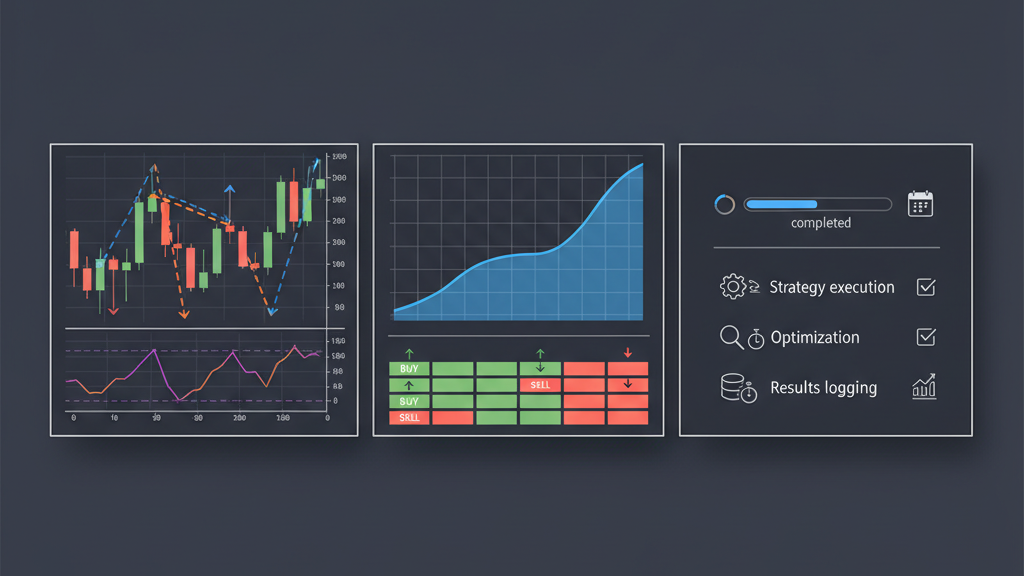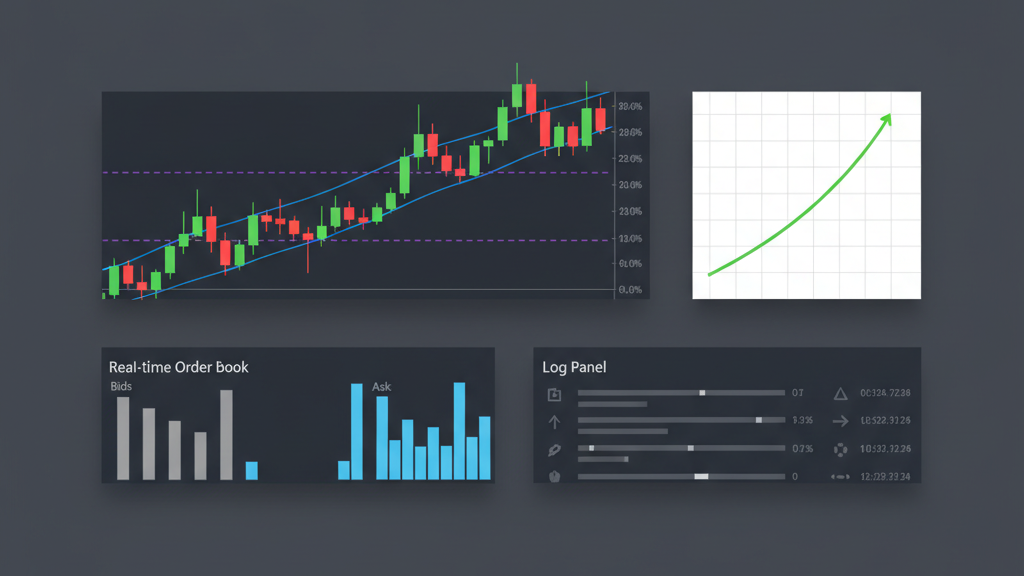
The Bollinger Bands squeeze indicator is a foundational concept for algorithmic traders looking to capitalize on volatility expansion. When Bollinger Bands contract, it signals a period of low market volatility, often preceding a significant price movement. Our focus here is not just on identifying this ‘squeeze’ but on algorithmically detecting the subsequent ‘volatility expansion entries’ that can offer compelling trade opportunities. Implementing such a strategy effectively in an automated system requires a deep understanding of the underlying mechanics, robust backtesting, and meticulous attention to execution and risk management, considering the rapid nature of these market shifts. We’ll explore the practical aspects of building and deploying systems that leverage this potent signal.
Understanding the Bollinger Bands Squeeze Mechanism Programmatically
From an algorithmic perspective, a Bollinger Bands squeeze occurs when the distance between the upper and lower Bollinger Bands narrows significantly. This narrowing is directly correlated with a decrease in the instrument’s standard deviation over the lookback period, indicating a compression of price action and reduced market volatility. The core premise for leveraging this phenomenon is the market’s tendency to oscillate between periods of low and high volatility; a prolonged squeeze often acts as a precursor to an impulsive move in either direction. For automated systems, detecting this compression involves continuously calculating the Bollinger Bandwidth or the percentage distance between the bands, and then comparing it against historical values or a simple moving average of the bandwidth itself. Identifying a ‘tight’ squeeze typically involves setting a threshold on this bandwidth metric, or observing multiple consecutive periods where the bandwidth remains below a predefined historical percentile, signaling a statistically significant reduction in price fluctuation.
Algorithmic Detection of Squeeze Conditions and Confirmation
Implementing a reliable algorithm to detect a Bollinger Bands squeeze requires more than just observing band contraction; it often necessitates confirmation from other volatility indicators or price action. A common approach involves pairing Bollinger Bands with Keltner Channels. A true squeeze is often identified when the Bollinger Bands contract *inside* the Keltner Channels, indicating extreme low volatility relative to average true range. Without additional confirmation, a simple Bollinger Band contraction might lead to false signals, especially in choppy, sideways markets where volatility remains low but without an impending breakout. Our systems continuously monitor these relationships, not just for the raw band width, but for the relative position of the bands against each other and against other volatility envelopes. This multi-indicator approach helps filter out noise and focuses the algorithm on higher-probability volatility expansion entries.
- Calculate Bollinger Bandwidth: `(UpperBand – LowerBand) / MiddleBand`.
- Identify Keltner Channel position: Ensure Bollinger Bands are fully contained within Keltner Channels.
- Thresholding: Use a moving average of the Bandwidth or a fixed percentile rank to define a ‘squeeze’ state.
- Duration check: Confirm the squeeze condition persists for a minimum number of bars (e.g., 5-10 periods).
Triggering Volatility Expansion Entries Post-Squeeze
Once a squeeze condition is identified, the next critical step is to detect the ‘volatility expansion entry,’ which signals the likely start of a directional move. This typically involves looking for a candle close outside the Bollinger Bands, or a significant price move breaking above/below a recent high/low after the squeeze has been established. The challenge here is distinguishing a genuine breakout from a false move or whipsaw, which is particularly prevalent in high-frequency environments. Our algorithms often employ a combination of criteria, such as a strong volume spike accompanying the price breakout, or a sustained close beyond the band rather than just a momentary breach. Furthermore, establishing a directional bias is crucial; a squeeze doesn’t inherently tell you *which way* the market will move. This often involves looking at higher timeframe trends, momentum indicators, or even news-based sentiment analysis to inform the entry direction, mitigating the risk of entering against the prevailing market flow and maximizing the probability of capturing the expansion.
Robust Backtesting for Bollinger Bands Squeeze Strategies
Backtesting Bollinger Bands squeeze strategies demands careful consideration beyond simple curve fitting. Data quality is paramount; using clean, tick-level or high-resolution bar data is essential to accurately simulate the rapid price action often associated with breakouts. Slippage modeling must be realistic, as volatility expansion entries can be prone to significant slippage due to fast-moving markets and order book thinness. Our backtesting engines allow for configurable slippage percentages or even order book simulation to reflect real-world execution costs. Furthermore, it’s vital to test across diverse market regimes and asset classes, as the effectiveness of squeeze strategies can vary significantly. Over-optimizing for a specific historical period or instrument can lead to severe performance degradation in live trading. We also evaluate different lookback periods for Bollinger Bands and Keltner Channels, understanding that optimal settings are rarely static and may require adaptive algorithms.
- Utilize high-quality, high-resolution historical data to mimic real market conditions.
- Implement realistic slippage and commission models to account for execution costs during breakouts.
- Test across various instruments and market regimes (bull, bear, sideways) to ensure robustness.
- Optimize lookback periods for Bollinger Bands and Keltner Channels, and consider adaptive parameters.
- Assess impact of data gaps or stale quotes on entry and exit signals.
Execution Challenges and Latency in Volatility Expansion Trades
Executing trades based on Bollinger Bands squeeze signals, particularly during the volatility expansion phase, introduces significant challenges related to latency and order management. Market conditions can shift rapidly, meaning a profitable signal identified by the algorithm can become invalid or less attractive within milliseconds. High-latency connections or slow order routing can result in significant price degradation, turning a theoretically profitable entry into a loss-making one due to adverse slippage. Our execution automation tools are designed to minimize this impact by co-locating servers, optimizing network paths, and utilizing low-latency API connections to exchanges. Furthermore, the choice of order type is critical: while market orders ensure execution, they are highly susceptible to slippage in volatile markets. Limit orders can protect against slippage but risk non-execution, potentially missing the entire move. A common strategy involves using aggressive limit orders or smart order routing logic that can dynamically adjust order types based on real-time market depth and volatility. Monitoring API rate limits and handling potential API failures gracefully are also non-negotiable for reliable operation.
Risk Management Logic for Squeeze-Based Strategies
Effective risk management is paramount for any algorithmic strategy, but it takes on added importance with volatility expansion entries due to their inherent potential for rapid, large price movements in either direction. Without robust risk controls, a few failed breakout trades can quickly erode capital. Our systems incorporate dynamic stop-loss mechanisms, such as placing stops just outside the high/low of the breakout candle or using an Average True Range (ATR) multiple to adapt to current volatility. Position sizing is dynamically adjusted based on the calculated risk per trade and overall portfolio risk tolerance, ensuring that no single trade can disproportionately impact the account. Trailing stops can be implemented to protect profits once a move is underway, while predefined profit targets or reversal signals trigger timely exits. It’s also crucial to have circuit breakers in place: mechanisms that halt trading if drawdowns exceed a certain threshold or if the number of consecutive losing trades becomes too high, preventing runaway losses during unforeseen market anomalies or system malfunctions. Monitoring maximum allowable slippage and outright rejecting orders that exceed this threshold is also a critical line of defense.
- Implement dynamic stop-loss orders (e.g., ATR-based, prior swing low/high).
- Apply adaptive position sizing based on trade risk and portfolio equity.
- Utilize trailing stops to lock in profits during favorable expansions.
- Define clear profit targets and partial profit-taking strategies.
- Implement circuit breakers for overall system and account-level drawdown limits.
- Monitor and reject trades exceeding predefined slippage tolerances.