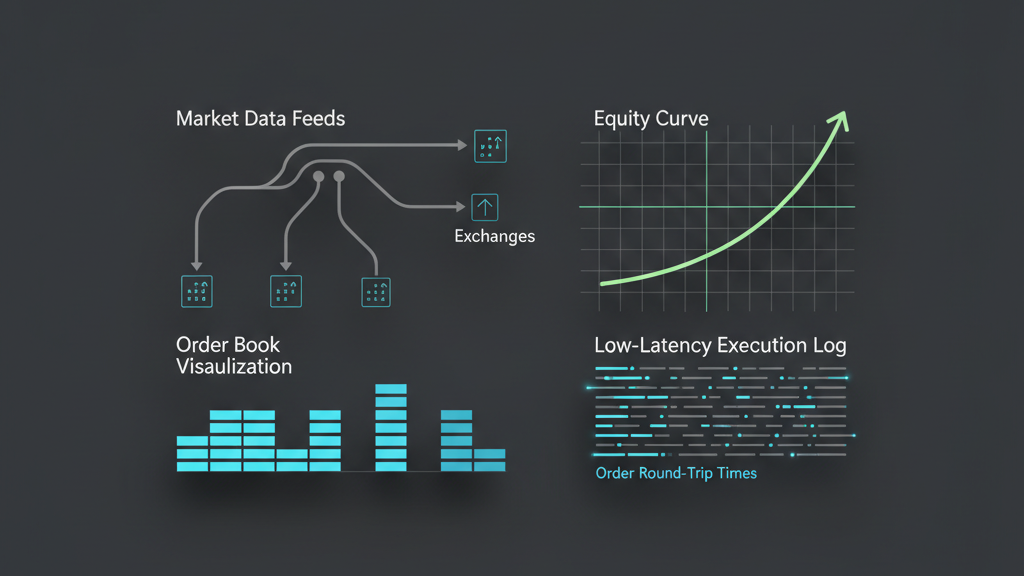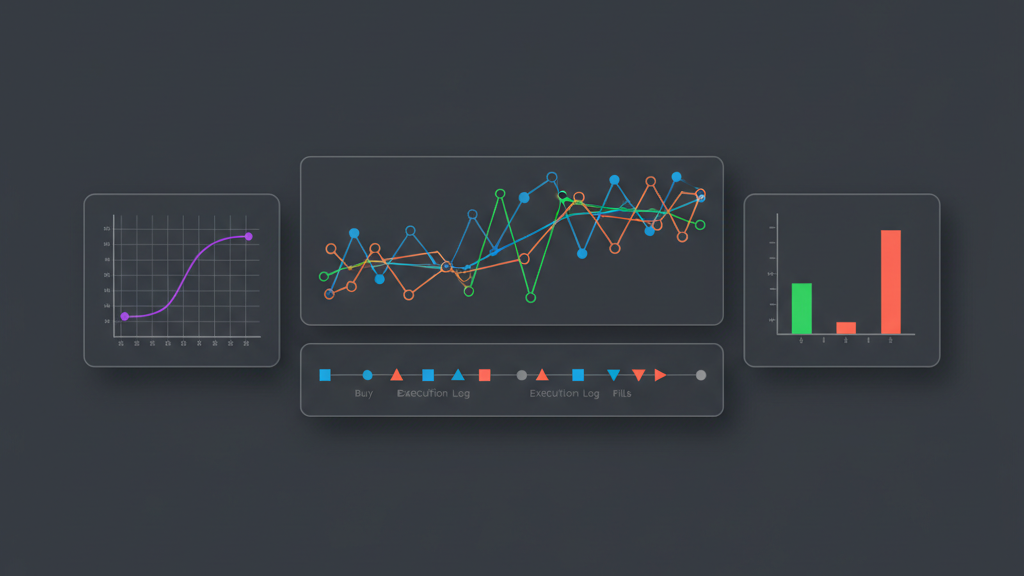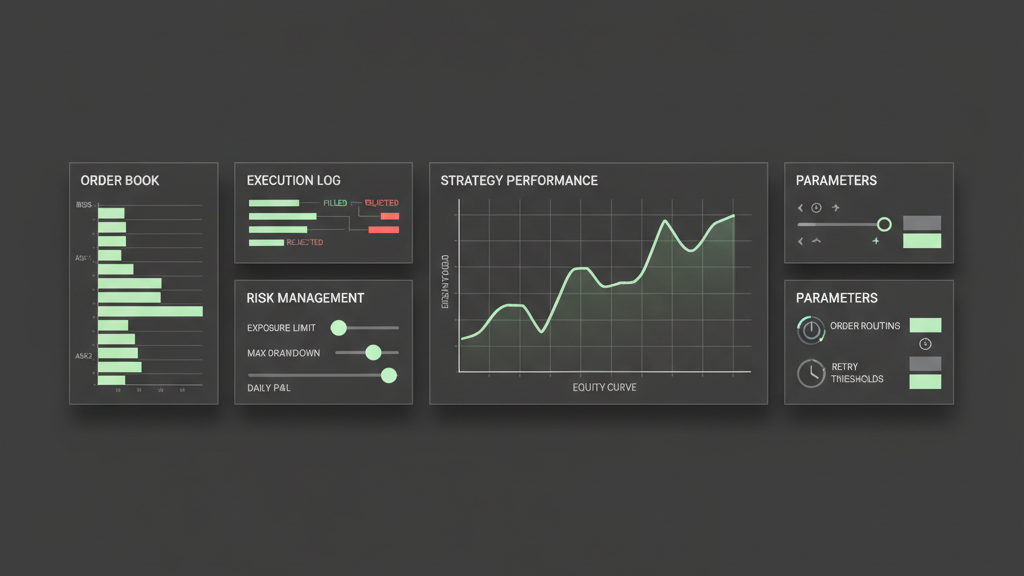
In algorithmic trading, slippage is an inherent challenge that can erode strategy profitability. It occurs when the actual execution price deviates from the expected price, often due to market volatility, liquidity gaps, or network latency. While intelligent order routing aims to find the best venue, market conditions can change in milliseconds, leading to unfulfilled or partially filled orders. To counteract this, implementing robust execution retry logic is critical. This approach dynamically re-evaluates and resubmits orders under specific conditions, providing a crucial layer of resilience and aiming to minimize adverse price impact. Building such a system requires a deep understanding of market microstructure, platform capabilities, and robust error handling.
The Inevitability and Cost of Slippage in Automated Trading
Slippage is more than just an inconvenience; it’s a direct drag on an algo strategy’s PnL. In high-frequency or even medium-frequency trading, a few basis points of slippage on a single trade can accumulate into substantial losses over many executions. It’s often compounded by market impact, where larger orders, even split across venues, can move the price against the trader. Understanding the root causes is crucial: it could be stale market data, an unexpected surge in volatility, or simply a temporary lack of liquidity at the desired price level. Our systems must anticipate these scenarios and be equipped to respond intelligently, rather than just re-submitting blindly or giving up, which might result in missing a critical trade opportunity or getting a significantly worse fill later. Effectively addressing slippage means building adaptive execution paths that can navigate these dynamic market realities.
Foundation of Intelligent Order Routing for Market Access
Intelligent order routing, often referred to as Smart Order Routing (SOR), is the first line of defense against poor execution. It’s designed to direct orders to the best available exchange or dark pool, considering factors like quoted price, available liquidity, and exchange fees. A robust SOR implementation isn’t just about finding the lowest offer or highest bid; it involves complex algorithms that might aggregate liquidity across multiple venues, seek out price improvement, or even prioritize specific venues based on their historical fill rates or latency characteristics for a given instrument. However, even the smartest initial routing decision can fall victim to transient market conditions, leading to partial fills or rejections. This is where a reactive layer is needed to follow up on the initial routing, ensuring the system doesn’t just ‘send and forget’.
- Best Price: Prioritizing venues offering the most favorable bid or ask.
- Maximum Liquidity: Routing to venues with the greatest depth at desired price levels.
- Lowest Fees: Considering transaction costs associated with different exchanges.
- Latency Optimization: Selecting venues with the fastest execution speeds or shortest network paths.
- Fill Probability: Using historical data to favor venues with higher fill rates for specific order types.
Crafting Effective Execution Retry Logic
Building effective execution retry logic requires more than just a simple resend. The system needs to analyze the reason for the initial failure – was it a price error, insufficient quantity, an exchange-side rejection, or a timeout? Based on this diagnosis, the retry mechanism can adapt. For instance, if an order is rejected due to insufficient liquidity at the requested price, a retry might involve adjusting the price slightly or splitting the remaining quantity across different venues. If it’s a general network timeout, a simple resubmit to the same venue might be appropriate. Critical parameters include the maximum number of retries, the time delay between attempts, and the permissible price deviation. Each retry should be a calculated decision, not a desperate one, aiming to secure the best possible fill without incurring excessive costs or adverse market impact. This process is deeply integrated with the `order routing with execution retry logic to reduce slippage` objective.
Architectural Considerations for Resilient Order Execution Systems
The underlying architecture is paramount for reliable order routing and retry logic. Low-latency connectivity to multiple exchange APIs is non-negotiable. This often means co-location or proximity hosting for critical components. The system needs to be fault-tolerant, capable of handling API outages, network partitions, and data feed disruptions without losing track of open orders or pending retries. Message queues and persistent storage are essential for ensuring order state is maintained across system restarts or component failures. Furthermore, a robust monitoring and alerting system must be in place to notify operators of unusual retry patterns, excessive slippage, or potential issues with connectivity to brokers or exchanges. Designing for scalability is also key, as trading volumes and instrument coverage can expand, requiring the system to handle increasing load without degrading performance or introducing additional latency, which could ironically lead to more slippage.
- Low-latency API Connectors: Direct, optimized connections to exchange and broker APIs.
- Persistent Order Store: Database or in-memory grid to track all order states and history.
- Circuit Breakers: Mechanisms to prevent cascading failures to unresponsive venues or APIs.
- Real-time Market Data Infrastructure: Reliable, low-latency feeds to inform routing and retry decisions.
- Distributed Processing: Spreading workload across multiple servers for resilience and scalability.
Mitigating Risks with Dynamic Price and Quantity Guards
While `order routing with execution retry logic to reduce slippage` aims to improve fills, it also introduces risks if not properly constrained. Dynamic price and quantity guards are essential safety mechanisms. A price guard might set a maximum allowable deviation from the initial desired price for any retry, preventing the system from chasing a rapidly moving market to a significantly worse price. Similarly, a quantity guard can limit the total cumulative quantity submitted across retries, especially important for large orders that might incur significant market impact if repeatedly re-attempted. These guards need to be configurable and potentially adaptive based on prevailing market volatility or the strategy’s specific risk profile. Without them, aggressive retry logic could inadvertently amplify losses, particularly during flash crashes or unexpected news events. Careful calibration and backtesting of these guard parameters are crucial.
Performance Monitoring and Iterative Refinement of Execution Logic
Implementing `order routing with execution retry logic to reduce slippage` isn’t a one-time setup; it requires continuous monitoring and iterative refinement. Key performance indicators (KPIs) must be tracked, such as average slippage per order, retry success rates, latency impact of retries, and overall fill rates. Detailed execution logs are invaluable for post-trade analysis, allowing engineers to identify patterns where the retry logic performed well or, conversely, where it failed to adapt optimally. Backtesting capabilities are also crucial, allowing new retry parameters or logic enhancements to be simulated against historical market data, including recorded order book snapshots and execution reports, before deployment to production. This data-driven approach ensures that the system is always learning and improving its ability to capture liquidity efficiently and minimize adverse price movements.
- Slippage Metrics: Track realized vs. expected price deviation for all fills.
- Retry Success Rate: Percentage of retried orders that ultimately get filled.
- Latency Impact: Measure the additional time introduced by retry cycles.
- Fill Rate Analysis: Evaluate overall order fill rates and partial fill frequency.
- Market Impact Attribution: Analyze how retry logic contributes to or mitigates market price movements.