Developing truly resilient algorithmic trading systems requires a robust approach to risk management, and a critical component of that is dynamic position sizing. Static position sizing, while simple to implement, often fails to adapt to changing market conditions, leading to oversized positions in volatile periods or undersized exposure during calm markets. This is where Average True Range (ATR) based indicator position sizing for risk-controlled automation becomes indispensable. By tying trade size directly to market volatility, we can create systems that inherently adjust their risk exposure, aiming for a consistent risk unit per trade rather than a fixed capital allocation. This article will delve into the practicalities of integrating ATR into your automated trading frameworks, covering everything from its core application to real-world backtesting and execution considerations, ensuring your strategies maintain a disciplined risk profile.
Understanding ATR as a Volatility Proxy
The Average True Range (ATR) is more than just a moving average of price ranges; it’s a fundamental measure of market volatility, telling us the typical price movement of an asset over a specified period. When we talk about ATR-based indicator position sizing, we’re leveraging this metric to quantify the ‘wiggle room’ an asset typically exhibits. For an algo trader, understanding ATR isn’t just about spotting trends; it’s about discerning how much a stop-loss order might need to breathe before a trade reverses or continues. A high ATR indicates a volatile market, implying a larger potential price swing, while a low ATR suggests a quieter market. This direct correlation to price movement makes it an ideal candidate for normalizing risk across different instruments and varying market conditions, moving beyond simple percentage-based stop-losses that don’t account for an instrument’s characteristic daily range.
Formulating ATR-Based Risk Units for Position Sizing
Translating ATR into actionable position sizing involves defining a ‘risk unit’ based on a multiple of the ATR. The core idea is that if a market moves more, your position size should be smaller to maintain the same monetary risk per trade. For example, if you define your maximum allowable risk per trade as $R, and your stop-loss is set at $N imes ATR$ away from your entry price, your position size ($PS$) would be calculated as $PS = R / (N imes ATR)$. This approach inherently adjusts to volatility. A higher ATR for a given instrument means $N imes ATR$ is larger, forcing a smaller position size. Conversely, a lower ATR allows for a larger position. Implementing this correctly requires careful calibration of $N$ and $R$ during backtesting, ensuring that the ‘risk unit’ aligns with your overall portfolio risk objectives and the characteristic volatility of the assets you trade. Mistakes here often lead to either over-leveraging during unexpected volatility spikes or under-utilizing capital in calmer periods.
Integrating Sizing Logic into Automated Trading Platforms
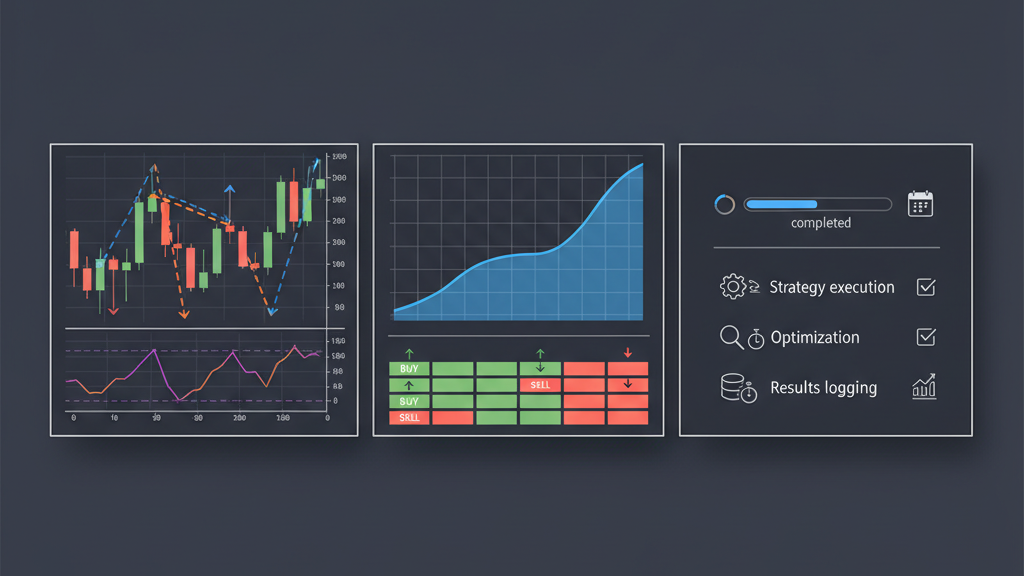
The integration of ATR-based indicator position sizing for risk-controlled automation within an algo platform requires a well-defined workflow. First, the platform needs reliable access to historical price data to calculate ATR in real-time or near real-time. This often means leveraging a robust data API with sufficient lookback periods. The sizing logic itself is typically implemented as a module within the order management system (OMS) or as part of the strategy execution engine. When a new trade signal is generated, the system queries the current ATR for the instrument, calculates the optimal position size based on the predefined risk parameters, and then passes this quantity to the order placement module. It’s crucial that this calculation happens before the order is submitted to account for potential latency or stale ATR values, especially in fast-moving markets. We also ensure that the calculated position size does not exceed overall portfolio or instrument-specific limits, acting as a final safeguard.
- Real-time ATR calculation: Requires robust data feed and low-latency computation resources.
- Dynamic sizing module: Placed within the OMS, triggered by trade signals, to compute and validate order quantity.
- Pre-trade validation: Confirm calculated size adheres to account-level max position limits and capital availability.
- Latency considerations: Ensure ATR is fresh; consider re-evaluating size if significant market movement occurs before execution.
Backtesting and Validating ATR-Sized Strategies
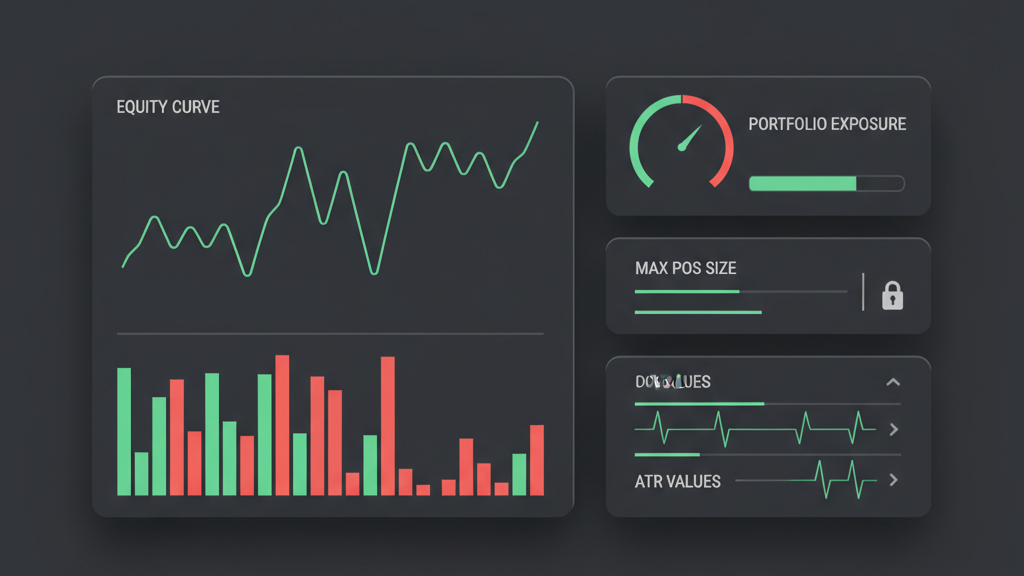
Effective backtesting of strategies employing ATR-based indicator position sizing for risk-controlled automation goes beyond simply running your strategy on historical data. You need to simulate the dynamic nature of the sizing. This means ensuring your backtesting engine correctly calculates and applies ATR for each historical trade entry, reflecting how the position size would have varied. A common pitfall is using a single, static ATR value for the entire backtest, which negates the very purpose of dynamic sizing. Pay close attention to data quality; gaps or errors in historical data can lead to skewed ATR calculations and thus incorrect position sizes, invalidating your backtest results. Walk-forward optimization is particularly useful here, allowing you to train ATR lookback periods and risk multiples on out-of-sample data, providing a more realistic expectation of future performance. Analyzing the equity curve for consistent risk-adjusted returns, rather than just raw profit, becomes paramount, especially examining drawdowns and recovery periods under varying market volatility.
Addressing Execution Gaps and Live Deployment Challenges
Deploying ATR-based position sizing in a live trading environment introduces several practical challenges that need careful consideration. Slippage is a primary concern: the price at which your order is filled might differ from your intended entry price, subtly altering your actual risk per trade. Similarly, partial fills can complicate position management, requiring adjustments to the calculated risk units for subsequent fills or remaining order quantities. API rate limits and network latency can also impact the freshness of ATR data, potentially leading to decisions based on slightly stale information. Our execution automation tools mitigate this by implementing retry logic, monitoring fill rates, and employing intelligent order routing to minimize execution slippage. Post-trade reconciliation is also critical: verifying that the actual position size and implied risk align with the ATR-derived target helps in continuous calibration and refinement of the sizing model in real-time. A robust system will have mechanisms to quickly detect and flag significant deviations, preventing runaway risk.
- Slippage mitigation: Monitor and account for real fill price vs. intended entry when calculating actual risk.
- Partial fills: Implement logic to handle fragmented executions and update position sizing for remaining orders.
- API and data latency: Strategies must accommodate potential delays in receiving fresh ATR data; consider using a slightly longer ATR lookback or buffering.
- Post-trade validation: Continuously compare actual trade risk with calculated ATR-based risk to refine live parameters.
Extending Risk Control Beyond Basic Position Sizing
While ATR-based indicator position sizing for risk-controlled automation forms a solid foundation, comprehensive risk management extends further. This dynamic sizing method can also inform adaptive stop-loss and take-profit levels. Instead of fixed price levels, stops can be placed at a multiple of the current ATR from the entry, moving dynamically with market volatility. This helps prevent being stopped out prematurely in choppy markets or giving back too much profit in trending markets. Furthermore, portfolio-level risk controls are essential: setting maximum daily loss limits, maximum open positions, or dynamic capital allocation based on overall portfolio volatility (which can also be ATR-derived). It’s a layered approach where each component works in concert to maintain a disciplined risk profile, ensuring that even if a single trade goes awry, the overall impact on the portfolio remains within acceptable parameters, safeguarding against catastrophic drawdowns.