Overfitting is a common trap in algorithmic trading, where a strategy appears profitable on historical data but ultimately fails in live markets. The core issue often lies in inadequate validation, specifically neglecting market regime changes during the backtesting phase. A robust out of sample backtesting design is crucial for identifying strategies that can adapt or remain resilient across different market conditions, from high volatility to low, trending to mean-reverting. This article will delve into practical methodologies and considerations for constructing backtests that genuinely challenge your strategy’s assumptions and prepare it for the unpredictable nature of real-time trading environments. Without a rigorous approach to out-of-sample validation, even the most sophisticated models risk becoming artifacts of past market behavior, destined for underperformance when conditions inevitably shift.
The Imperative of Out-of-Sample Validation
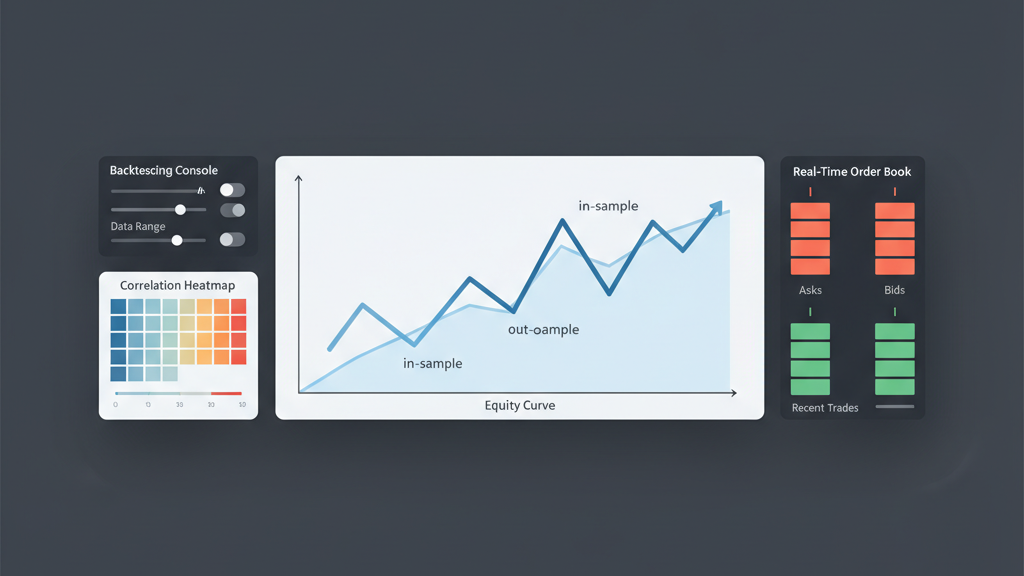
A common pitfall in algorithmic strategy development is designing a model that performs exceptionally well on historical data, only to underperform or outright fail in production. This is often due to overfitting or data snooping bias, where the strategy inadvertently captures noise or specific historical patterns that are unlikely to repeat. Simply splitting data once into an in-sample and out-of-sample period often isn’t enough, as even the ‘unseen’ data might still reside within a similar market regime to the training set. A truly robust out of sample backtesting design moves beyond merely testing on unseen data, by stressing the model against differing market dynamics and actively seeking periods that challenge its core assumptions. Without this rigorous validation, even a complex strategy can be a mirage, reflecting past market idiosyncrasies rather than a true edge.
Identifying and Characterizing Market Regimes
Before validating, you need to understand what constitutes a ‘regime change’ for your specific strategy. This isn’t just about time; it’s about shifts in market dynamics that significantly alter how your strategy performs. These could be shifts in volatility, trading volume, cross-asset correlations, or fundamental macro factors. For instance, a mean-reversion strategy thrives in low-volatility, range-bound markets but might face significant drawdowns during a high-volatility, trending environment. A robust backtest needs to identify these distinct periods and test strategy resilience across them. You can use observable market features, statistical measures like rolling standard deviation, or even unsupervised learning techniques like clustering to delineate these regimes, allowing for targeted validation against known challenging periods.
- Volumetric shifts: Identifying periods of unusually high or low trading volume, often indicating institutional activity or panic.
- Volatility clustering: Recognizing sustained periods of elevated or suppressed market variance, which impact risk and return profiles.
- Correlation breakdown: Observing sudden, significant changes in cross-asset correlations, often preceding or accompanying major market events.
- Trend persistence vs. Mean Reversion: Differentiating market states based on the dominant price action patterns.
Practical Approaches to Out-of-Sample Design
Implementing an effective out of sample backtesting design requires careful consideration of various methodologies. Walk-forward optimization is a popular technique where you continuously re-optimize strategy parameters on a rolling in-sample window and then test the optimal parameters on the subsequent, forward-looking out-of-sample period. This simulates a live trading environment where parameters might be periodically retuned. Another approach is block backtesting, where you explicitly isolate distinct, often historically difficult, periods (e.g., flash crashes, major economic crises) for testing. Time-series cross-validation methods, like blocked K-fold splits, offer more robust statistical guarantees than a single train-test split by respecting the temporal order of data. The choice of method depends heavily on the strategy’s nature, its sensitivity to changing parameters, and the availability of sufficiently long and diverse historical data to ensure meaningful validation.
Data Quality and Integrity for Robust Backtests
The quality of your historical data is paramount; even the most sophisticated out-of-sample backtesting design can be rendered useless by dirty or biased data. Common issues include survivorship bias, where only currently active assets are included, artificially inflating historical returns by excluding delisted or bankrupt securities. Look-ahead bias, where future information inadvertently leaks into your historical testing, is another significant concern – for example, using earnings data before its official release date. For high-frequency strategies, tick-level data with accurate timestamps is essential to model latency and slippage realistically. Furthermore, proper handling of corporate actions like splits, dividends, and mergers is critical to ensure that historical prices are correctly adjusted, preventing misrepresentation of returns and avoiding false signals. A robust data pipeline is an investment that pays off in reliable backtest results.
- Survivorship bias: Excluding delisted or bankrupt assets can artificially inflate historical returns and provide a false sense of security.
- Look-ahead bias: Inadvertently using future information, such as financial statements or news releases, before it was publicly available.
- Tick-level data: Essential for high-frequency trading strategies to accurately simulate latency, slippage, and market microstructure.
- Corporate actions: Properly adjusting historical prices for stock splits, dividends, and mergers to avoid misrepresenting returns or strategy triggers.
Evaluating Performance Across Regimes
When evaluating an out of sample backtesting design, simply looking at the total net profit or a single Sharpe ratio for the entire period is insufficient. It’s crucial to analyze performance metrics across the different market regimes identified during your validation process. A strategy might exhibit an excellent overall Sharpe ratio but experience catastrophic drawdowns during specific high-volatility or trending periods. Key metrics to monitor include maximum drawdown, Calmar ratio, Sortino ratio, and recovery factor, but these must be examined on a per-regime basis. Consistency and stability in these risk-adjusted returns across diverse market conditions are far more indicative of a robust strategy than exceptional performance during a single favorable regime. Statistical significance tests can also help determine if observed performance is genuinely due to the strategy’s edge or merely random chance.
Bridging Backtest to Live: Execution and Monitoring
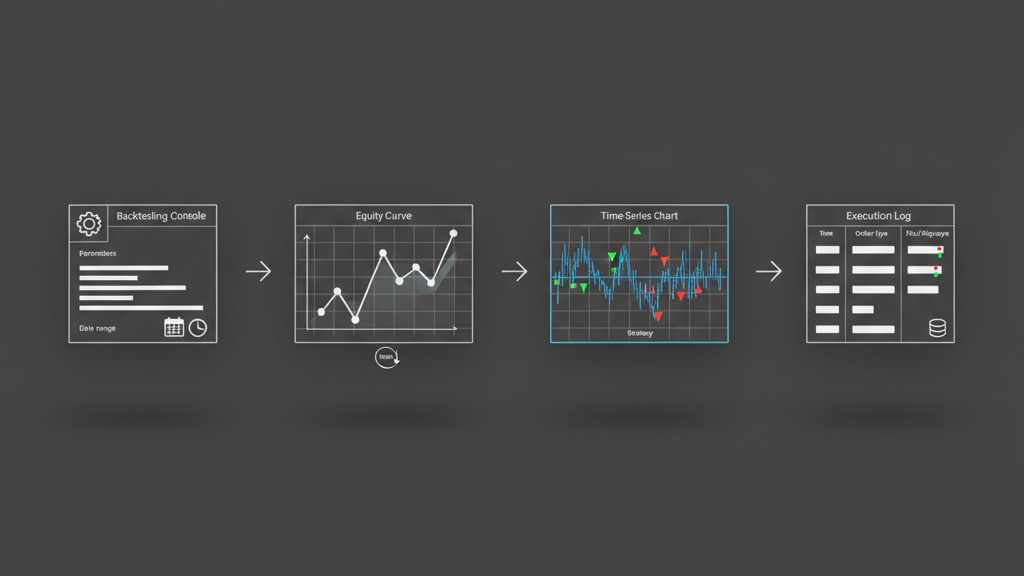
Successfully validating an algorithmic strategy through a rigorous out of sample backtesting design is a major step, but the transition to live trading introduces a new set of challenges. Real-world execution involves factors like network latency, exchange API rate limits, order book depth, and slippage, which are difficult to perfectly simulate in a backtest. Developing an execution simulation layer that accurately models these real-world constraints can help bridge this gap, providing more realistic expectations for live performance. Once deployed, continuous live monitoring is essential. This involves tracking key performance indicators in real-time and comparing them against your backtested expectations. Crucially, your monitoring system should also alert you to significant shifts in market regimes, enabling you to proactively re-evaluate, adjust parameters, or temporarily deactivate the strategy before substantial drawdowns occur, effectively managing concept drift.
- Latency modeling: Simulating network and execution delays to estimate realistic fill prices and order placement times.
- Slippage estimation: Accounting for the price impact of your orders, especially significant for larger positions or illiquid assets.
- API reliability: Designing for robust error handling, retries, and fallback mechanisms to cope with exchange API failures or downtimes.
- Live monitoring metrics: Continuously tracking key performance indicators and comparing them against backtest expectations to detect divergence early.